How Much Does It Cost to Make a T-Shirt? Factory Numbers, Not Guesses
Our published tier pricing for a heavyweight boxy tee runs USD 13.60-17.60 per piece — and on a tee, unlike a hoodie, decoration is often the biggest slice you actually control.
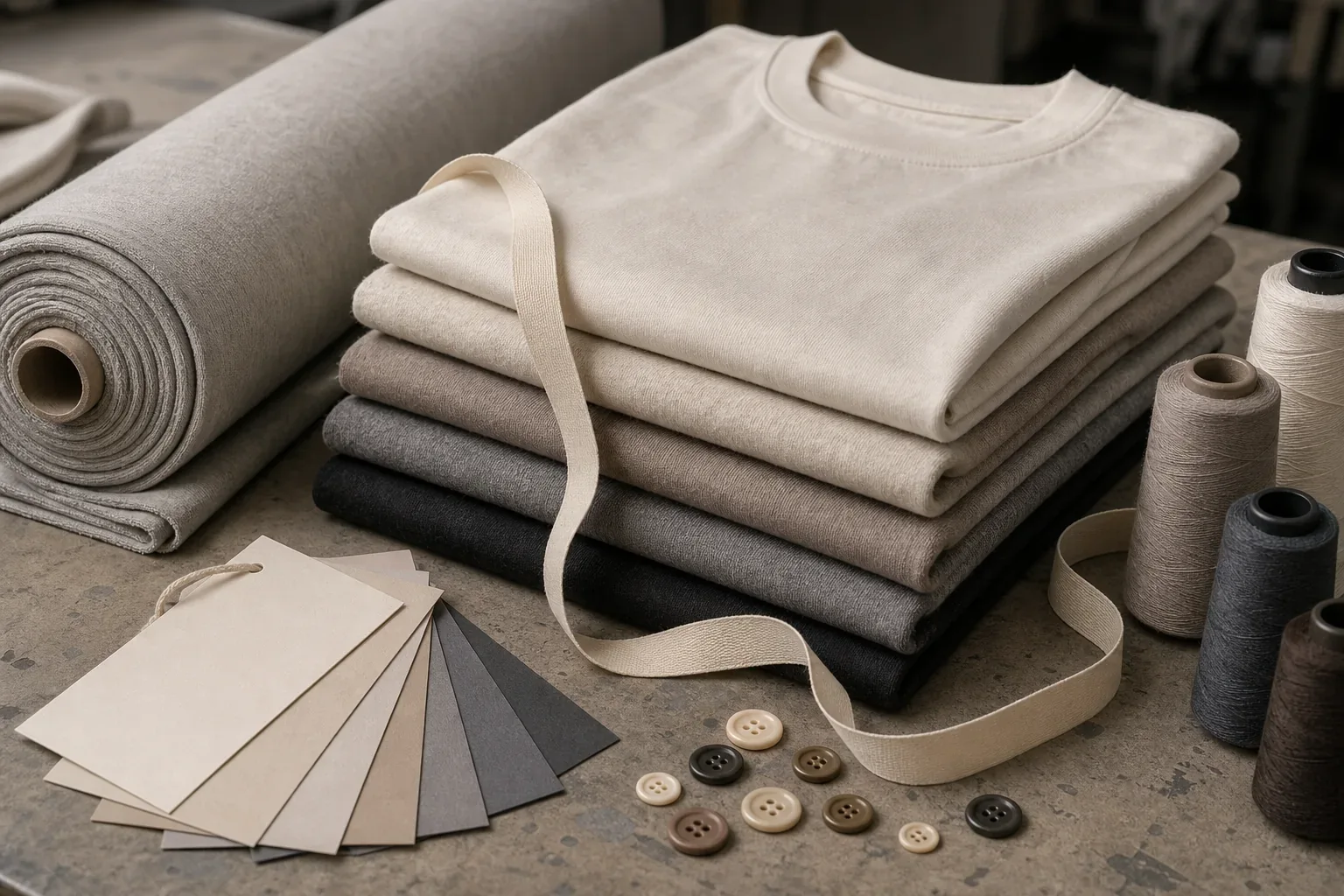
A real number first: our published tier pricing for a heavyweight boxy tee runs roughly USD 13.60-17.60 per piece depending on quantity — live catalog pricing for a 100% cotton oversized cut, not a teaser. A lighter, simpler tee prices below that band; a heavily washed or heavily decorated one prices above it. What decides where you land is a short stack of costs, and on a tee the stack behaves differently than most buyers expect.
Compared with bulkier garments, a tee has less of everything — less fabric, fewer sewing operations, no hardware — so decoration and fabric take turns being the biggest controllable slice. A basic midweight blank body is cheap enough that a two-location print program can cost more than the garment under it; go heavyweight and washed, and fabric takes the top spot back. Read your own design against that seesaw and the quote stops being mysterious.
For a starting budget based on your garment, fabric weight, decoration and quantity, use our clothing cost calculator. It provides separate sample and bulk references for cotton T-shirts and hoodies; the product examples in this guide have their own specifications and are not a universal rate card.
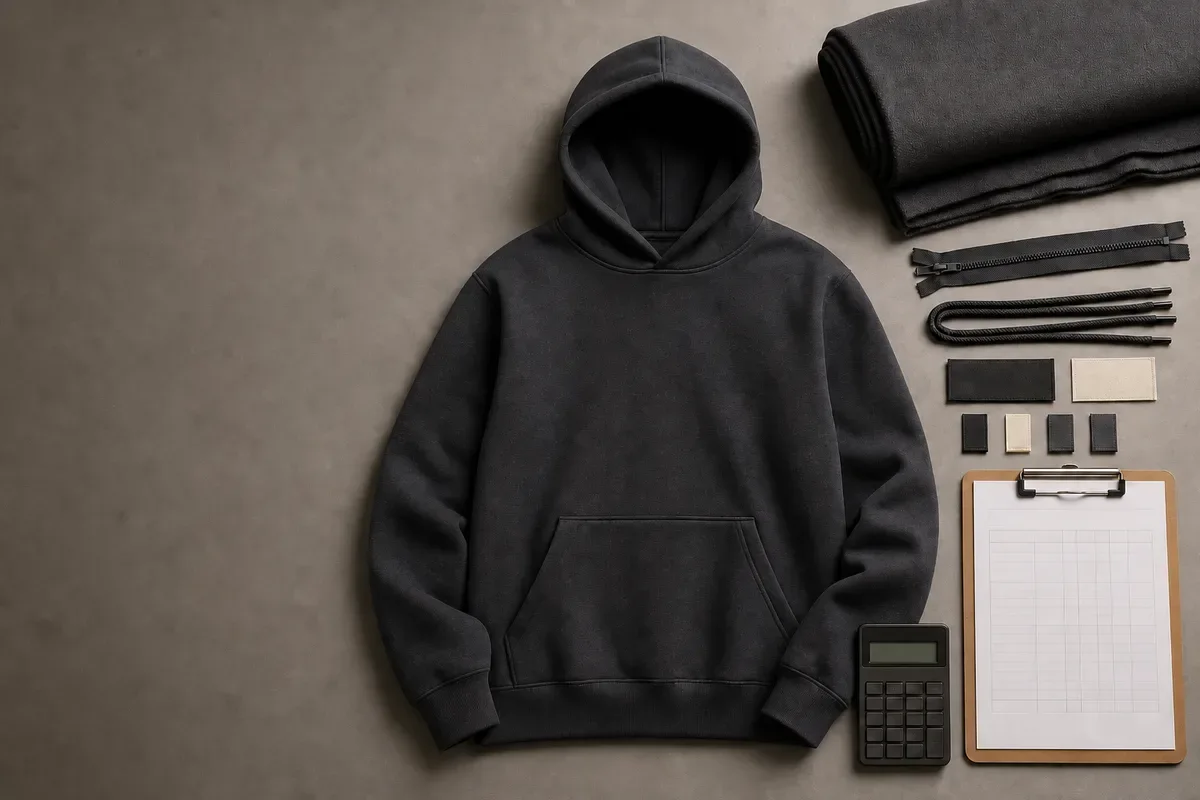
The t-shirt manufacturing cost stack
| Cost layer | What drives it on a t-shirt |
|---|---|
| Fabric | Weight × consumption: jersey gsm and how oversized the pattern cuts |
| Cut and sew | Fewer operations than a hoodie — neckband, shoulder construction, hems — so this slice is smaller and steadier |
| Decoration | Setups per technique per location; often the swing factor on tees |
| Wash and finish | A rinse is near-free; vintage programs buy tank time and can raise the final minimum |
| Trims and packing | Neck labels, hang tags, polybags — cents that stack, never zero |
Samples carry the whole stack with none of the amortization, which is why ours quote at a project-specific quoted amount per piece.
Fabric: grams are the price
Jersey is bought by weight, and a tee is mostly fabric by area. A 240 gsm midweight body and a 320 gsm heavyweight body are different garments at the fabric buy, before any styling — and an oversized boxy pattern multiplies the difference because it simply uses more cloth. Our GSM guide maps the weight bands; the honest rule from the hoodie cost anatomy applies unchanged: pay for grams your silhouette actually shows.
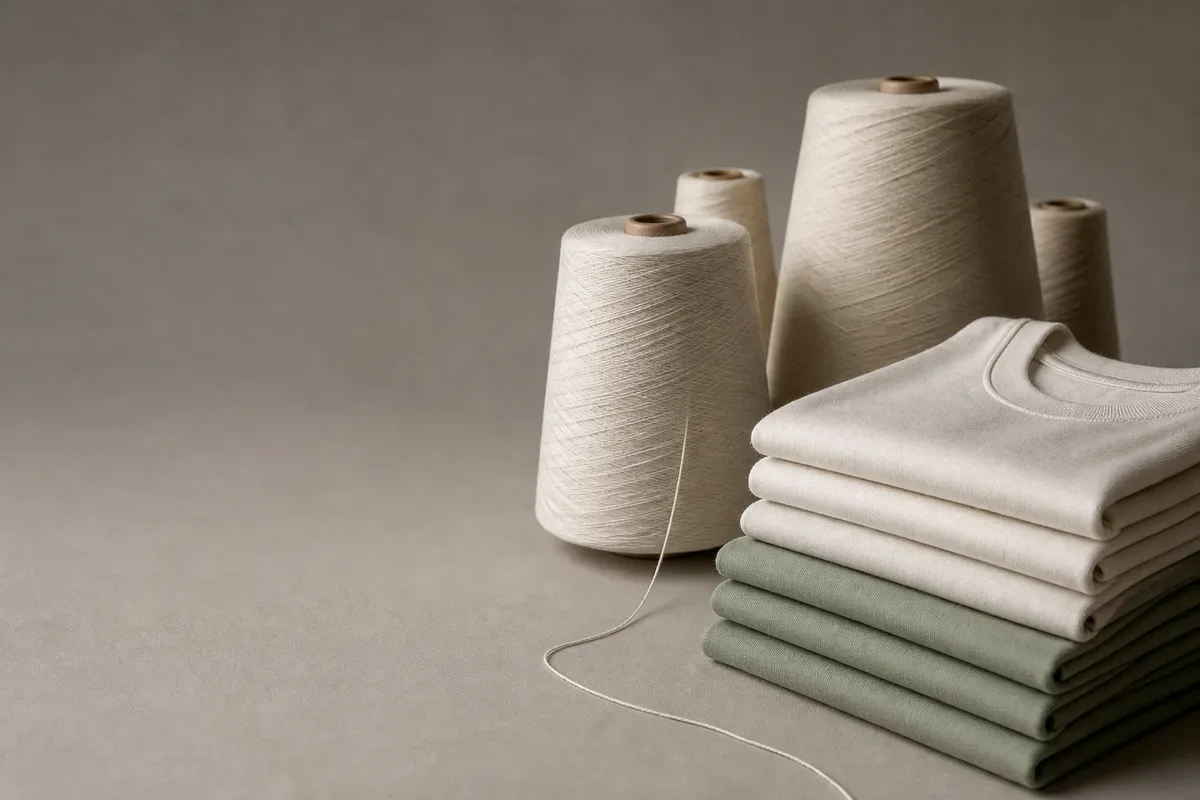
Yarn matters at the same layer: ring-spun and combed cotton print smoother and feel better than open-end at a modest premium — the full trade is in our ring-spun guide. It is the cheapest quality upgrade a tee can buy, because it improves the fabric and every print that lands on it.
Decoration: the swing factor
Factories quote decoration per technique per location. On a tee that rule has teeth: one strong front hit is one setup, while a front-back-sleeve program is three setups riding on a garment whose base cost is modest — decoration can outgrow the blank under it. Technique moves the number too. Screen printing amortizes its per-color setups across a 50-300 piece run, while digital methods trade setup for a flatter per-unit cost. Specialty work — puff, high-density, embroidery — prices as the premium it looks like. Which method fits which artwork is its own decision: see the print methods comparison.
The optimization order we give buyers: cut locations before you cut technique quality. One well-produced placement outsells three thin ones, and it outmargins them by even more.
Quantity: where a tee price actually bends
Every layer amortizes across the run — fabric by the roll, screens and setups once, line efficiency after the first pieces. Our MOQ starts at 50 pieces, with the final minimum depending on the product, fabric, wash, and customization. Moving from the minimum toward a few hundred pieces changes unit price meaningfully; past the first few hundred units the curve flattens. Two planning consequences: consolidating colorways is the easiest price fix available, and chasing thousands of units for a discount usually buys less than getting off the minimum tier did.
Blanks and POD: the honest comparison
If your design lives entirely in the print, decorated blanks or print-on-demand beat custom production at small volume — no development, no minimum, higher unit cost. Custom manufacturing earns its price when the garment itself is the product: your fit, your weight, your wash, your labels. The crossover math — and the moment to switch — is mapped in the POD vs cut-and-sew guide. Short version: a brand reordering the same design at 50+ pieces is usually already paying custom prices for a blank product.
Once the route and cost model are clear, the T-shirt manufacturers compared by production model helps build a shortlist for like-for-like review.
Reading a cheap tee against an expensive one
Two tees that photograph identically can sit far apart on a quote. The gap is always in the same places: fabric weight and yarn (heavyweight ring-spun vs light open-end), shrinkage control, stitching density and shoulder construction, and whether the color comes from a dyed yard or a garment wash. None of these show in a product photo; all of them show at the second wash. Construction details worth specifying live in the t-shirt anatomy guide — and if two factories quote the same tech pack very differently, that variance has its own anatomy.
Planning numbers, in writing: MOQ starts at 50 pieces. Simple samples typically take 10-18 working days after project details are confirmed; complex styles or processes take longer. Bulk typically takes 20-30 working days after approval. The final minimum and sample pricing depend on the product, fabric, wash and customization. Shipping terms are confirmed by destination and project; our shipping terms guide explains the vocabulary. The full custom t-shirt cost picture is on our t-shirt manufacturer page.
FAQ
How much does it cost to manufacture a t-shirt? As a live anchor: our published tier pricing for a heavyweight boxy tee runs USD 13.60-17.60 per piece by quantity. A midweight basic prices below that; heavy washes and multi-location decoration price above it. Quantity moves every layer, which is why a per-piece number without a quantity is meaningless.
Why is a sample so much more expensive than the bulk price? A sample carries every setup — pattern, fabric cut, print screens — with no run to spread them over. We confirm the sample price after project review because it covers development, not just the shirt.
What is the cheapest way to lower my per-piece cost? Consolidate colorways first — separate colors can require separate fabric, dye, wash, and setup quantities, so confirm the breakdown before costing. Then cut decoration locations before decoration quality, and question grams before questioning the wash. Quantity does the rest: moving above the first quoted tier usually changes unit cost more than chasing very large volumes.
Does a heavier t-shirt always cost more? Yes, at the same construction — jersey is bought by weight, so a 320 gsm body contains more cotton than a 240, and an oversized cut multiplies the consumption. On a tee the grams also change drape and print hand, which is what the customer actually feels in the first wear.