Parts of a Hoodie — and How a Factory Sews Them Together
A hoodie becomes production-ready when its cut pieces, trims, measurements and construction notes agree. Name each component, specify the alternatives and follow the conditional route from fabric to packed garment.
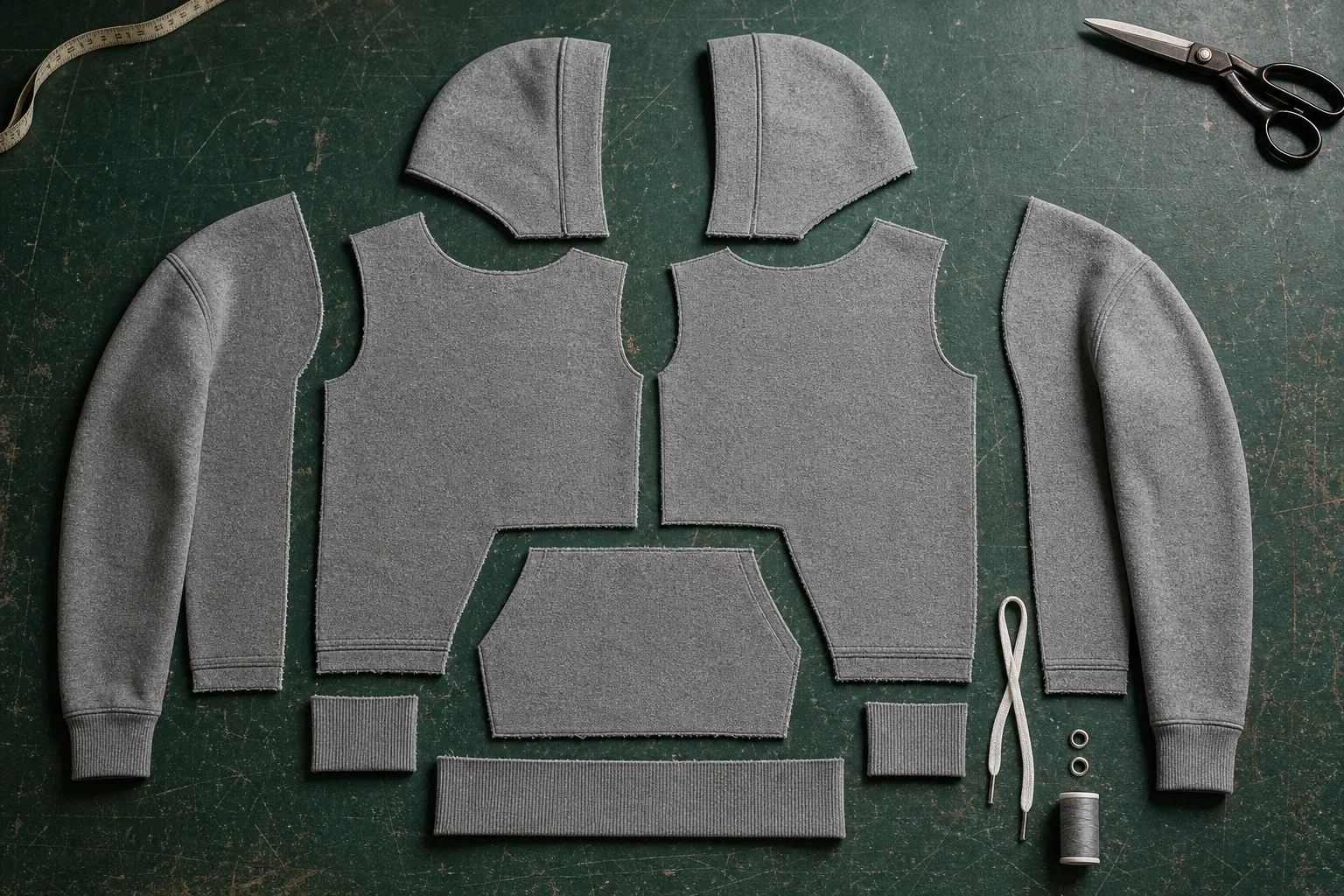
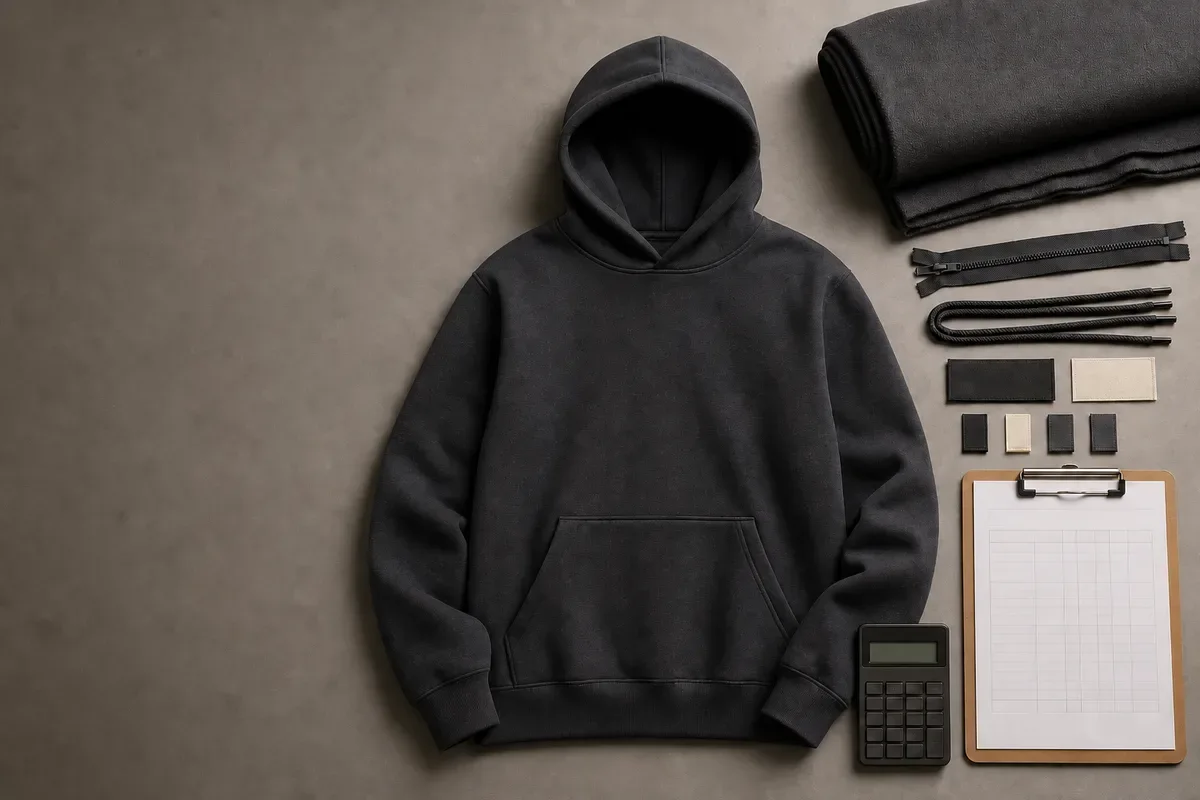
A hoodie is not one material and it does not have one universal piece count. Its cut pieces can include front and back bodies, sleeves, hood shells and lining, pocket parts, cuffs and a hem band. Its bill of materials (BOM) also includes items that are not pattern pieces: thread, drawcord, eyelets, zipper, labels and packing components. A two-panel pullover, a three-panel lined hood and a full-zip style therefore break down differently.
This guide names the parts of a hoodie, shows what a buyer must specify for each one and maps a typical production route without turning that route into a fixed factory promise. The approved technical flat, pattern, BOM, measurement chart and sample—not a generic component count—define the garment. The companion T-shirt anatomy guide applies the same discipline to a simpler product.
If you are choosing the finished garment category before specifying its components, compare our types of hoodies overview.
The technical flat

The flat is a communication drawing, not a production-scale pattern. Its callouts must agree with the BOM and measurement chart. If the drawing shows a stitched eyelet while the BOM lists a metal grommet, the factory has two competing instructions.

The hood: panel count, lining and drawcords
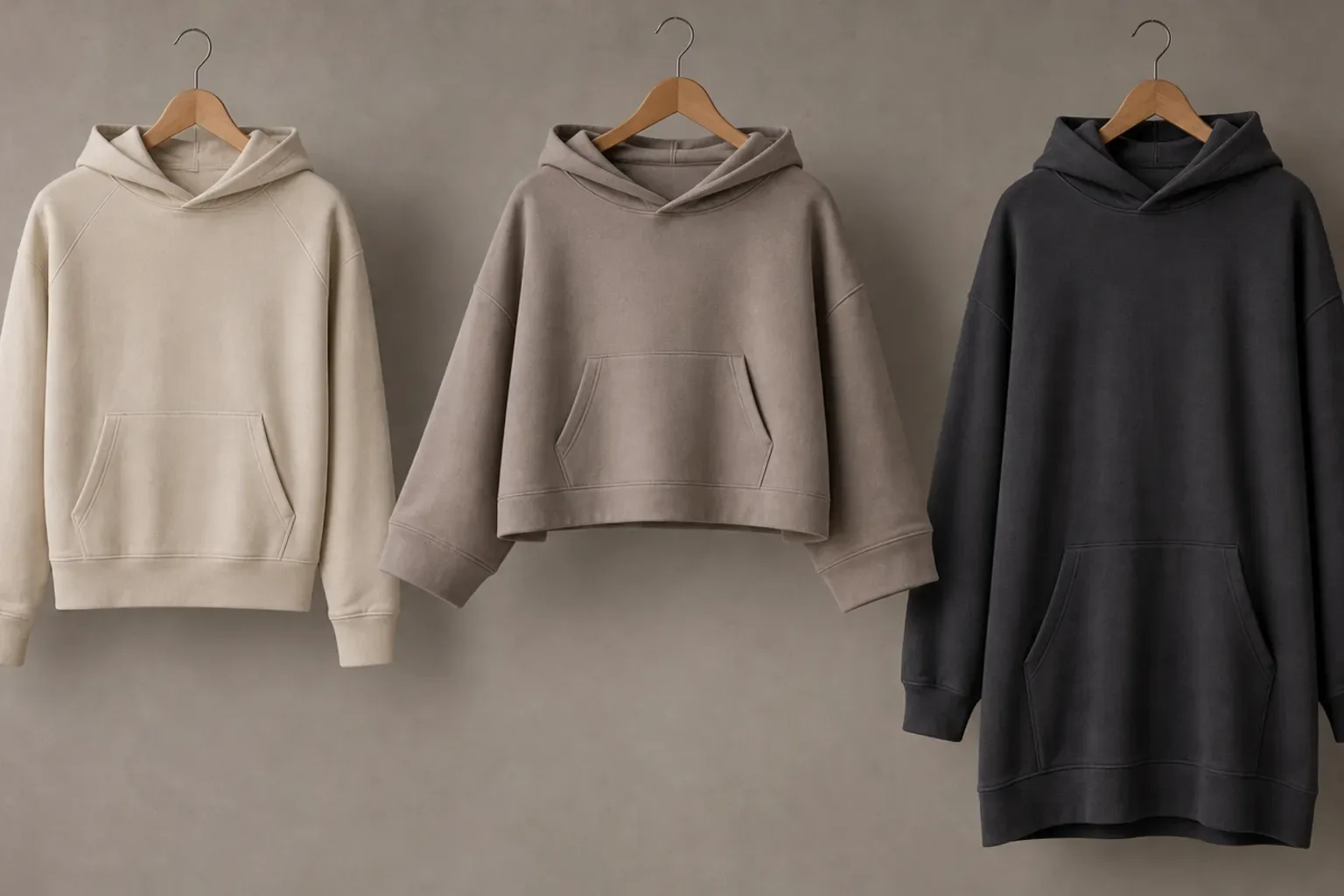
A two-panel hood commonly joins left and right shell pieces along a center seam. A three-panel hood adds a center panel, changing the crown geometry and seam placement. Either construction can be self-lined, lined in a different material or left unlined with an agreed edge finish. The tech pack should show the selected build in exterior and interior views; “double hood” is not precise enough to identify its layers.
A pullover can use a crossover front, where the hood edges overlap at center front, or another finished opening. Specify the overlap, hood opening, depth and height through drawings and points of measure. Approve how the hood sits both up and down, because a flat component name does not control the finished shape.
A scuba hood is shaped closer to the head. Its panel build, opening, lining, height, depth and worn-up fit still belong on the technical flat, pattern and measurement chart.
When an adult style uses a drawcord, the BOM should identify a flat or round cord, material, color, finished exposure and end treatment. The exits may be metal grommets or stitched eyelets; their position, backing and finished appearance belong on the detail drawing. A metal, molded or heat-sealed tip is an option only when it suits the selected cord and intended care route.
Children's products need a market-specific safety review rather than a scaled-down adult specification. In the United States, hood and neck drawstrings are prohibited on children's upper outerwear in sizes 2T to 12, or the equivalent, under the ASTM F1816-97 requirements referenced by 16 CFR Part 1120. The current CPSC guidance reports 26 deaths and 73 nonfatal incidents associated with neck or hood drawstrings from January 1985 through June 2019. Other destinations and garment zones can use different rules, so confirm the intended market and current requirements instead of treating this US scope as a global rule for every children's garment.
Body and pocket: where the design actually lives
The body usually begins with front and back pattern pieces, but a full-zip style divides the front and a paneled design adds more sections. A pullover may use a one-piece kangaroo pocket with two hand openings; a zip-up can use two separate pockets. Welt, inseam and zippered pockets are other constructions, not quality tiers.
Pocket width, height, opening angle, placement and reinforcement must be called out. A bartack is one possible reinforcement at an opening corner, but the approved stitch and appearance should be named rather than assumed. Inspect pocket symmetry, usable opening, attachment security and distortion on the sample.
Decoration does not have one universal position in the sequence. Some artwork is easier to apply to a flat cut panel; other printing, embroidery, appliqué or wash-dependent decoration can be applied later. The route depends on the method, artwork location, seam crossings and finish order. In every case, place artwork from named pattern or garment landmarks and approve it at a stated garment state. The method trade-offs live in our print comparison and embroidery vs screen printing guides.
Sleeves and shoulders: the silhouette levers
Hoodie sleeves can be set-in, raglan or developed with a dropped shoulder. These are pattern and fit decisions, not interchangeable labels. State the seam route, shoulder position, sleeve shape, length and opening, then inspect left-right balance, hang and movement on the sample. The silhouette vocabulary—oversized, boxy, cropped and drop shoulder—is owned by our hoodie fits and construction guide. The pattern landmarks also connect to the tee anatomy guide.
Ribbing and trims: the stretch frame
Cuffs and the bottom band often use rib knit, but the construction, fiber content and elastic component are choices. Some designs use self-fabric or another finish. Specify the cuff and band material, relaxed and extended dimensions, finished height, seam placement and required recovery; do not assume body fabric and rib will react identically to washing or garment finishing.
A full-zip hoodie also needs a controlled zipper line: element construction, opening configuration, nominal size, slider and pull, measured finished length, tape color and finish. A zipper garage or chin guard is a separate construction choice. The clothing zipper specification guide owns those decisions in detail.
Brand, size, care and content information may be separate labels or combined presentations. Their required content depends on the destination market. Back-neck tape is another optional BOM item whose material, route, width and attachment should be shown. The private-label package guide owns the wider label and packing system.
The fabric layer, briefly
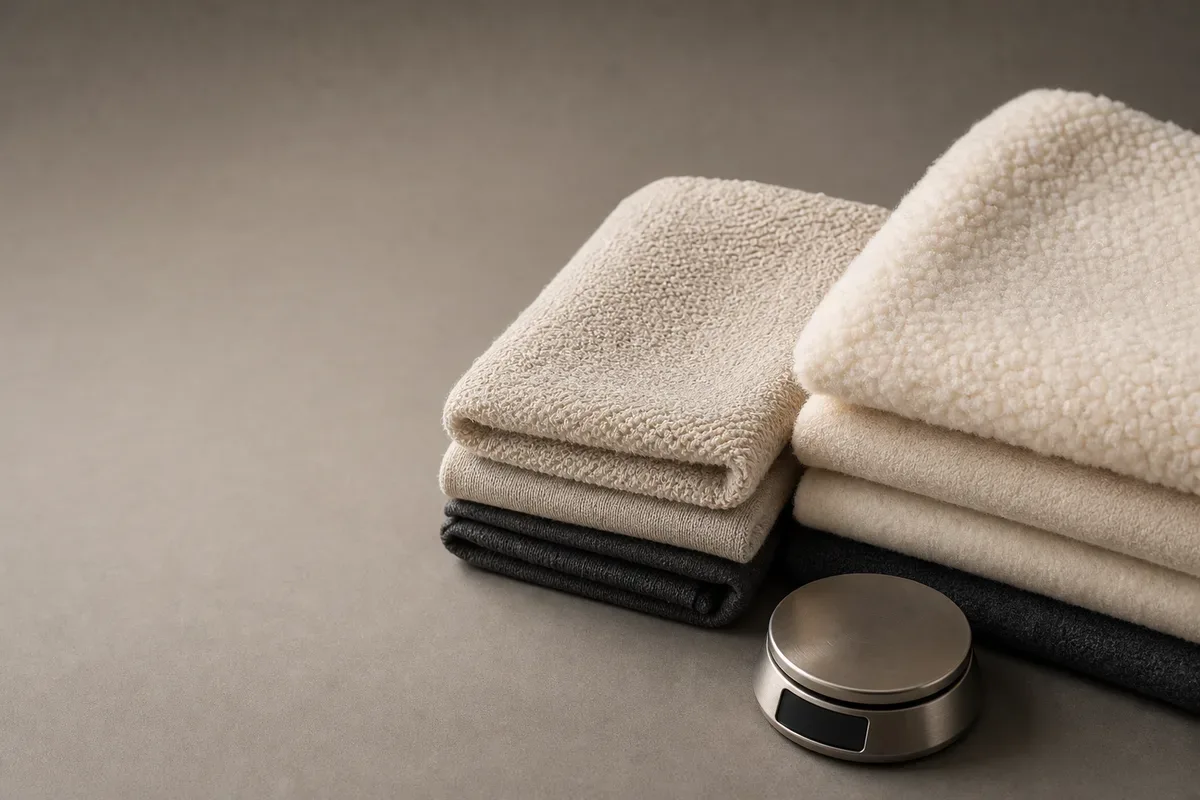
Many hoodies use a loop-back knit such as French terry or a brushed fleece, often in cotton or a blend, but “hoodie” names a garment type rather than one mandatory material. Body fabric, hood lining, pocketing and rib can be different materials and need separate BOM rows. Identify each by supplier or fabric code, construction, fiber content, finished weight, color, finish and approved physical swatch. The fleece fabric weights guide and streetwear GSM guide own the deeper material comparison.
What should a buyer specify for each hoodie component?
| Component | Specify before sampling | Check on the sample |
|---|---|---|
| Hood shell and lining | Two- or three-panel build, materials, crossover or opening, seam route, height and depth POMs | Shape up and down, left-right balance, lining control, opening and neckline attachment |
| Drawcord and eyelets, if permitted | Intended market and size range, cord material/profile/color/exposure, tip, exit type, backing and placement | Symmetry, finish, security, fabric distortion and compliance evidence required for the destination |
| Body and shoulders | Pullover or split front, panel lines, shoulder type, fabric direction and body POMs | Silhouette, balance, seam position, grain or direction and measurements |
| Sleeves | Set-in or raglan route, sleeve shape, length, opening and attachment seam | Pair match, pitch, hang, movement and seam appearance |
| Construction, dimensions, opening, placement, edge finish and reinforcement | Position, symmetry, usable opening, distortion and attachment security | |
| Cuffs and hem band | Material, construction, finished height, relaxed/extended dimensions, seam and recovery requirement | Pair match, stretch and recovery, seam flatness and finished dimensions |
| Zipper, if used | Supplier/code or approved equivalent, element and opening type, nominal size, slider, length endpoints, color and finish | Smooth operation, left-right level, front-edge wave, endpoint alignment and care response |
| Labels, tape and thread | Identity, material, color, dimensions, placement, orientation and attachment | Correct content, comfort, legibility, position and seam or adhesion security |
How a hoodie is made: the production sequence
Components explain what a hoodie contains; the operation sheet explains the route for one approved style. The seven stages below are a planning map, not a claim that every material, decoration and finish follows one unchanging path.

- Confirm the fabric and pre-cut state. Match the roll or lot identity to the approved material and record the applicable inspection, handling and release decision. Relaxation addresses the state used for spreading and cutting; it is not the same as a laundering result. The fabric relaxation guide owns that gate, while the shrinkage guide owns dimensional change after a named care route.
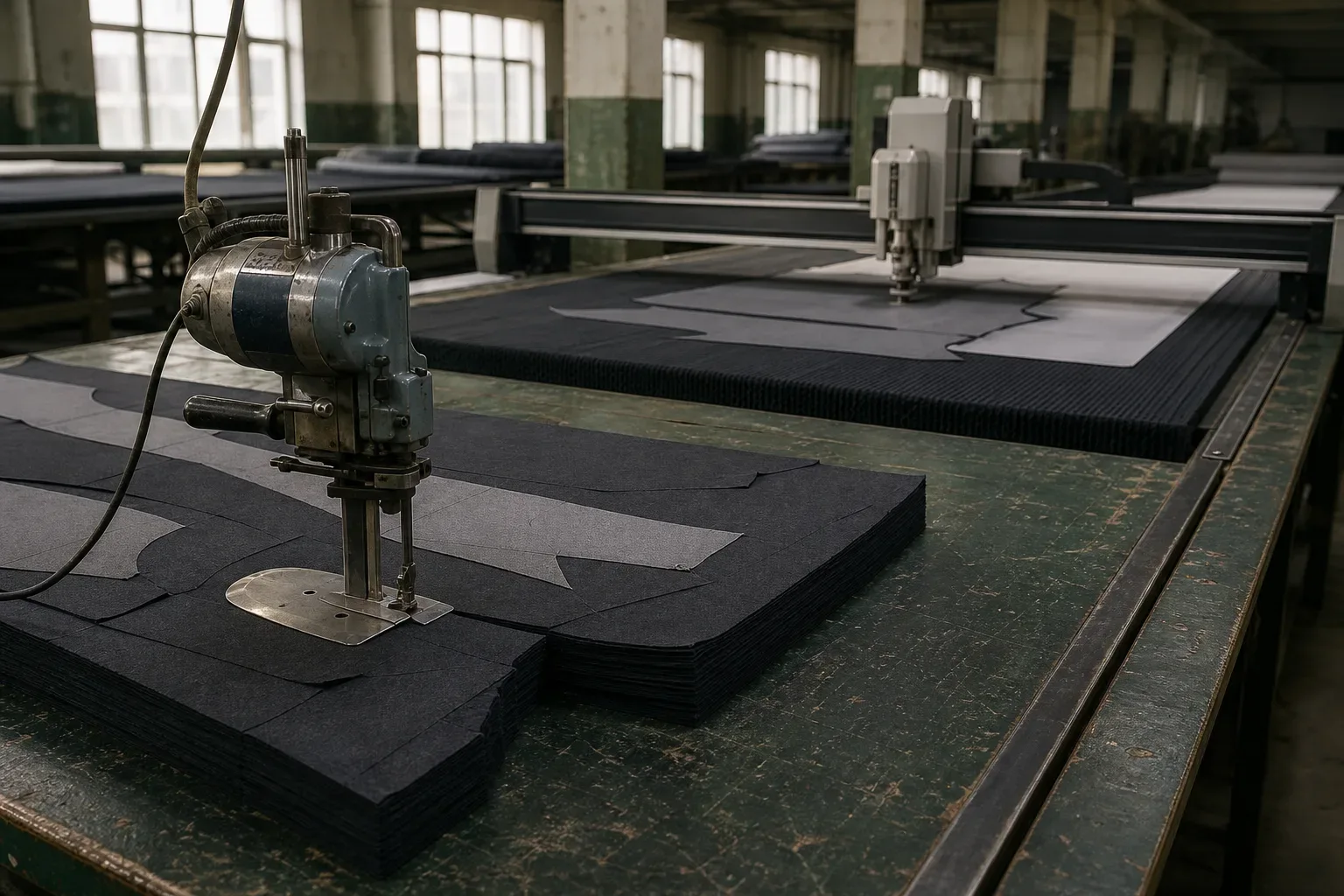
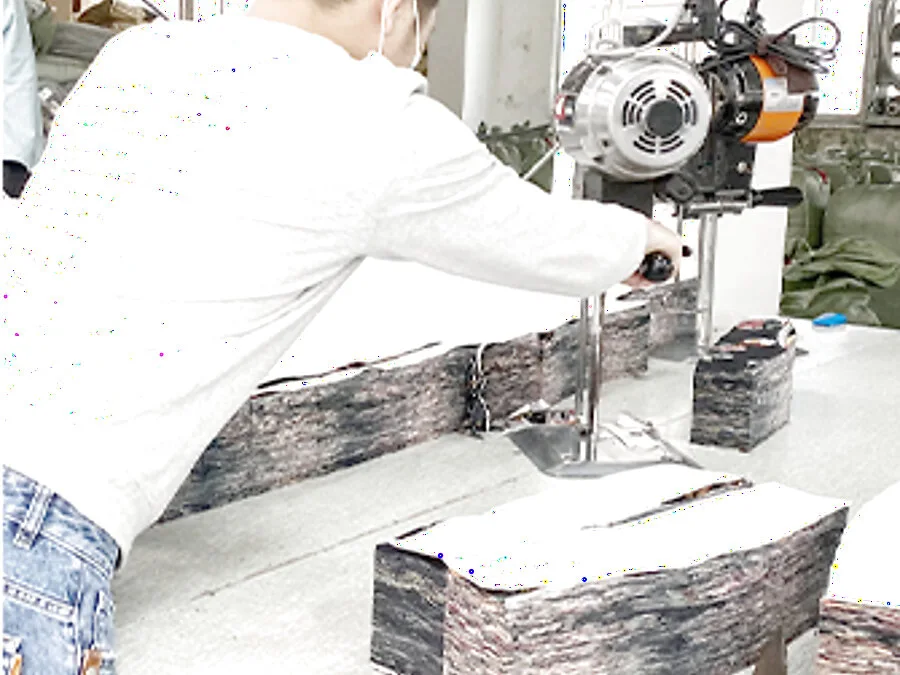
- Plan the lay and cut. A marker arranges the required pattern pieces against usable fabric width, direction and material constraints. The selected route may be a multi-ply lay or a single-ply process. Cut pieces should retain size, bundle and lot identification so unapproved mixing can be detected. The industrial cutting guide explains the equipment choices and their limits.
- Apply decoration at the approved stage. Printing, embroidery or appliqué may be scheduled on flat panels, a partly assembled component or a finished garment. Compare the artwork revision, placement landmarks, material state and any later wash before releasing the decorated work.
- Build the subassemblies. Hood shells and linings, pockets, cuff or band rings, eyelets and zipper preparations can be completed before they join the body. The exact grouping depends on the construction sheet and available operations.
- Assemble in the specified order. Shoulder, sleeve, side, hood, pocket, cuff and hem-band operations must follow the approved seam and stitch callouts. There is no universal rule that the hood is always attached last. Inspect seam appearance, security, symmetry and measurements at the checkpoints defined for the project.
- Apply the selected finish, if any. An unwashed program, garment wash, garment dye or another finish can require a different route and approval state. When a finish can change shade, hand, dimensions, hardware or decoration, the finished sample—not the pre-finish garment—controls approval. Our stone wash versus acid wash guide explains two appearance-led routes.
- Inspect and pack to the written plan. Inline process checks and a final sampling plan answer different questions. An agreed AQL inspection does not mean every characteristic on every unit was measured. Define the lot, sample, defect classes, measurement checks and any project-specific safety screening, then confirm folding, labels, packaging and carton marks against the packing specification.

ISO 4915 classifies and designates stitch types. Numbers such as 504, 514, 406 and 516 identify constructions; they are not generic quality grades and should not be substituted for a location-specific seam specification. The stitch and seam field guide owns that taxonomy and the sample checks.
Operation count is one input to price: extra panels, lining, hardware, reinforcement, decoration and finish can add materials, setups or labor. The hoodie production cost guide owns the full cost stack.
What the vocabulary buys you
A component name becomes useful when it connects to a measurable instruction and a sample check. “Three-panel self-lined hood” still needs shell and lining identities, seam route, opening and depth measurements, while “split pockets” still needs dimensions, placement and reinforcement. A mood board can communicate direction; it cannot replace those decisions.
A factory-ready handoff should include front, back and interior flats; a revision-controlled BOM; points of measure with diagrams, units and tolerances; seam and stitch callouts; artwork files with placement dimensions; wash and care state; destination-market requirements; quantity by color and size; and the physical reference or approved sample that controls anything drawings cannot express. The tech pack guide shows how those records fit together.
For a project review, send the garment reference or technical drawings, material and fit direction, measurement spec, artwork, label and packing requirements, intended market, and quantity by color and size. Jiashun can review the project details before preparing a project-specific quotation. MOQ starts at 50 pieces; the final minimum and colorway breakdown depend on the product, fabric, wash and customization. The full program is on our custom hoodie manufacturer page. If you are still comparing suppliers, the hoodie manufacturer roundup maps the field.
FAQ
What are the parts of a hoodie called? The main cut components can include hood shell and lining pieces, front and back bodies, sleeves, pocket parts, cuffs and a hem band. The BOM also covers thread, drawcord and eyelets when permitted, zipper on a zip-up, labels, tape and packing. There is no universal pattern-piece count; the approved style, pattern and BOM control it.
What is the hole for the hoodie string called? An eyelet. It may be a metal grommet or a stitched eyelet. Specify its size, position, backing and finish together with the drawcord material, profile, exposure and compatible end treatment. Children's products require a destination- and size-specific safety review before a hood drawcord is included.
How is a hoodie made step by step? The typical control sequence is to confirm fabric identity and pre-cut state, plan and cut the pieces, apply decoration at its approved stage, build small parts, assemble the garment, apply any selected wash or finish, then inspect and pack to the written plan. The operation sheet can move decoration, hood attachment or finishing when the approved construction requires a different route.
What are hoodies made of? Many hoodies use French terry or brushed fleece in cotton or a blend, but the garment can combine different body, lining, rib, pocket, thread and trim materials. Specify each BOM item separately by construction, fiber content, finished weight where relevant, color, finish and approved physical reference.
Why don't kids' hoodies have drawstrings? In the United States, hood and neck drawstrings are prohibited on children's upper outerwear in sizes 2T to 12, or the equivalent, under the requirements referenced by 16 CFR Part 1120. That is a defined US scope, not a universal rule for every market or garment. Confirm the destination, size range, garment zone and current requirements before adapting an adult hoodie for children.
References
- US Consumer Product Safety Commission, “Drawstrings in Children's Upper Outerwear” — current US scope, ASTM F1816-97 requirements referenced by 16 CFR Part 1120, and incident totals through June 2019; accessed August 3, 2026.
- International Organization for Standardization, ISO 4915:1991, Textiles — Stitch types — Classification and terminology — stitch-type designation and terminology; accessed August 3, 2026.
- American & Efird, ISO Stitch Terminology matrix — visual construction reference for common ISO stitch types; accessed August 3, 2026.