Why New Clothes Are Made to Look Old
Distressed clothing is manufactured time: what distressed actually means, how deliberate damage went from punk protest to production craft, and why brands pay a factory to age garments before anyone has worn them.
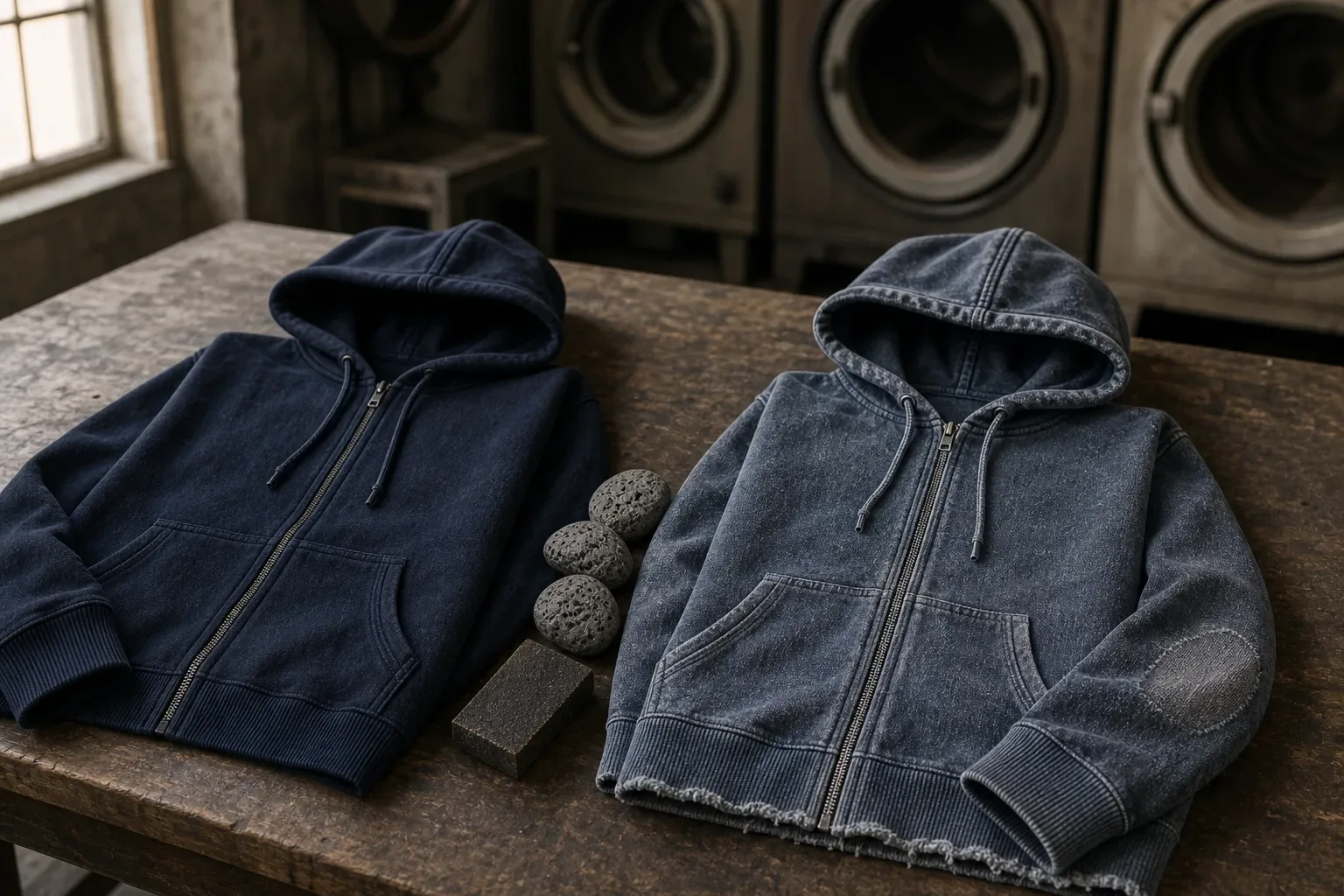
Of everything that happens on a wash floor, the strangest — measured against common sense — is this: a brand pays extra for the operations that damage its garments. A hoodie comes off the sewing line perfect, and then we tumble it with stones, sand its elbows, fray its hems, and it leaves the building worth more than when it was flawless. Most of our articles explain how that's done. This one is about the stranger question underneath: why anyone wants it done at all.
What "distressed" actually means
Distressed clothing is any garment deliberately treated to look aged, worn or damaged before it is ever sold. It is an umbrella term covering three families of work:
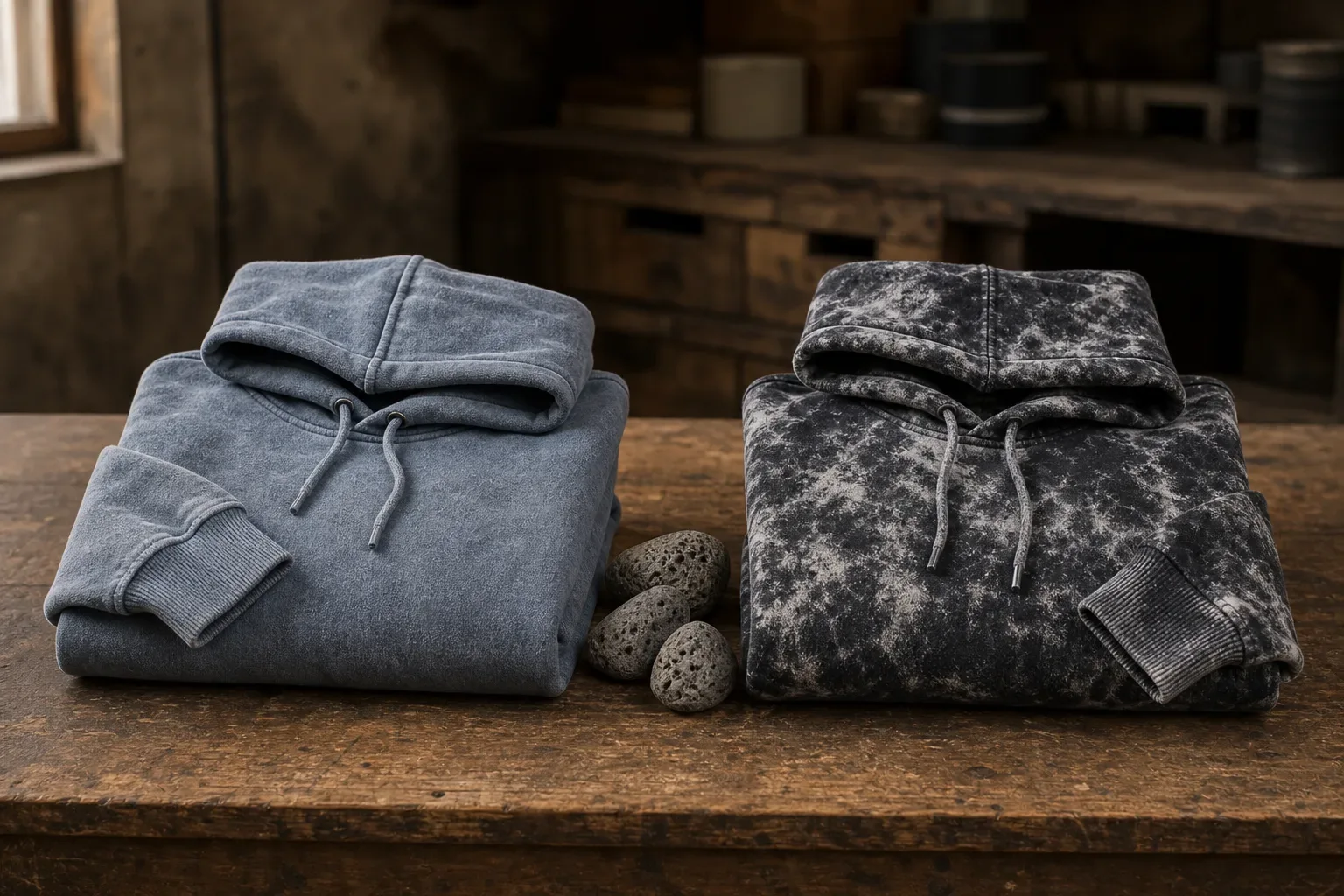
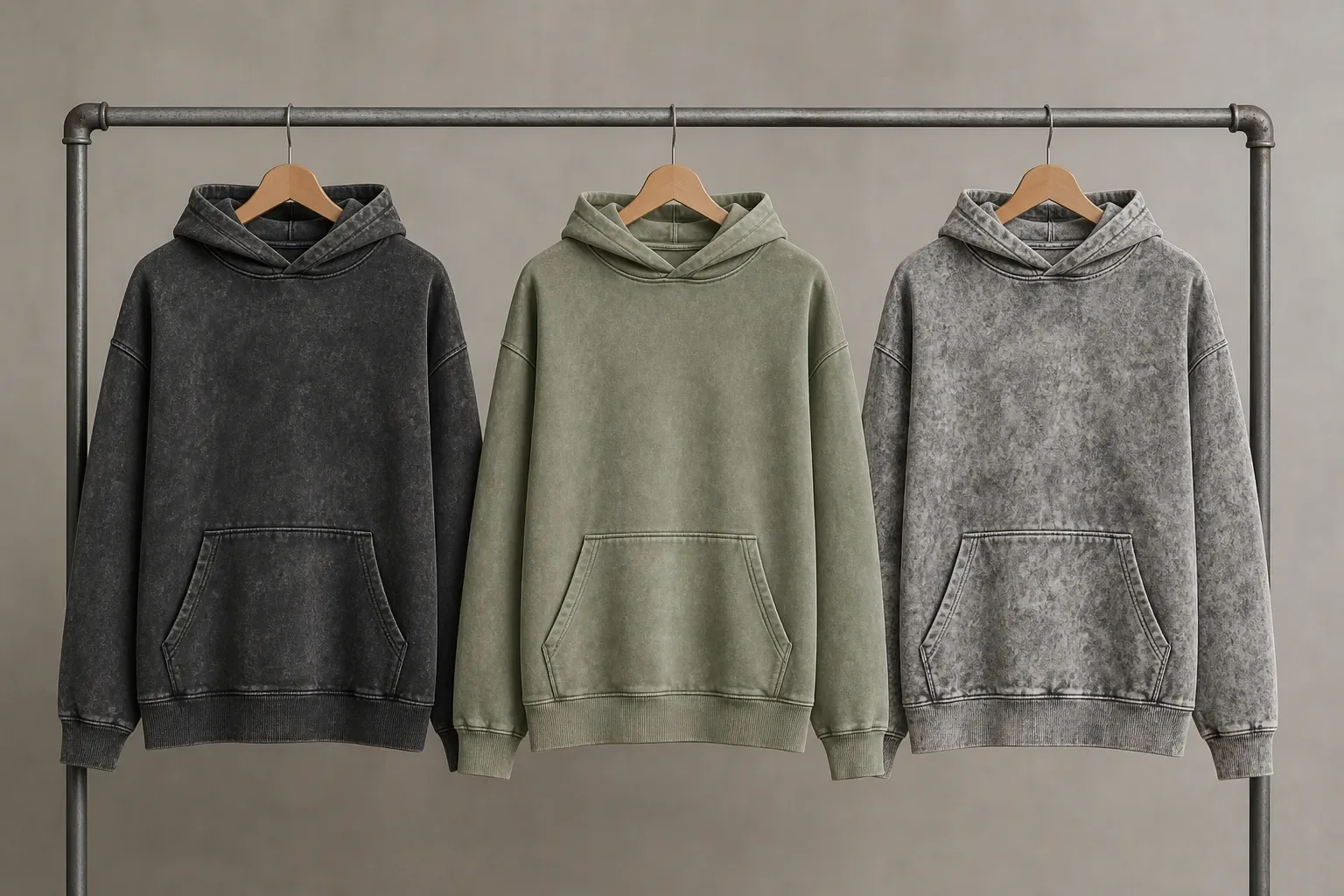
- Washes age the whole garment at once — stone, acid, enzyme and vintage washes fade color and soften hand-feel across every surface.
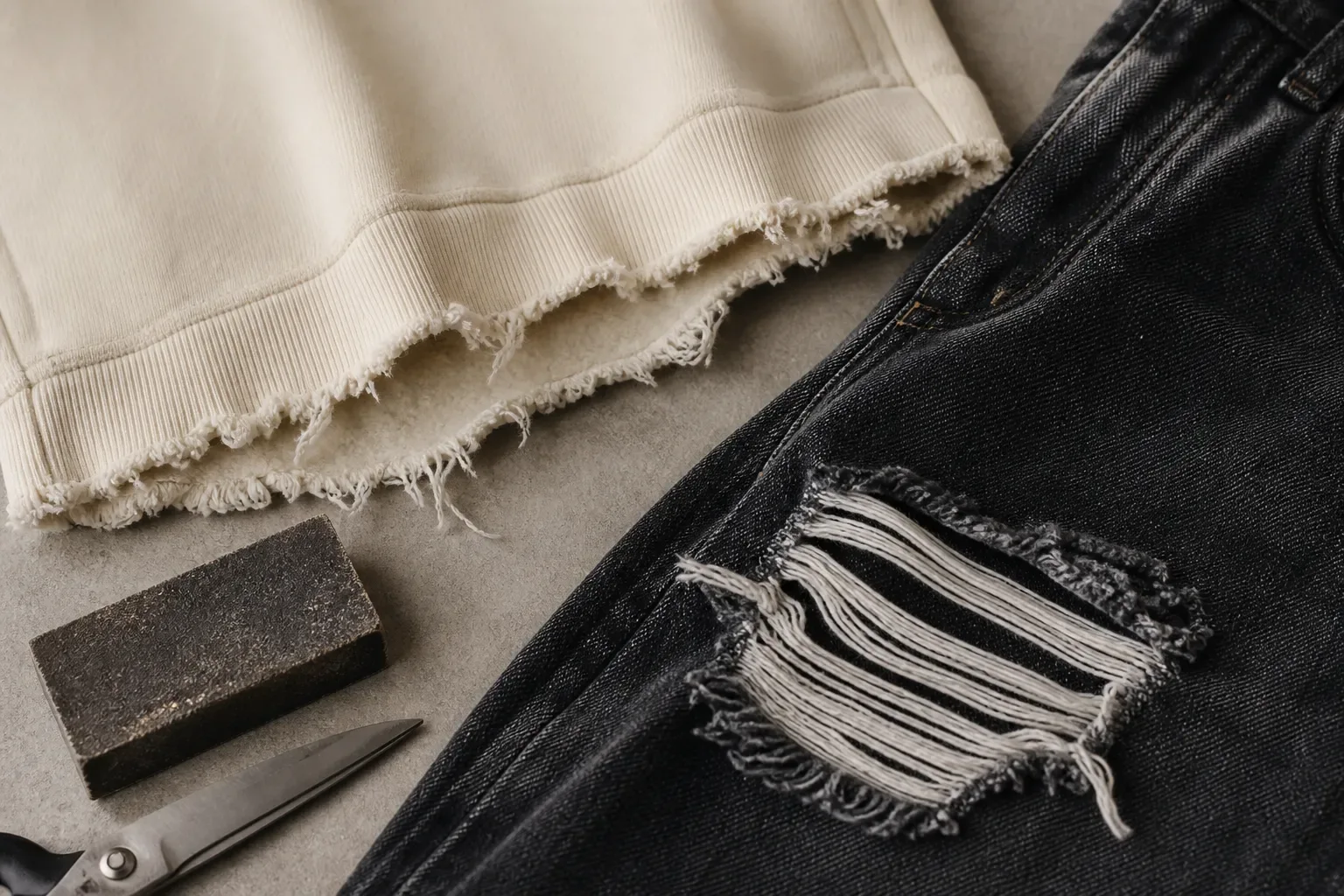
- Distressing is localized, mostly manual damage — the rips, frayed hems, sanded edges and visible repairs covered in our distressed details guide.
- Wear simulation fakes the specific marks a body leaves — whiskering at the lap, fade lines behind the knees, softened collar tips.
"Distressed" and "ripped" get used interchangeably, but ripped is the subset, not the synonym: a garment can be heavily distressed — faded, whiskered, frayed — without a single hole in it. What unites all of it is the intent. Distressing is the manufacture of time. A garment normally earns this surface over years of wear; a factory delivers it in one production run.
Nobody planned this look
Worn-out clothing wasn't invented by fashion — it was inherited from work. Fading, fraying and patched knees were originally evidence: this person labors in these clothes. The look carried meaning long before anyone tried to sell it.
Fashion's first move was protest. In the 1970s, punk took scissors to garments on purpose — deliberate destruction as a refusal of polish, made to offend the well-dressed. Grunge in the early 1990s mainstreamed the thrift-store version of the same statement: worn was honest, new was suspicious.
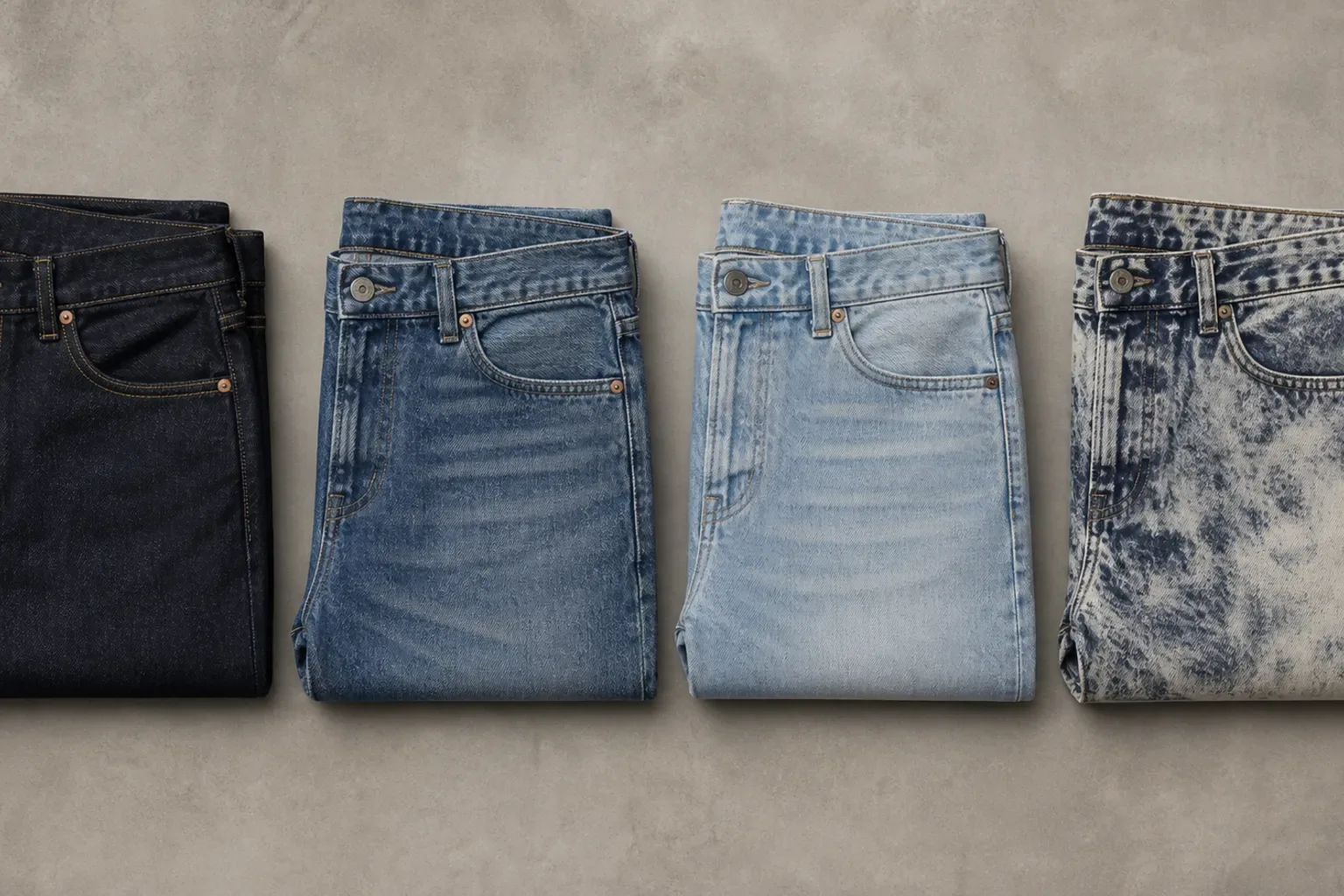
The industrial turn came between those two moments, and it came from comfort as much as style. Raw denim is genuinely stiff, and for decades the softness and fade of a broken-in jean had to be earned through wear. When mills and laundries worked out stone washing in the late 1970s and made it an industry standard through the 1980s, they were selling something concrete: the reward of two years of wearing, available at first try-on. The acid-wash craze of the 1980s pushed the same machinery toward spectacle, and premium denim in the 1990s and 2000s — led by Japanese mills obsessed with reproducing vintage garments stitch for stitch — turned aging into a craft discipline, with hand-sanding, whiskering and repair work done by specialists.
Streetwear is the current chapter, and it's the one we live in daily: heavyweight fleece and jersey adopting denim's entire vocabulary. An acid-wash hoodie is a jeans idea translated into 500 gsm cotton — and roughly half the distressing demand we see now is for knits, not denim.
Why old reads better than new
Strip away the trend cycles and the psychology underneath is consistent.
Patina is time made visible. A worn garment carries evidence of a life — the fade says this has been somewhere. New clothes have no story yet, and to many eyes that blankness reads as cheapness rather than freshness. This is why people ask why anyone would pay for ripped jeans: they're not paying for the hole, they're paying for the years the hole implies.
Broken-in is a comfort signal you can feel. This part isn't psychology at all. Abrasion physically softens fabric — a stone-washed fleece is measurably softer-handed than the same fleece unwashed, because the stones break surface fibers. The worn look and the worn feel arrive together, and shoppers deciding in seconds at a rack respond to both.
Imperfection reads as individuality. A pristine garment is identical to ten thousand siblings. A washed one isn't — stone contact is random, acid-wash marbling never repeats, and hand-distressing carries human variance from piece to piece. Every unit is slightly one of a kind, and that has become a selling point brands print on the product page.
And underneath it all, the borrowed meaning is still there. Distressed clothing still quotes labor, rebellion and disregard for polish — even when it's worn to an office. That inherited meaning is why the look has survived five decades of trend cycles while resurfacing in a new fabric each time.
Why brands pay to damage garments
For the label commissioning the work, the reasons are less romantic and more structural.
The first touch is the sale. Retail and e-commerce decisions happen fast, and a washed garment feels already loved at first contact — soft, drapey, pre-shrunk, no break-in period to promise. An unwashed blank asks the customer to imagine its future; a washed one delivers it.
Finish is differentiation. Blanks from any two factories look broadly alike; a wash recipe doesn't. The specific depth of a fade, the contrast of a marble, a signature placement of damage — these become recognizable brand signatures precisely because they're hard to copy by eye. The finish, not the silhouette, is often what makes a piece identifiably yours.
Perceived value supports the price. Every wash cycle and every distress point is added labor, and customers can see and feel the result even when they can't name it. The same hoodie photographs with more depth washed than flat — texture gives the product page something to show.
It also ages gracefully. A pre-faded garment has nowhere embarrassing to go: future wear blends into the manufactured wear instead of ruining a pristine surface. Distressed pieces are, in a real sense, pre-forgiven.
None of this is free, and the cost structure is honest about why: washing is a batch process and distressing is priced point by point, which is one reason two factories can quote the same design differently.
The honest tensions
Distressing has critics, and a factory that runs these processes daily owes the debate a straight answer.
Damage is damage. A rip is a structural weak point however fashionable it is, which is why production distressing stabilizes what it destroys — bar tacks, interior backing and wash-setting keep controlled damage from becoming uncontrolled. A well-made distressed garment is engineered to stay at the level of wear it shipped with; a badly made one keeps going. The difference is entirely in the make.
Manufactured age costs real resources. It takes water, energy and labor to make a new garment look old, and the industry knows it — it's why enzyme washes that do more with less, and laser and ozone finishing that replace some wet processes and manual sanding, have spread through garment finishing. The direction of travel is the same effect for less input, and buyers increasingly ask for exactly that.
And some people simply find it dishonest — paying a premium for wear you didn't earn, borrowing the costume of labor. It's the oldest criticism of the look, and the debate itself is worth noticing: nobody argues about finishes that mean nothing. Our own view from the floor is practical: a distressed garment isn't pretending to be vintage any more than a garment-dyed tee is pretending to be sun-faded. It's a finish — chosen, like any finish, for how it looks and feels. The meaning people read into it is exactly why it sells.
Making things look accidental is precision work
Here's the irony that organizes our whole wash floor: the worn look may read as careless, but it's the most deliberate work in the building. Every "random" rip on a production run sits on a damage map locked at sampling. Wash recipes specify stone load, cycle time and chemistry, because what happens in the drum has to happen the same way next month. The chemistry of why any of it works — surface dye, pale core — decides which fabrics take the effect at all. And the whole system exists so that piece #47 of your run matches the sample you approved, while still carrying the natural variation that makes the finish worth buying.
That's the real answer to why old: not nostalgia, but the fact that time is now a manufacturable surface — and manufacturing it well is a craft with its own specs, tolerances and failure modes.
Should your line include a washed or distressed piece?
If you're building a collection, here's how we'd frame the decision at review:
- Match the finish to the brand story. Vintage, heritage, skate and streetwear codes support distressing naturally. If your brand voice is crisp and minimal, a garment dye or clean enzyme wash delivers softness without the wear story.
- Match it to the fabric. Heavyweight fleece in the 350-500 gsm band and mid-to-heavy denim take stones and bleach beautifully; light jersey doesn't, and gets enzyme washing instead. The fabric decision and the finish decision are one decision.
- Decide your tolerance for variation first. Washed and distressed finishes vary piece to piece by nature. If your inventory must match the product photo exactly, choose an unwashed or garment-dyed program and save yourself the dispute.
- Start with one hero piece. A single washed style tests the finish, the price point and your customer's appetite before you commit a full line to it.
For planning numbers from our own catalog: a 450 g vintage stone-washed zip-up hoodie tiers at USD 28.90-32.90 per piece, a 500 gsm vintage acid-wash zip-up at USD 25.40-32.80, and an acid-wash baggy wide-leg jean at USD 26.80-30.90. MOQ starts at 50 pieces, with the final minimum depending on the product, fabric, wash, and customization — confirmed at design review.
If you're weighing a washed or distressed direction for a specific design, send the reference to our wash team — fabric, finish and budget resolve together at design review, and quotes follow once sufficient project details are reviewed.
FAQ
What does distressed mean in clothing? Distressed clothing is any garment deliberately treated to look aged or worn before sale — through washes that fade and soften the whole piece, localized damage like rips, fraying and sanding, or simulated wear marks such as whiskering. "Ripped" is one type of distressing; faded and frayed garments are distressed too.
Why do people wear ripped jeans? Partly comfort — washed, broken-in denim is physically softer — and partly meaning. Worn clothing implies a history: labor, rebellion, a life lived in the garment. Pre-distressed jeans deliver that story, and the individuality of never-identical damage, without the years of wear it would otherwise take.
Is distressed clothing lower quality? Not when it's made properly. Production distressing stabilizes every damage point — bar tacks, backing and wash-setting keep rips from spreading — so the garment holds the level of wear it shipped with. Quality shows in whether the damage stays controlled, not in whether damage exists.
Why does distressed clothing cost more if it's damaged? Because the damage is added labor, not absent labor. Every wash cycle is a batch process and every rip, fray and sanded patch is a manual operation executed to a placement map, piece after piece. You're paying for the extra work of aging a garment, on top of making it.