Types of T-Shirts: A Factory Guide by Neckline, Sleeve, Cut and Weight
A practical map of common t-shirt necklines, sleeves, cuts and fabric directions — and the extra specifications a factory still needs before quoting or sampling.
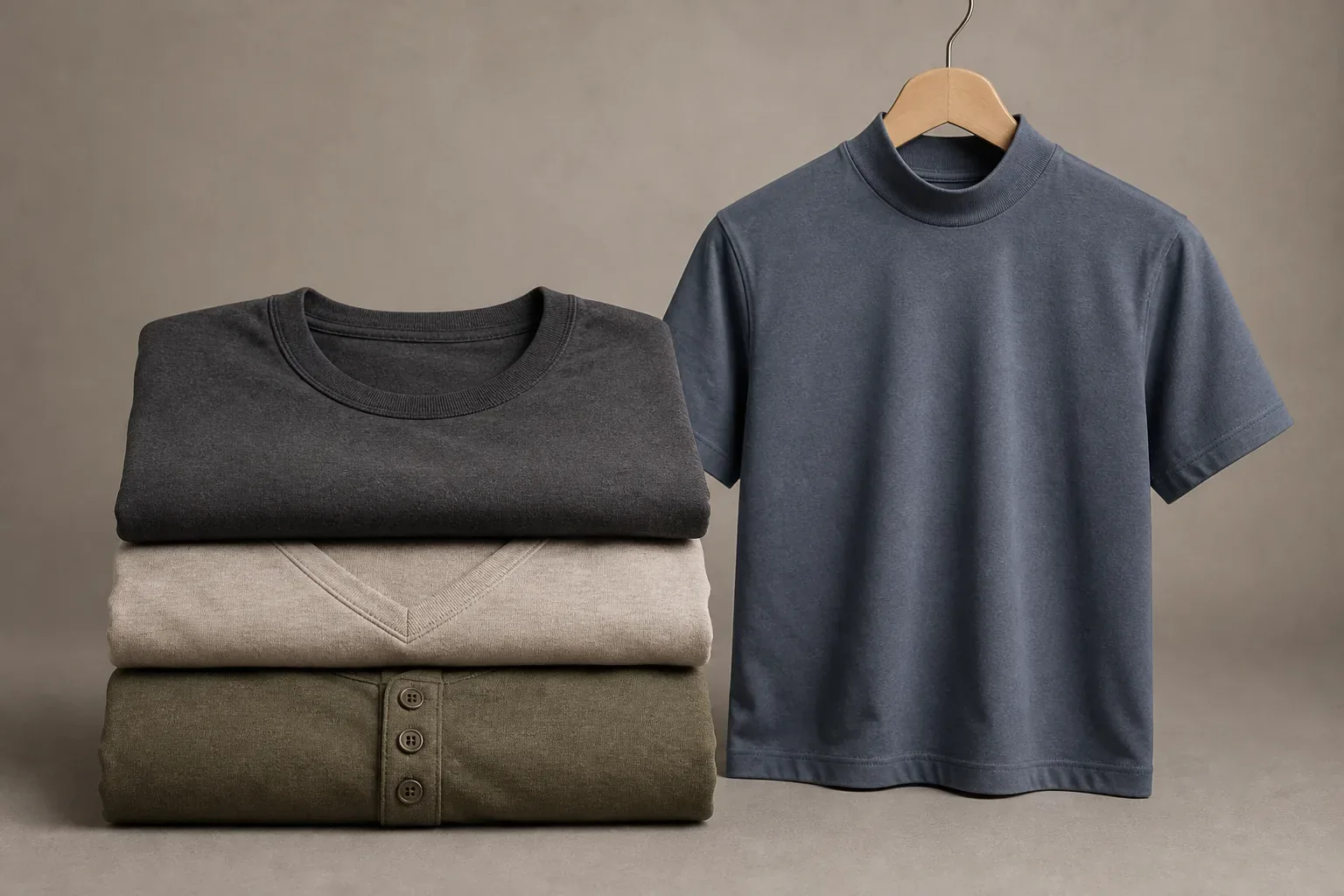
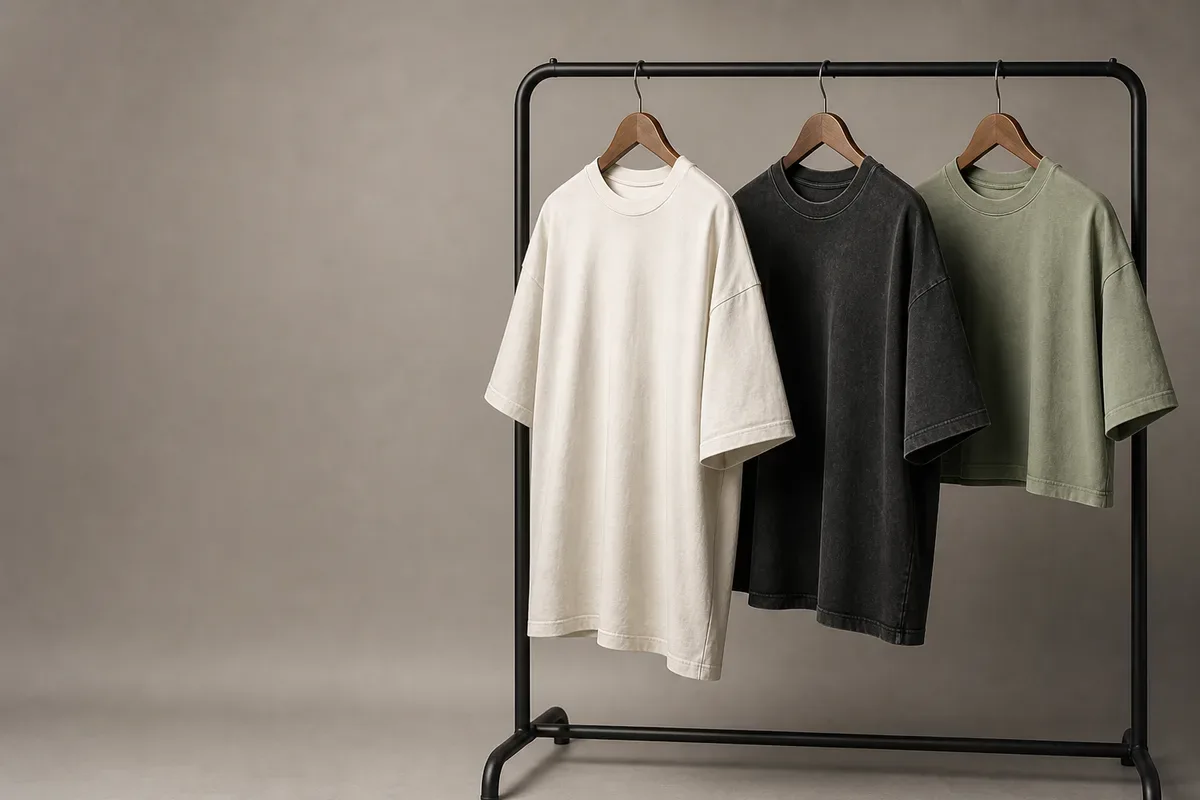
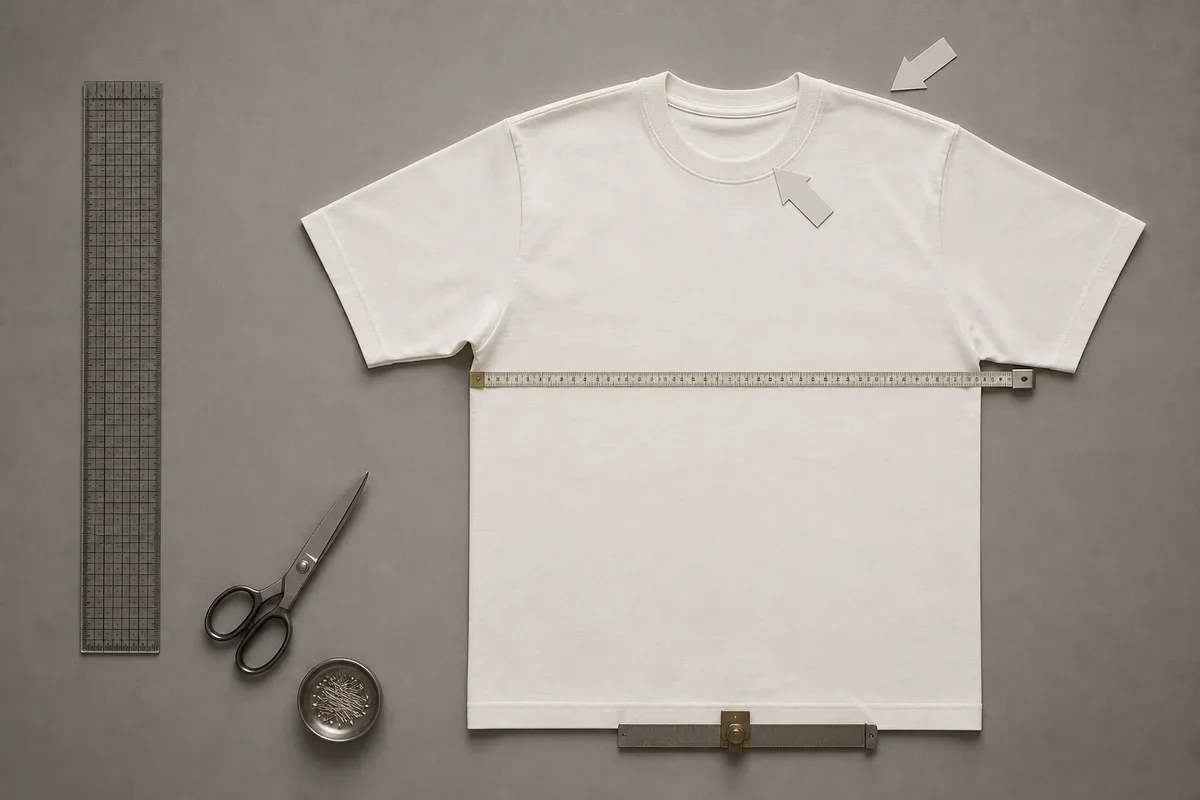
T-shirt names often combine several decisions rather than belonging to one flat list. Four useful axes are neckline, sleeve construction, cut and fabric direction. Common examples include crew, V-neck, henley and mock neck openings; set-in and raglan sleeves; regular, boxy, oversized, longline and cropped cuts; and jersey fabrics that vary in construction, fiber, yarn, mass and finish. These examples are not an exhaustive taxonomy, and a label such as “heavyweight boxy crew with short set-in sleeves” is still only a design direction. A quote-ready brief also needs measurements, an identified fabric, colors, artwork, quantities and approval evidence. The measurement side lives in our t-shirt fits and construction guide.
| Axis | The options | What it decides |
|---|---|---|
| Neckline | crew, V-neck, henley, mock neck and other openings | neck pattern, collar/binding/placket construction, available artwork area |
| Sleeve | short or long set-in, raglan, ringer direction, sleeveless and other builds | armhole and sleeve pattern, seam route, cuffs and trim |
| Cut | regular, boxy, oversized, longline, cropped and project-defined variants | silhouette and measurements; not a universal numeric standard |
| Fabric | jersey, interlock, knitted pique and other approved articles | construction, fiber, yarn, mass, finish and garment behavior to verify |
Necklines: crew, V-neck, henley, mock neck
Neckline names are a useful way to organize tees, but changing the opening can affect more than trim. The front pattern, neck shape, binding or rib, placket, reinforcement and artwork clearance may all change. Treat each construction as its own approved pattern and sample rather than assuming the rest of the body stays identical.
Crew neck. The round neckline finished with a ribbed collar — the default t-shirt. The factory note is that “crew” alone is not yet a spec: rib width and tension are separate choices, and they set the character of the whole garment. Wide, firm ribbing pushes the whole tee toward a vintage, heavyweight character, while narrow soft ribbing sits at the retail-basic end. The same name covers both, which is why our sample reviews start at the collar.
V-neck. The opening meets at a center-front point and may use mitered rib or another specified finish. Depth, point geometry, attachment route and target appearance belong in the pattern and sample. If the point drifts or puckers, hold the garment and assess whether controlled rework is feasible; do not publish “rework” or “recut” as a universal disposition without examining the construction and damage.
Henley. A collarless opening with a buttoned placket. The project must define the placket pattern and construction, opening length, button count and spacing, reinforcement, buttonholes and buttons. Those additions change the operation and material scope from a crew neck, but the cost and labor effect remain project-specific.
Mock neck. A short standing collar: the same rib-trim logic as the crew, cut taller and tensioned to stand rather than lie flat, with none of the fold of a true turtleneck. Collar height is the spec line to state, and a mock neck pushes chest artwork lower, which matters once decoration enters the plan.
Scoop and boat necks are further examples of openings that may use binding, rib, facing or another approved finish. They reinforce why this list is illustrative rather than exhaustive.
Sleeves: set-in, long, raglan, ringer
Short set-in sleeve. A sleeve sewn into a shaped armhole, with the seam running around the armhole. It is a common reference build, but the sleeve and armhole shapes still need named measurements and an approved pattern.
Long sleeve. Extends the sleeve toward the wrist and requires the brief to define length, opening, taper and finish, such as a plain hem or ribbed cuff. Artwork on the sleeve needs its own placement map and trial on the selected construction.
Raglan. The sleeve extends toward the neckline and replaces the conventional shoulder seam with a diagonal seam route. Baseball tees are one familiar application, sometimes with contrast or three-quarter sleeves. A raglan needs its own pattern and fit assessment; if body and sleeve use different colors or materials, identify and coordinate each approved article and lot scope.
Ringer. Often describes a tee with contrast trim at the neckline and sleeve openings. Do not assume the base pattern stays unchanged: band width, seam allowance, opening dimensions, stretch/recovery and attachment method may require pattern or sample adjustments.
Sleeveless, briefly. Remove the sleeve and the armhole becomes a finished edge — bound or ribbed, on a pattern drafted deeper for it. Muscle tees and tanks branch into their own category from there; we note them for completeness and leave them to their own pages.
Cuts: regular, boxy, oversized, longline, cropped
Cut names are the loosest words in tee briefs, so here is the map in one pass.
Regular. Shoulder seams at the natural shoulder with moderate ease: the reference the others depart from.
Boxy. Widens the chest against a shorter body into a deliberate square. Fabric construction, mass and finish affect how that geometry appears on the body, so the selected jersey and pattern must be assessed together in a garment sample rather than inferred from a weight label alone.
Oversized. Scales chest, length, and armholes up as one dedicated pattern (simply sizing up a regular tee produces a different, baggier garment). It is enough of a category to run as its own program on our oversized tee manufacturer page.
Longline. Extends the hem well past the hip, often finished with a curved hem or short side vents.
Cropped. Stops the hem at or above the waistband, usually over a boxy chest.
Where the centimeters land for each of these — and what drop shoulders, ribbing, and hems do underneath them — is the territory of the fits and construction guide linked above; this page only fixes the names.
Fabric: the types you feel before you see them
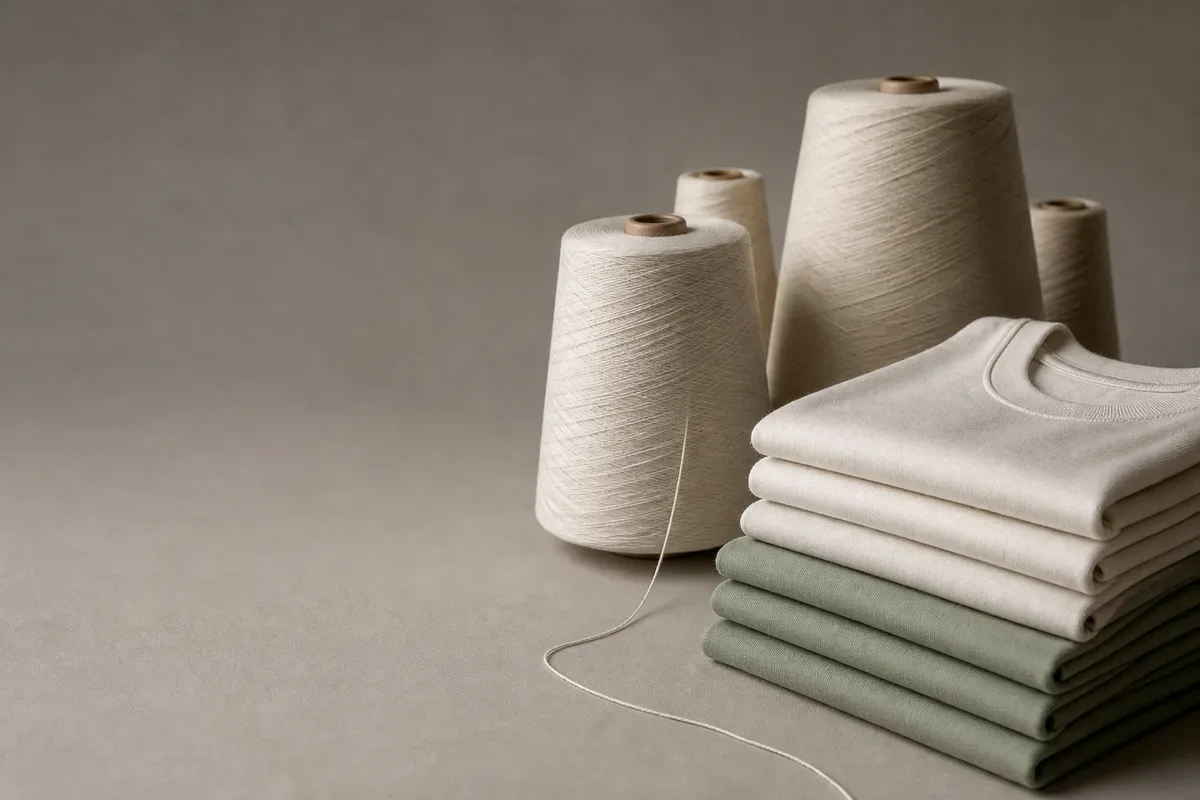
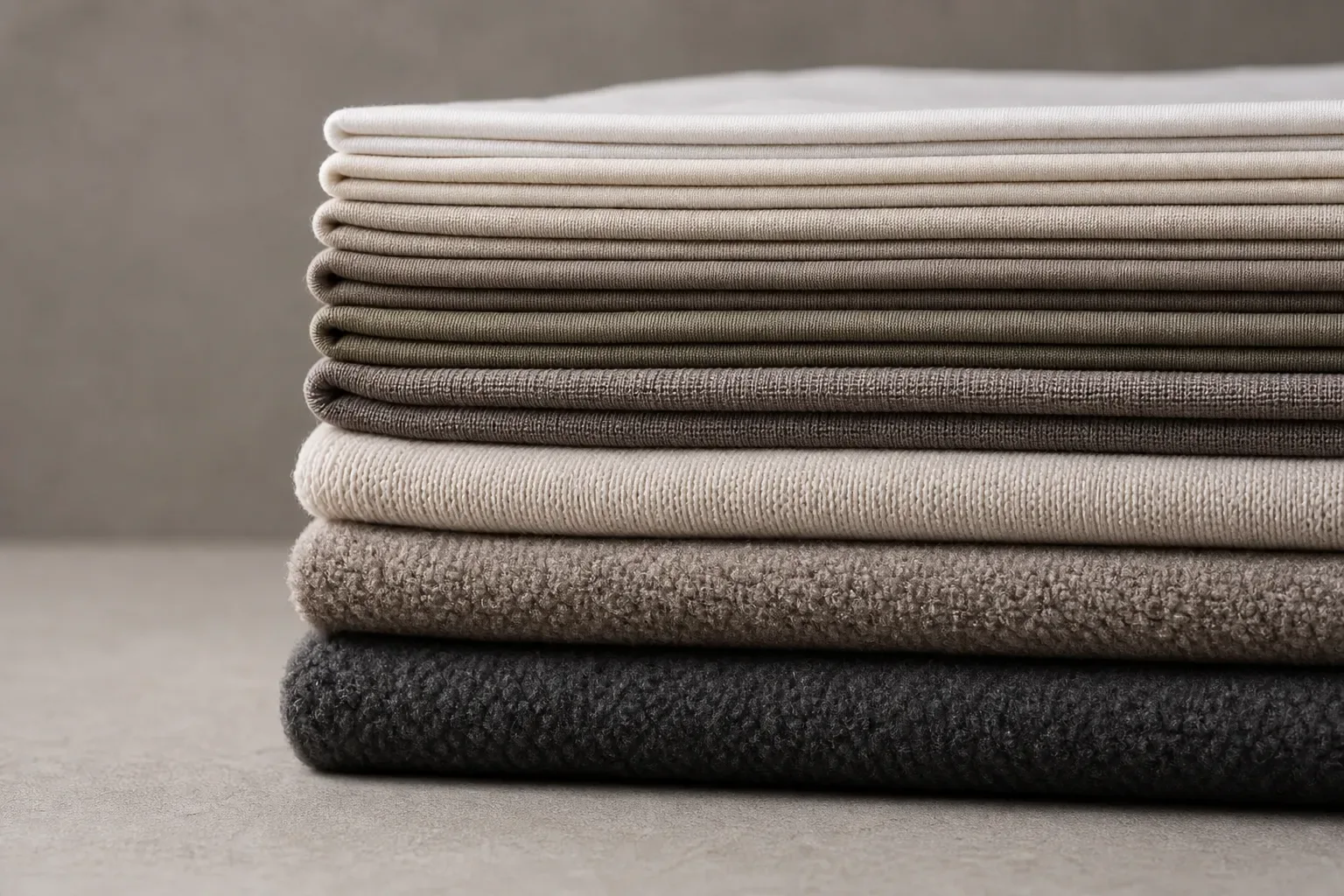
Two tees cut from the same pattern can still be different products, because fabric is a type axis of its own. Weight is one visible input, but GSM does not by itself predict drape, stability or silhouette; the streetwear GSM guide shows how to compare identified fabrics and finished garments. Yarn preparation and spinning route form another axis. Ring-spun, rotor/open-end, carded and combed labels describe different decisions rather than universal printability, hand or quality grades; the ring-spun cotton guide owns that evidence. Fiber content is another layer and must be evaluated with construction, finish and decoration trials; our cotton fiber content guide covers that handoff. A useful brief records each layer instead of using “premium tee” as its specification.
Which types carry graphics, and which carry embroidery
A flat, wide front on a boxy or oversized crew may offer useful placement area for large graphics, but cut, jersey construction, finish and artwork process still need to be trialed together. Do not infer wash stability or fine-line reproduction from “heavyweight” or “ring-spun” alone; approve the relevant artwork strike-off or sample and the after-care result. Screen print, digital and transfer methods have different artwork and material requirements, compared on our printing page.
Embroidery adds concentrated thread and machine interaction to a knit. Fabric construction and mass, stitch count and direction, backing, placement and hooping can all affect the result. A heavier jersey does not guarantee a clean dense placement, and a lighter jersey does not guarantee puckering; approve the decoration on the identified garment construction before bulk.
The taxonomy edits the available canvas, too. A henley placket, V-neck point or raglan seam can intersect a planned placement, while contrast sleeves and ringer trim add their own visual boundaries. These are not fixed artwork rules; mapping decoration against the actual pattern and sample reduces late redesign risk.
Naming a tee the way a factory reads it
A useful tee brief names one option per axis plus the fabric layers: “crew neck, short set-in sleeves, boxy cut, heavyweight cotton jersey” establishes a direction, then measurements, an identified fabric, colors, artwork and quantities complete the review inputs. Production starts at 50 pieces per style, with the final minimum confirmed once fabric, colors and decoration are reviewed — the full program across every type above lives on our custom t-shirt manufacturer page.
FAQ
What are the types of t-shirts?
Four useful axes for organizing common t-shirt names are neckline, sleeve construction, cut and fabric direction. They are not exhaustive and they are not a production specification. A baseball tee, for example, may signal a raglan and contrast-sleeve direction, while “heavyweight” names only one material attribute. Confirm the complete pattern, measurements, identified fabric and trim, colors, artwork and quantities for the actual style.
What are the names of different types of shirts?
“Shirt” can refer to several garment families. This page uses neckline, sleeve, cut and fabric as a practical map for common knit tees. Woven shirts — including many dress shirts, oxfords and flannels — have different collar, placket, cuff, yoke and fabric decisions; our oxford vs poplin guide is one place to start on that side.
What are the different types of tees?
Many store names can be unpacked with these axes, but some describe a decoration, pocket, use case, era or proprietary design rather than a complete garment construction. “Ringer,” “baseball,” “henley,” “boxy” and “heavyweight” each communicate only part of the brief. Translate the label into project-specific pattern, material, trim and artwork decisions before quoting or sampling.
What is a practical baseline T-shirt brief?
A short-sleeve crew can be a practical starting direction, but there is no universal best or most popular specification for every program. Name the intended use and silhouette, then define measurements, fabric construction and mass, fiber content, finish, trim, artwork, quantities and approval evidence. A streetwear brief may instead begin with a boxy or drop-shoulder direction; the same missing inputs still need to be resolved.