Corduroy Wale Count Guide for Apparel Buyers
Compare fine, standard and wide-wale corduroy, then record the actual rib count, fabric identity, direction and physical approvals your factory needs.
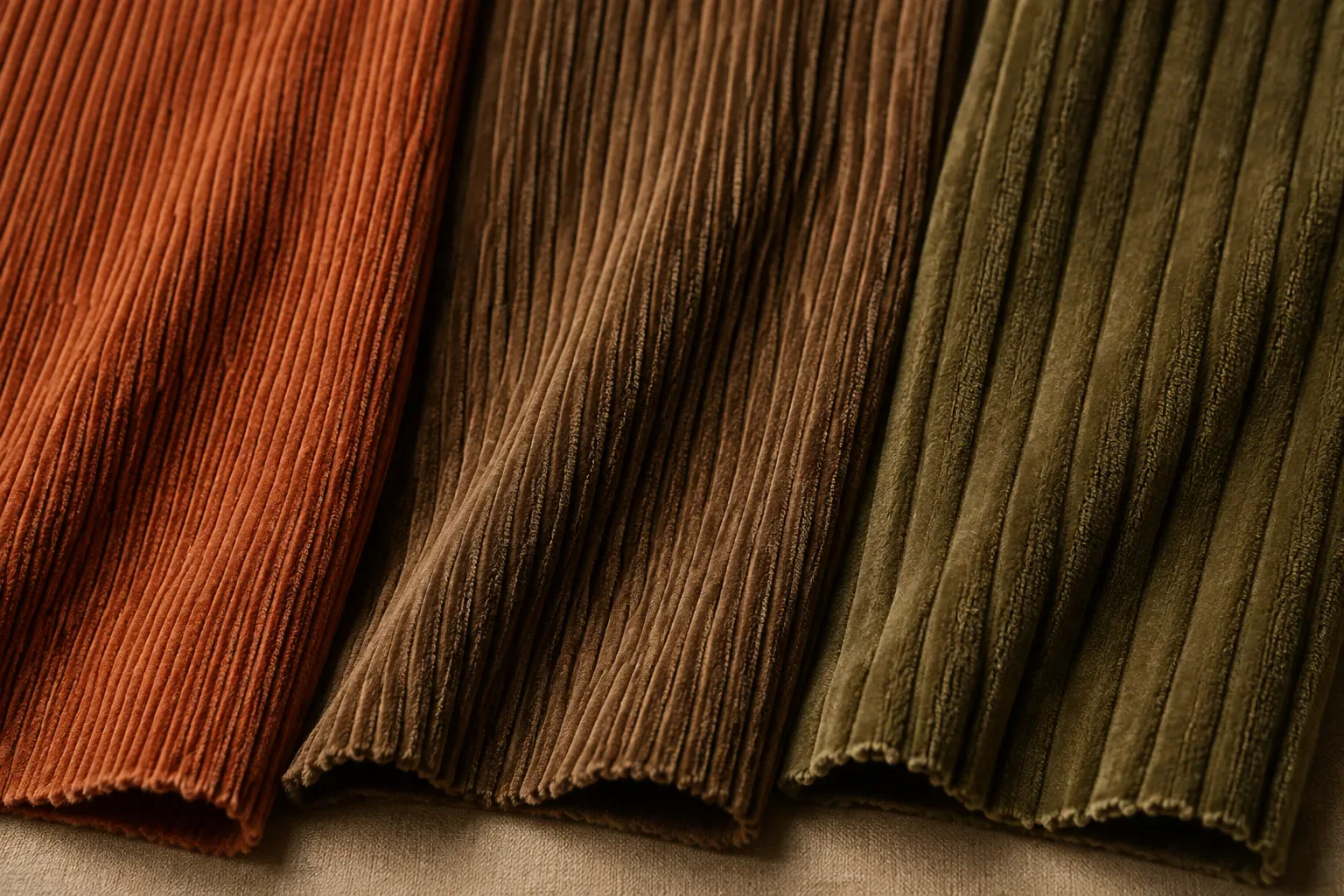
A corduroy wale is one of the visible lengthwise pile ribs, and wale count describes how many of those ribs appear within a set width—usually one inch. For a factory brief, record the actual wales per inch together with the exact fabric or sample identity. Names such as pinwale, regular wale and wide wale help describe a look, but the name alone is not a complete specification.
A higher count places more, narrower ribs in the same width. A lower count places fewer, broader ribs there. That difference changes the visual scale of a shirt, pants or jacket, but it does not tell you the fabric's weight, composition, softness, stretch or durability. Those are separate decisions.
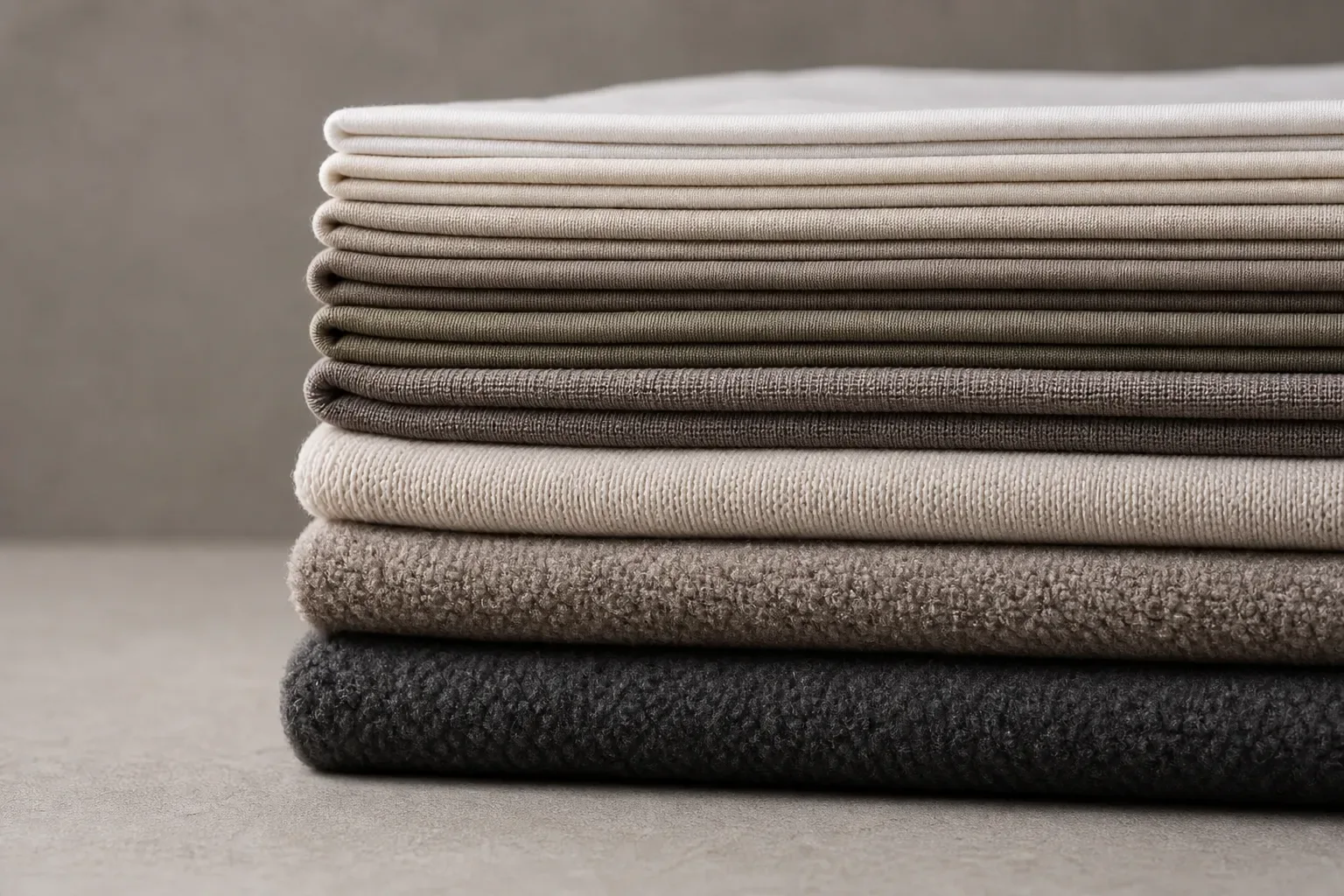
The cover is a generated editorial illustration of three corduroy rib scales. It is not a factory photograph, customer order or production result.
What a corduroy wale is and how the count is read
Corduroy is a pile fabric. Corduroy wales are its raised lengthwise rows, also called cords. CottonWorks' weaving reference describes the pile as being formed with filling yarn and gives a broad construction range of 1 to 22 wales per inch. The practical buyer-facing idea is simpler: the rows run lengthwise, while the count is taken across them within the agreed span.

For a physical review, place the agreed measuring span across the ribs and confirm the count with the supplier. Then record all of the following:
- the numeric count and unit, such as wales per inch;
- the supplier article, quality code or other fabric identifier;
- the sample, lot or roll identity when available;
- the face, rib direction and material state; and
- who counted it, where it was counted and which reference was approved.
Do not count from a compressed website image. Perspective, crop, image scaling and shadows can all make a photograph look finer or wider than the physical material. If the number in a data sheet and the approved swatch appear to disagree, hold the decision and reconcile the identified evidence rather than silently choosing one.
Pinwale, standard and wide wale: use the name, then record the number
Public references do not use one perfectly consistent naming table. Cotton Incorporated's consumer fabric page, for example, names feathercord, pinwale, regular, wide and broad bands; a CottonWorks glossary describes wide wale with a different, overlapping boundary. Both are useful vocabulary from the same publisher family, not an industry-wide acceptance standard.
That is why a buyer can keep the working label while making the numeric count and physical reference controlling:
| Working label | Visual effect to inspect | What the approval record should control |
|---|---|---|
| Pinwale / fine wale | Fine texture with less dominant rib spacing | Actual count, fabric identity, color and finish state |
| Standard / mid wale | Clearly visible ribs at a moderate visual scale | Actual count and approved rib appearance on the target garment |
| Wide wale | Bold ribs whose direction and alignment read more strongly | Actual count, intended matching decisions and approved physical sample |
The table is a selection aid, not a promise that every supplier files the same count under the same name. In an RFQ, “brown pinwale” leaves the factory to infer too much. “Supplier article [code], [count] wales per inch as declared, brown lab-dip [ID], finished state matching approved swatch [ID]” gives the project a traceable template. Replace every bracketed field with evidence for your program.
Wale count is not fabric weight, handfeel or performance
Rib count describes surface scale. It does not substitute for any of these fields:
- mass per unit area in GSM or ounces;
- declared fiber composition;
- weave and pile construction details;
- pile height, handfeel or drape;
- stretch and recovery;
- color, dye route, brushing, wash or finish; or
- abrasion, tear strength and finished-garment durability.
Two fabrics can show a similar number of wales per inch yet feel and behave differently because the yarns, ground construction, pile, mass and finish differ. Conversely, two fabrics at a similar weight can have very different rib scales. Use the streetwear GSM guide to structure the weight decision and the cotton fiber-content guide to separate declared blend information from verified composition.
The same boundary applies to performance. A wide rib is not automatically stronger, and a fine rib is not automatically lighter or less durable. When wear evidence matters, specify the end use, failure concern, method, specimens and acceptance basis. The abrasion-versus-tear guide explains why those tests answer different questions.
Match the rib scale to the garment and design area
There is no universal “best” wale count for a product category. Start with the intended visual proportion, then test the selected fabric on the garment's real panels and details.
| Application example | Questions to answer on the physical sample |
|---|---|
| Shirt or overshirt | Does the rib scale balance with the collar, placket, cuff and pocket? Which pocket or placket ribs should match, and which may contrast deliberately? |
| Pants | How visible should ribs be across the fronts, backs, waistband, fly and pocket areas? Does the reviewed garment keep the intended silhouette after the agreed wear and wash exposure? |
| Jacket | Does a bold scale compete with panels, quilting, trims or artwork? Which seams and pockets require visual continuity? |
A mood board can answer “finer” or “bolder,” but it cannot approve the material. Ask for candidate swatches whose identities and counts are known, view them at garment scale, and select one for a production-intent sample. If the design uses more than one corduroy quality—perhaps shell and collar trim—give each material its own BOM row and direction rule.
Application examples are not stock or capability claims. Availability, minimums, construction feasibility, wash route and price still need project-specific confirmation.
Plan nap direction and rib matching before cutting
Corduroy's raised pile can look different when the surface direction reverses. The 1981 South Dakota State University Extension fact sheet covers pattern layout, cutting and construction for corduroy and velveteen; its enduring decision principle is that pile direction must be planned before cutting. Modern equipment settings and tolerances still belong to the actual factory, fabric and sample route.
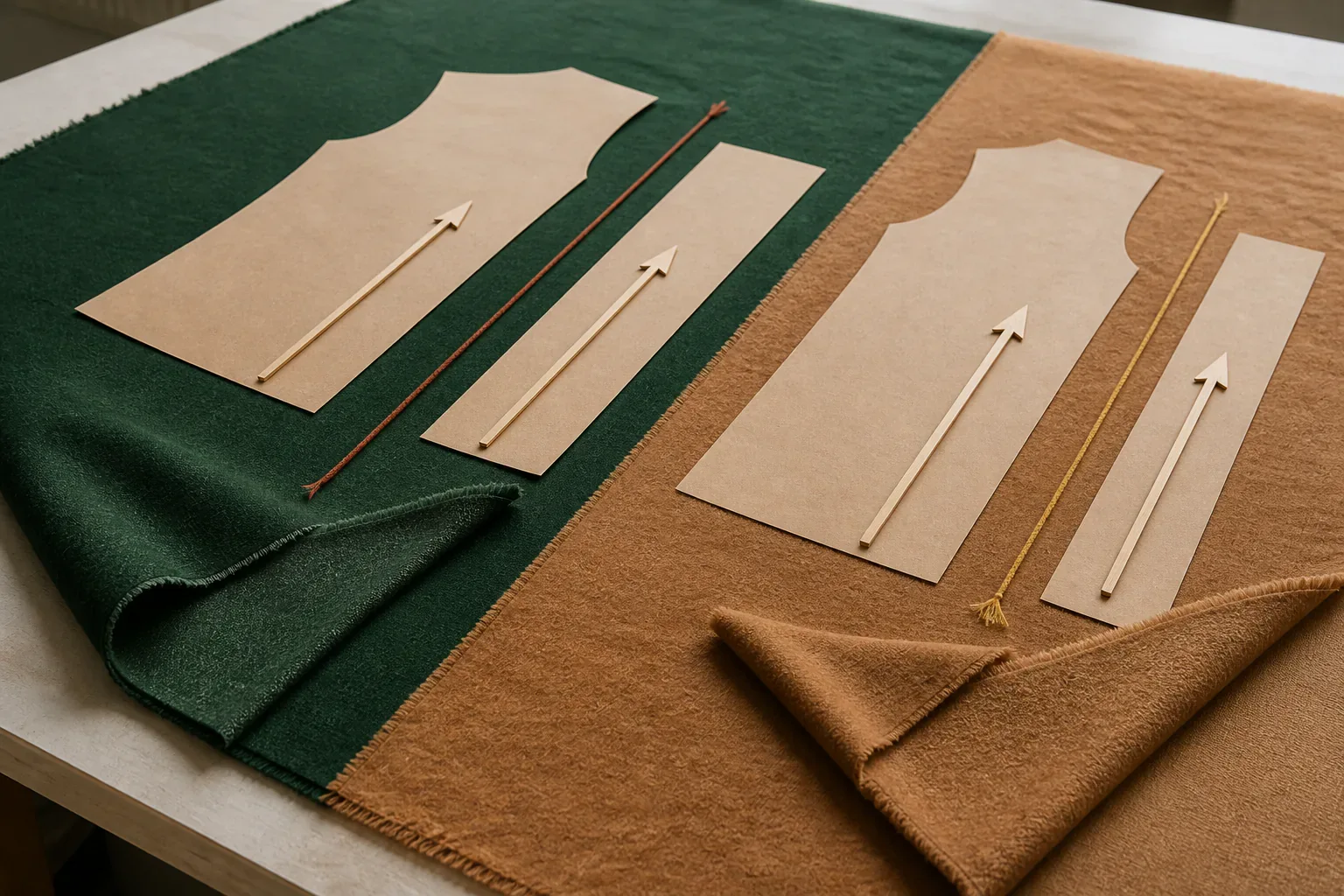
For each visible pattern piece, record the fabric face, top-to-bottom direction and whether rotation is allowed. Review fronts, backs, sleeves, collars, cuffs, pocket pieces, plackets, waistbands and facings rather than writing only “nap one way.” The fabric grain, nap and one-way cutting guide owns the complete direction map, marker constraints and pairing rules.
Rib matching is a design instruction, not an automatic rule that every rib must cross every seam uninterrupted. Matching may be important at a patch pocket, center front or paired panel, while a curved armhole or shaped collar needs a different visual decision. Mark the exact landmarks to align, approve any intentional contrast and inspect left-right balance on the garment sample.
Review seams, pockets, plackets and collars on the physical sample
The same wale count can look different after it is turned, folded, topstitched or joined. A bold rib may make a small placement difference easier to see; a fine surface can still reveal shading or direction changes. Neither observation proves that one category is inherently easier to sew.
On the sample, check:
- edge definition after collars, cuffs, waistbands or facings are turned;
- bulk and roll at seam intersections;
- topstitch appearance across high and low parts of the rib;
- pocket shape, opening, symmetry and any specified match points;
- placket alignment and closure position;
- pair balance at sleeves, legs and fronts; and
- the same details after the approved wash or finish, if one applies.
Record seam construction, stitch type, thread, reinforcement and machine settings through the normal development route. Do not reuse a fixed needle size, presser-foot pressure, stitch density or seam allowance merely because another fabric was also called corduroy.
Test embroidery, prints and patches on the actual surface
Pile and rib relief can affect artwork edges, coverage, small gaps and the way stitches or ink sit on the surface. Artwork therefore needs a material-specific sample at the intended size, placement and garment state.
Official equipment and supply guidance illustrates why the setup cannot be chosen from the word “corduroy” alone. A Brother machine manual recommends water-soluble stabilizer for corduroy in its own embroidery context. Madeira's backing guide lists fabric stability, stitch density, design size, speed and expected laundering among the selection factors and discusses topping for corduroy and other lofty surfaces. Those are useful inputs, not one universal factory recipe.
Ask the development team to record the artwork revision, digitized or print file, size, placement landmarks, fabric and sample identity, backing or topping actually trialed, process order and finish state. Compare the result for pile show-through, edge clarity, distortion, hand and underside appearance. If artwork or method changes, run the relevant sample again. The apparel artwork approval checklist provides the wider asset and sign-off record.
Put the complete corduroy specification in the RFQ and tech pack
Use a table like this for each corduroy component:
| Field | What to record |
|---|---|
| Wale | Actual count per inch, unit and working label |
| Fabric identity | Supplier article or quality code; lot or roll where available |
| Construction | Supplier's declared fabric construction description |
| Composition | Declared fiber blend and evidence source |
| Weight | Agreed GSM or ounce value, separately from wale count |
| Color | Color standard, submission reference and approved state |
| Direction | Face, nap direction, piece orientation and one-way rules |
| Finish state | Greige, finished, washed or other state relevant to comparison |
| Garment zones | Rib matching, continuity or deliberate contrast by landmark |
| Decoration | Artwork revision, size, placement and approved sample method |
| Approval reference | Swatch, garment sample and washed-sample identifiers |
Add style number, BOM revision, units, intended market, quantity by color and size, target timing, packaging and any test plan required by the product. If a field is a supplier declaration rather than independently verified, say so. The fabric swatch approval checklist shows how to preserve that evidence boundary.
Approve the swatch, physical sample and washed sample in sequence

- Identify and review the swatch. Confirm the article or quality code, actual count, face, direction, composition and weight declarations, color reference and finish state. A small swatch can control those observations; it cannot show the complete garment.
- Review a physical garment sample. Check rib scale on the silhouette, pile direction, matching landmarks, seams, pockets, collars, plackets and decoration. Tie every comment to the style, sample and tech-pack revision.
- Review the washed or finished sample when applicable. Compare the state that the buyer will actually receive. Record shade, surface, dimensions, detail appearance and artwork against the agreed evaluation route. The garment-wash defect guide helps separate a visible symptom from an unverified cause.
- Record the release basis. Identify the approved swatch and garment, list accepted deviations, close open comments and state which files and revisions control bulk. The sample approval checklist structures that decision.
- Reopen what changed. A different fabric article or lot, wale count, color, finish, construction, artwork or decoration method may invalidate only part of the approval, but it must not pass silently.
An approved development sample is a reference, not proof that every bulk unit conforms. Purchase specifications, incoming material checks, production controls and the agreed final-inspection plan remain separate.
FAQ
What does wale mean in corduroy? Wale means one raised lengthwise cord or pile rib. Wale count records how many of those ribs appear within an agreed width, commonly one inch. For sourcing, pair the number with the fabric and sample identity.
Is pinwale always the same number of wales per inch? No universal naming boundary should be assumed. Published category bands overlap, and suppliers may group counts differently. Keep “pinwale” as useful shorthand, but put the actual count and approved physical reference in the specification.
Does a higher wale count mean lighter corduroy? No. A higher count means more, narrower ribs within the measured width. Fabric mass depends on the complete construction, yarns, pile and finish, so GSM or ounce weight must be specified and reviewed separately.
Which wale count should I use for a shirt, pants or jacket? Choose the visual scale that fits the design, then sample the identified fabric on the real garment. Review how the ribs relate to panels, collars, pockets, plackets, waistbands, seams and artwork rather than applying one count to every product in a category.
What should I approve before bulk corduroy production? Approve an identified fabric and numeric wale count, direction and matching rules, color and finish state, a physical garment sample, any decoration trial, and a washed or finished sample when relevant. Record the controlling revisions and reopen the affected decision when an input changes.
Send the corduroy specification and sample reference
For a project review, share the garment type, quantity by color and size, target wale count or identified swatch, composition and weight if known, color reference, artwork, planned finish and approval deadline. Jiashun can review the combination before confirming fabric sourcing, sampling requirements, feasibility, minimums, timing and a project-specific quotation.
For a shirt or overshirt program, continue to our custom shirt manufacturer page. A photograph can communicate the direction, but an identified sample and written specification should control the production decision.
References
- CottonWorks by Cotton Incorporated, “Complex Woven Fabric Designs” — corduroy pile construction and the stated range of wales per inch; accessed September 7, 2026.
- CottonWorks by Cotton Incorporated, “Wide Wale Corduroy” — one published wide-wale definition; accessed September 7, 2026.
- Cotton Incorporated, “What Is Corduroy?” — named wale categories and garment examples; accessed September 7, 2026. This and CottonWorks are the same publisher family, not independent corroboration.
- South Dakota State University Cooperative Extension, “Sewing Corduroy and Velveteen” (1981) — historical pile-fabric pattern, layout, cutting and construction guidance; accessed September 7, 2026.
- Brother, Embroidery and Sewing Machine Operation Manual, p. 63 — model-specific corduroy stabilizer guidance; accessed September 7, 2026.
- Madeira USA, “Embroidery Backing Options Explained” — backing and topping selection factors, including guidance for corduroy surfaces; accessed September 7, 2026.