Types of Hoodies: A Factory Guide to Closures and Style Families
Choose a finished hoodie by closure, silhouette and use case: pullover, full-zip or quarter-zip, then standard, oversized, boxy cropped, heavyweight, athletic or sleeveless.
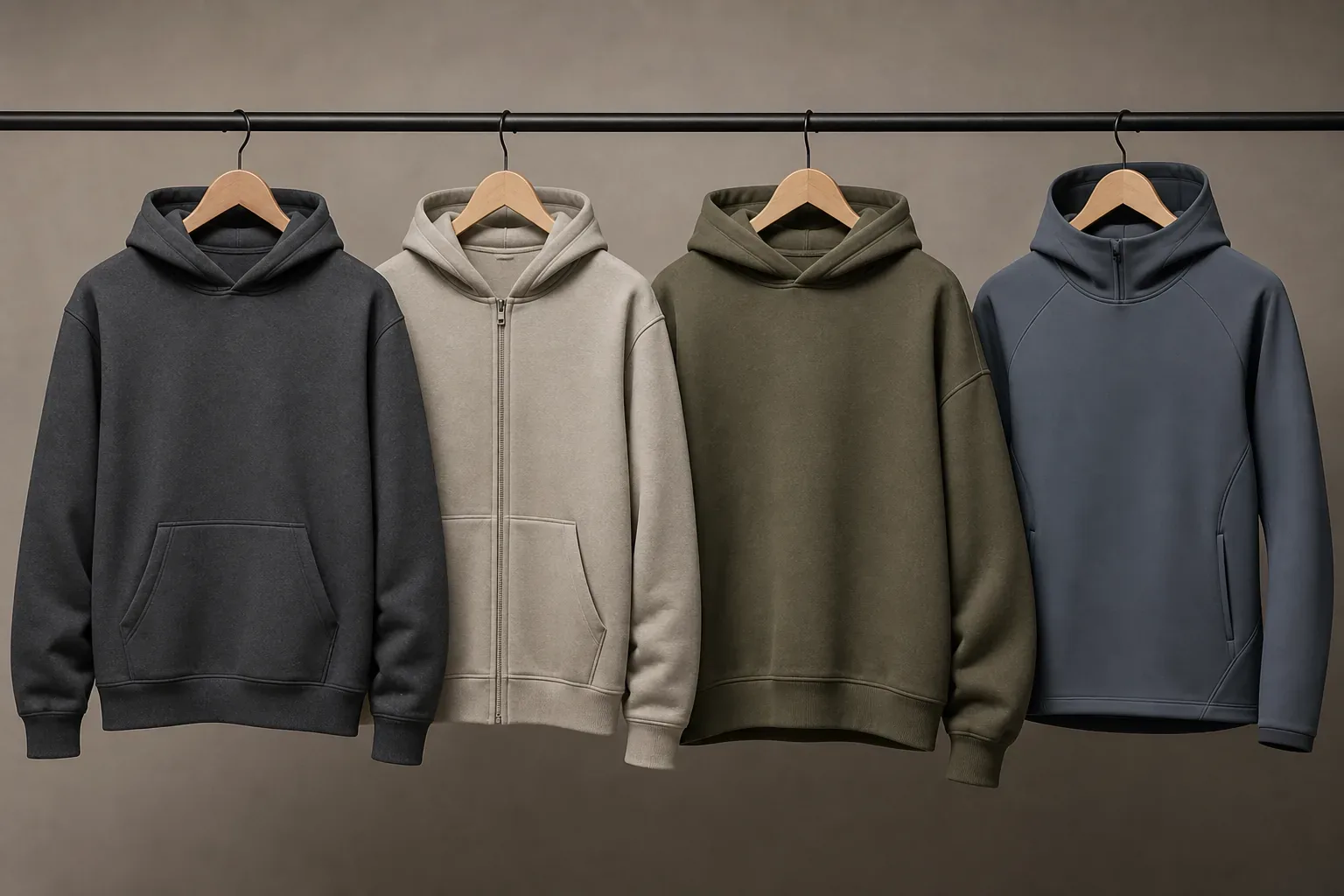
Ask a sewing floor to name the types of hoodies and the answer starts with two selection layers. The first is closure: pullover, full-zip, or quarter-zip. The second is the finished style family: standard, oversized, boxy cropped, heavyweight, athletic, or sleeveless. Name one option from each layer and the factory understands the intended product category and use case.
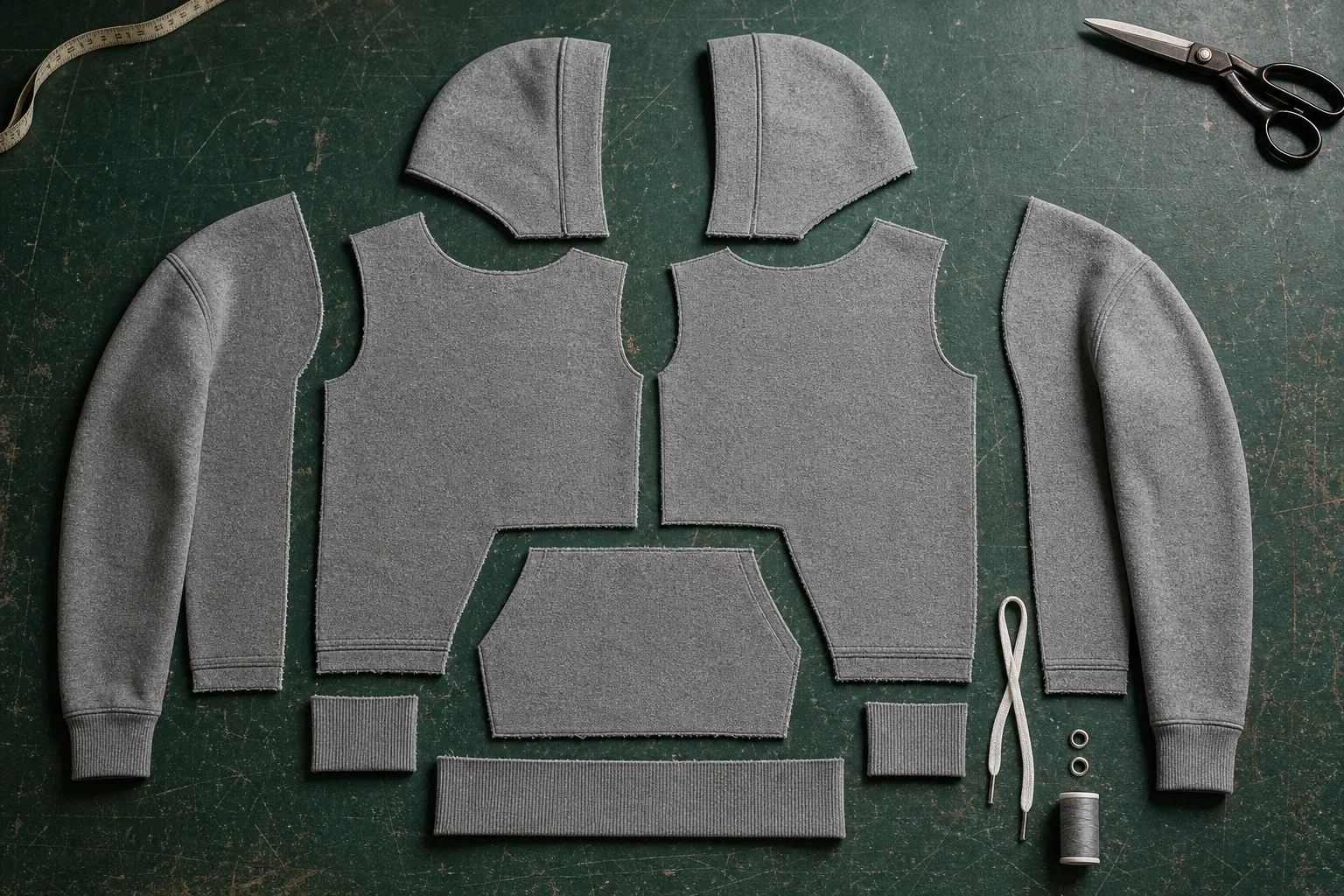
This guide stays with that finished-garment taxonomy. The measurement side of fit — what separates oversized from boxy from cropped in centimeters — is mapped in our hoodie fits and construction guide. Hood panels, openings, lining, drawcords, pockets, rib and zipper specification belong to the parts of a hoodie guide.
| Layer | Options | What it decides |
|---|---|---|
| Closure | pullover, full-zip, quarter-zip | how the garment opens and where artwork can sit |
| Style | standard, oversized, boxy cropped, heavyweight, athletic, sleeveless | silhouette, fabric direction and audience |
Pullover or zip-up: the first split
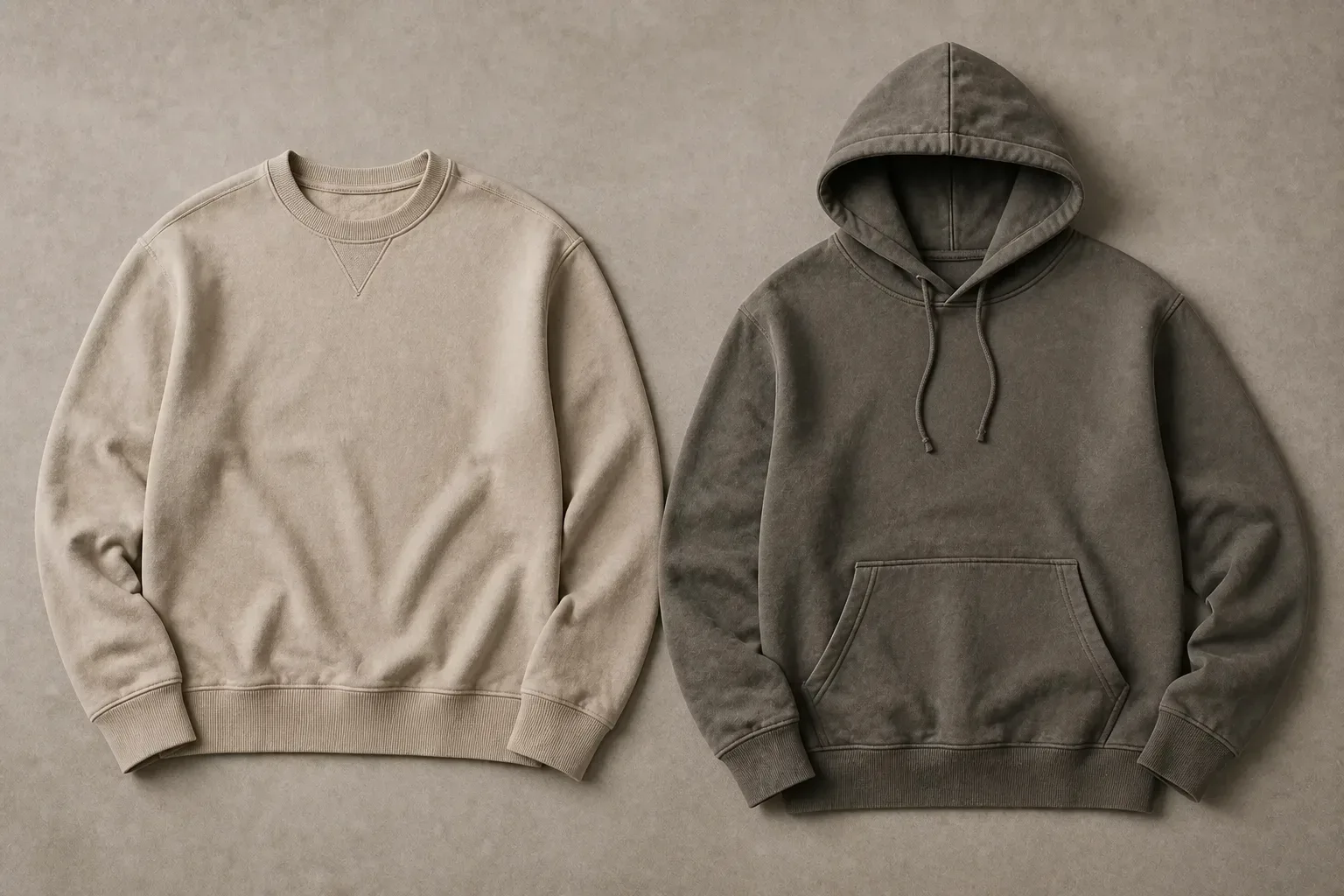
Pullover. Worn over the head, with no opening dividing the center front. It remains the category default because the uninterrupted front gives artwork a broad canvas and the silhouette reads immediately as a hoodie. Streetwear drops, merch runs and uniform programs often start here unless layering or access argues otherwise.
Full-zip. Opens from hem to neckline and works as a layer — on and off easily, worn open over a tee — which is why it skews toward daily-wear and outerwear-adjacent programs. The center opening also changes the artwork plan, so backs, sleeves and separated chest placements become more useful than one uninterrupted front graphic.
Quarter-zip. Opens at the neck but still pulls on like a pullover, leaving most of the chest canvas continuous. It is the smallest of the three closure types but a steady one for training wear, golf-adjacent brands and buyers who want zipper styling without turning the garment into a full layer.
The everyday styles: standard, oversized, boxy cropped
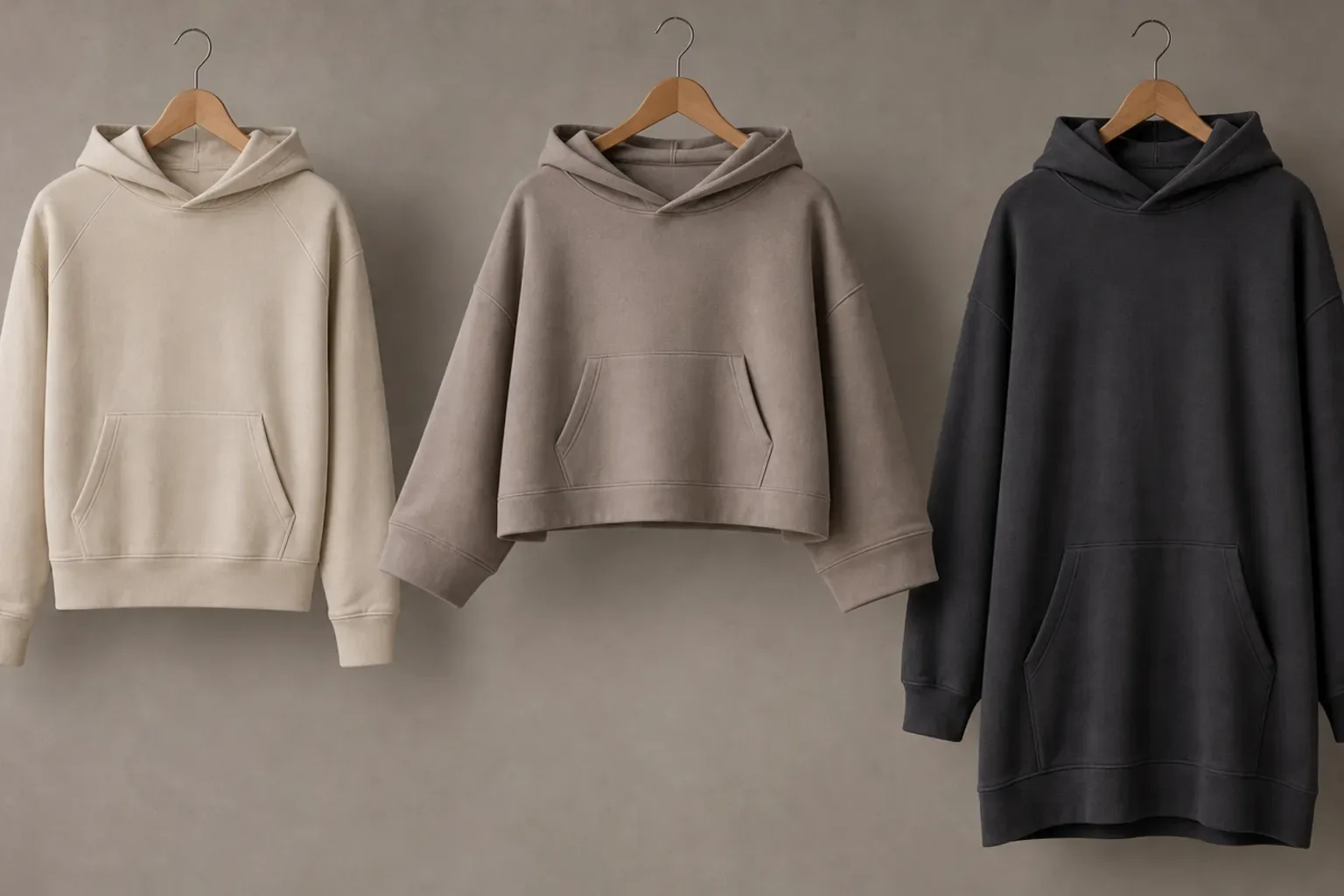
Standard (classic). Regular fit, mid-weight fleece, shoulder seams at the natural shoulder, body covering the waistband. Who wears it: everyone — this is the school hoodie, the company hoodie, the blank that the decoration industry is built on. The factory note is reassuring: the pattern is so established that sampling risk concentrates in fabric and trim choices.
Oversized. The dominant streetwear silhouette of the moment: wider, longer, intentionally draped. Who wears it: streetwear and loungewear buyers first, and by now nearly every fashion-led program. The factory note: “oversized” is the most stretched word in the briefs we receive. It names a dedicated pattern, so we treat the word as the start of a measurement conversation and settle the numbers against a reference garment.
Boxy cropped. Wide through the chest and finishing at or above the waistband — a deliberate square. Boxy and cropped are separate measurement decisions in the fits guide; briefs usually order them together, so they share an entry here. Who wears it: fashion-forward streetwear, womenswear programs, festival merch. The factory note: the hem length is the highest-stakes number on the spec sheet, and we lock it on a physical sample.
The specialist builds: heavyweight, athletic, sleeveless
Heavyweight. Defined by fabric rather than cut: dense fleece from roughly 400 gsm upward, the territory where a hoodie starts holding its own shape on a hanger (the weight bands and what they buy are mapped in our streetwear GSM guide). Who wears it: premium streetwear buyers whose garment has to read substantial in a product photo and in the hand. The factory note: everything scales with the fabric — seams bulk up, ribbing gets heavier to match the body, and the base can carry denser decoration than a light fleece ever could. Heavyweight builds are enough of a category that they run as their own program on our heavyweight hoodie manufacturer page.
Athletic (tech). Polyester or poly-blend performance knits, a trimmer cut and function-first details such as secure pockets, thumbholes and low-profile seams. Who wears it: training, running and athleisure lines. The factory note: the fiber rewrites the decoration menu, and stretch fabrics need seams specified to stretch with them.
Sleeveless. The cut-off silhouette, built that way on purpose: armholes patterned deeper and finished with binding or rib. Who wears it: gym and training brands, summer drops. The factory note: the armhole finish is the entire quality story here — a bound armhole on a purpose-drafted pattern is what separates a designed sleeveless from a cut-off one.
Specify components after choosing the type
Hood panel count, lining, opening, drawcord, pocket, rib and zipper details are component specifications. Use the parts of a hoodie guide for those decisions; keep this page for choosing the finished hoodie category and use case.
Fabric and decoration follow the type
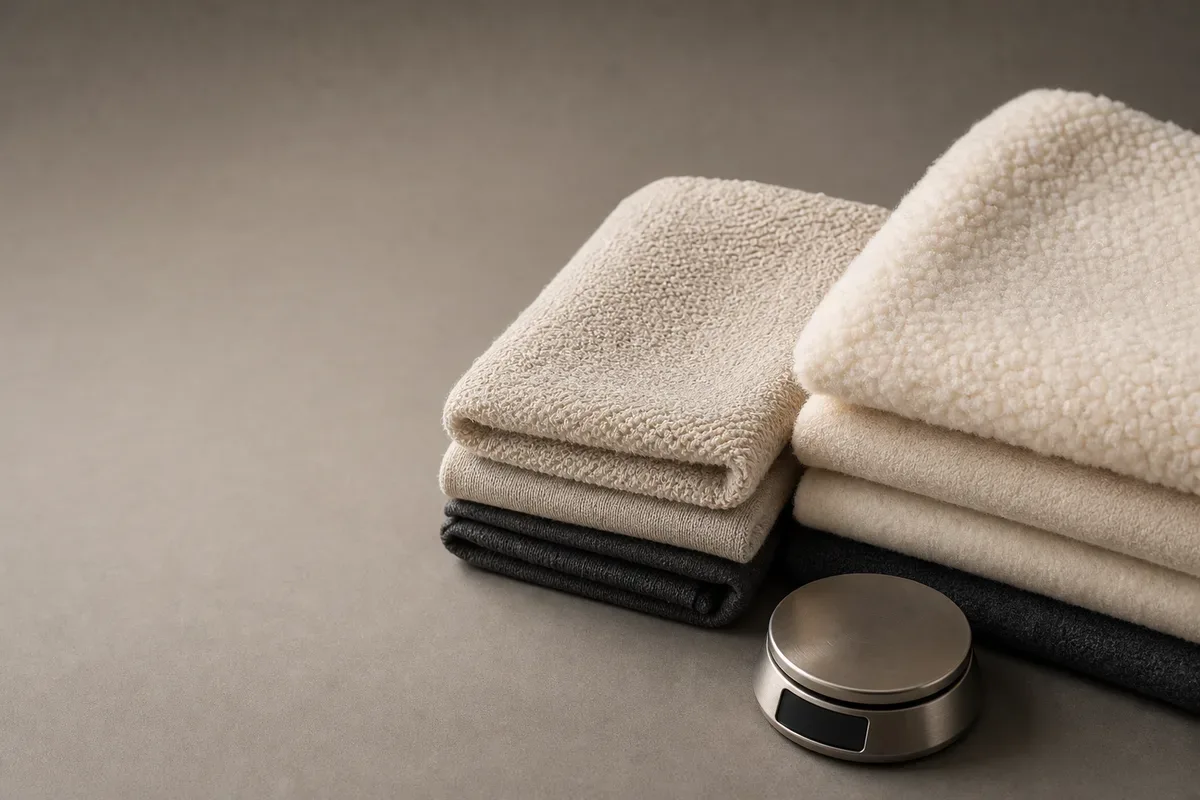
Two fabric faces carry nearly the whole taxonomy: French terry (loop-back) wears cooler and gives structure, brushed fleece gives the soft interior most people picture — the full comparison lives in what french terry fabric is and our fleece weights guide. The short version: structured styles (boxy, oversized, heavyweight) lean on dense loop-back, while comfort-first standards lean brushed.
Decoration follows the same logic. Pullovers carry big chest and back graphics. Zip-ups move artwork to backs and sleeves. Heavyweight fleece is the natural base for dimensional work: puff print reads best when the raised ink has a substantial fabric to stand on, a pairing with its own walkthrough in our puff print hoodie guide. Athletic poly leans toward heat transfer and embroidery. Choose the type first, and every decoration decision after it gets cheaper to make correctly.
Choosing a type: the honest decision walk
The best type follows the use case, and the walk is short. Merch, uniforms or a first collection: standard pullover with a decorated front. A streetwear drop where the garment itself is the product: oversized or boxy heavyweight pullover. A daily-wear layering piece: full-zip. A performance line: athletic fabric with the closure chosen for how it will be worn. A gym accessory drop: sleeveless. Pick the row that matches how the customer will actually wear it, then spend the sampling round refining fit and fabric instead of second-guessing the category. Production starts at 50 pieces per style, with the final minimum confirmed once fabric, colors and decoration are reviewed — the full program across every type above lives on our custom hoodie manufacturer page.
FAQ
What are the different types of hoodies?
Two layers cover the finished-garment taxonomy: closure (pullover, full-zip or quarter-zip) and style family (standard, oversized, boxy cropped, heavyweight, athletic or sleeveless). A useful brief selects one from each layer, then specifies fit, fabric and components separately.
Where are hoodie component choices explained?
Use the parts of a hoodie guide for hood panels, lining, openings, drawcords, pockets, rib and zipper specification. This page only chooses the finished hoodie category and use case.
What are some popular hoodie styles?
In the briefs that reach our line, oversized and heavyweight builds dominate streetwear programs, usually as pullovers; the standard pullover remains the workhorse for merch and uniforms; and athletic builds cover the training space. Boxy cropped styles keep growing in fashion-led and womenswear programs.
Which type of hoodie is best?
The right answer follows the use case rather than the abstract. For decorated merch, a standard pullover gives the biggest print canvas at the most predictable cost. For a statement streetwear piece, a heavyweight oversized or boxy build justifies its price in hand-feel and silhouette. For daily layering, a full-zip; for training, an athletic build. Decide what the wearer does in it and what the front panel needs to carry, and the type picks itself.