Panel-to-Panel Shade Variation in Garments: Evidence Before Diagnosis
A panel shade difference is an observation, not a root-cause verdict. Build a traceable garment, component, face, orientation, roll, lot and wash-state map before deciding where the evidence belongs.
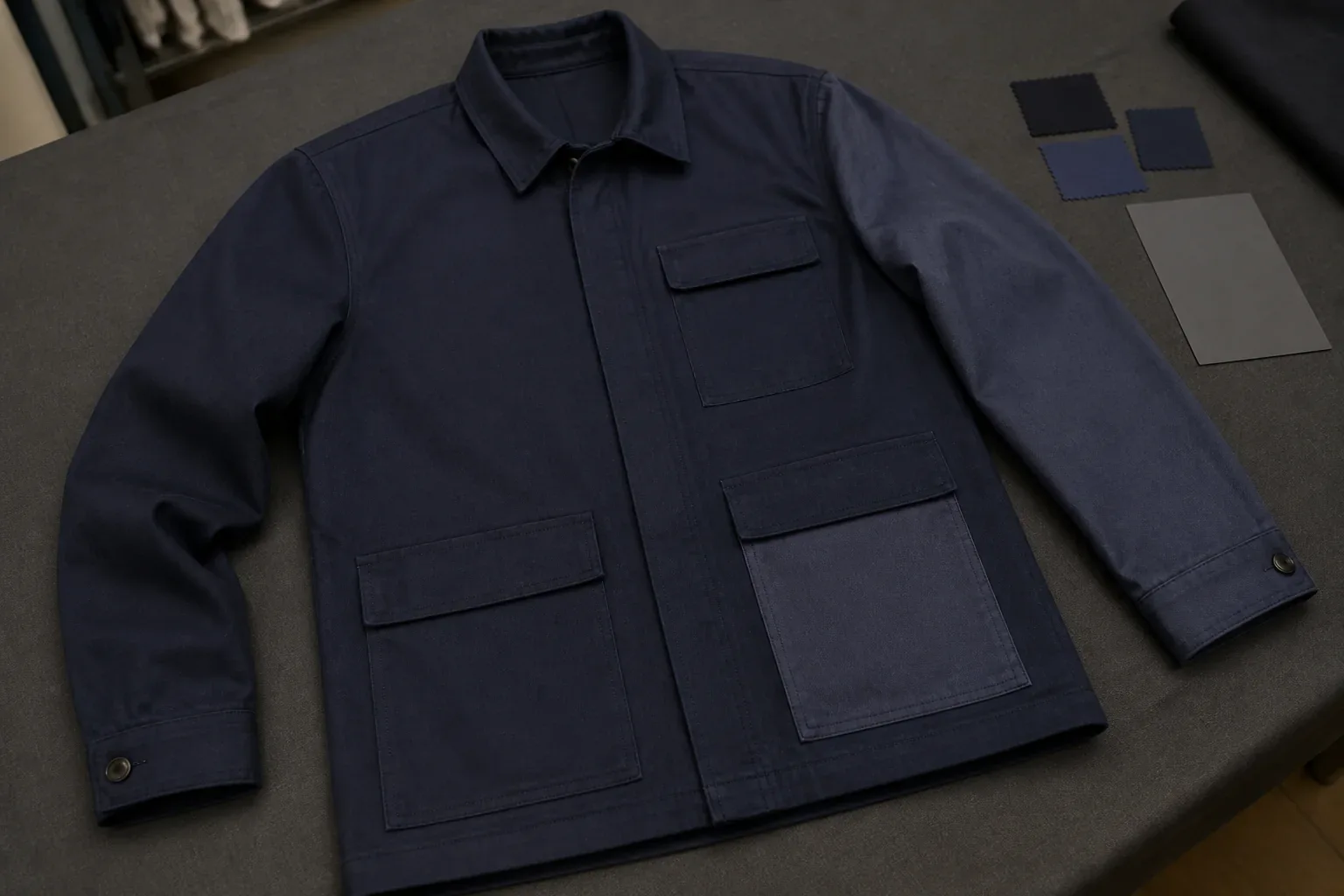
Panel-to-panel shade variation is an observed color or appearance difference between identified components of one assembled garment. A sleeve may look lighter than the body, two front panels may carry different casts, or a waistband may disagree with the legs. That finding does not by itself prove mixed fabric rolls, a cutting mistake, a dyeing fault, a wash problem or failed workmanship.
The first useful decision is therefore not “Who caused this?” It is: Where is the difference, which physical identities meet at that boundary, under what repeatable viewing condition is it visible, and at what material or wash state did it first appear? Those facts determine which specialist owner can test the next question without turning a photograph into a verdict.
This guide owns that assembled-garment evidence map and the routing decision. It does not set the target color, invent an allowable tolerance, approve a production shade range, diagnose the wash process, or accept or reject the lot.
What Panel-to-Panel Shade Variation Means
A useful observation names both sides of the comparison. “Shade is bad” hides the evidence. “Wearer-right sleeve appears darker and redder than the front body when the dry garment is viewed face-up under the recorded light” tells a reviewer where to look and what remains to be checked.
The visible boundary can occur between:
- left and right paired panels;
- body and sleeve, hood, collar, rib, pocket or waistband;
- adjacent pieces intended to use one material identity;
- intentionally different materials whose color relationship is controlled; or
- zones of one component that have different orientation, surface character or wash exposure.
Not every visible contrast is a defect. A designed contrast panel, different textile construction, pile direction, coated face, seam shadow or localized finish can create an intentional difference. The task is to compare the garment with the approved design and identify whether the observed relationship belongs to that design. Do not erase intended variation by demanding visual sameness, and do not excuse an unintended mismatch merely because the product has a washed or vintage direction.
Keep Four Different Color Decisions Separate
Several documents may sit beside the same garment, but they answer different questions:
| Decision | Canonical owner |
|---|---|
| What physical or defined reference expresses the intended color? | Color matching and physical references |
| Has a proposed dye formulation reached the intended direction on the named substrate? | Lab dip approval |
| Which observed production shade groups are accepted, restricted or held? | Garment shade-band approval |
| Where do components of one assembled garment visibly disagree, and where should that evidence go next? | This panel-variation guide |
The distinction matters in practice. Two component colors can each fall within a broad approved production range yet look wrong when placed next to each other. Conversely, two adjacent pieces can look coherent while the complete garment sits outside the target or approved shade group. Panel agreement and range approval are related controls, not substitutes.
This guide also does not approve material identity. The fabric swatch approval checklist owns the pre-cut evidence for the actual material and lot. Nor does it decide whether the wrong pattern component, side or revision was installed; that belongs to the garment panel-mismatch owner.
Map the Visible Pattern Before Naming a Cause
Start with an annotated garment map. Give the garment a durable ID, use wearer-left and wearer-right consistently, and mark every component boundary where the difference begins, ends or changes character. Capture a full front, back and inside view before close-ups so the detailed image never loses its location.
Classify the topology without turning it into a cause:
| Observed topology | Record first | Questions the map can open |
|---|---|---|
| One whole component differs from adjacent components | Component names, seams forming the boundary, material and bundle IDs | Identity, shade group, face, orientation, or a component-specific exposure |
| Paired components disagree | Wearer-left/right IDs and applicable pairing rule | Pair identity, group continuity, direction, or asymmetric process history |
| Difference follows a seam exactly | Both materials, seam allowance faces and construction order | Different inputs, surface direction, backing or local exposure |
| Difference crosses component boundaries | Location path, fold/contact geometry and before/after state | Garment-level handling, wash, drying or environmental exposure |
| Difference changes when the garment is rotated | Face, nap/pile or directional surface evidence | Viewing geometry or material orientation |
| Several garments are internally coherent but differ from one another | Garment IDs, batch/lot and retained shade-group references | Garment-to-garment range or lot-level control |
The third column is a routing list, not a diagnosis. A sleeve-sized difference does not prove the sleeve came from another roll. A fold-shaped line does not prove which production event created it. A difference visible after washing does not prove the wash created it unless the earlier state is available and comparable.
Record unavailable evidence explicitly. If bundle identity was lost or no pre-wash state exists, say so. Unknown is a valid status; an invented history is not.
Compare the Garment in a Repeatable State
Color appearance changes with illumination, specimen orientation, backing, moisture, surface direction and surrounding colors. AATCC EP9-2025 provides principles and a procedure for visually comparing textile specimens with a standard. ASTM D1729-22 covers controlled visual appraisal of colors and color differences for diffusely illuminated opaque materials. Their public scopes support a simple operational rule: record the comparison condition so another reviewer can repeat it.
For an assembled-garment screen, record:
- garment ID, colorway, size, production stage and dry or wet state;
- physical target or retained-reference ID and its revision;
- illumination or viewing-booth setting used for the decision;
- garment presentation, orientation, backing and viewing direction;
- whether face, reverse and inside views were compared;
- reviewer, location and date; and
- instrument, geometry, aperture, locations and calculation method if readings supplement the visual review.
Do not use a phone camera as a colorimeter. Exposure, white balance, compression, displays and mixed light can alter an image. Photographs can preserve location and layout, but the physical review or agreed measurement evidence carries the color decision.
ISO 105-J01:1997 describes general principles for measuring textile surface color, and ISO 105-J03:2009 describes calculating color differences for specimens of the same material measured under the same conditions. ISO 105-J03's public scope also makes the acceptance boundary explicit: the maximum result depends on the closeness required for the end use. It does not give every garment one universal pass number.
Average measurements can miss a localized panel boundary, texture or directional finish. If instruments are used, identify the comparable material zones and preserve the visual topology. Do not average body, rib, zipper tape and a washed seam into one number and call the assembled garment uniform.
Build the Identity Map
Once the visual pattern is stable, map the identities that meet at it. The purpose is to show what evidence exists, not to reconstruct missing production records by guesswork.
For each affected component, capture where available:
- Garment identity: order, style, colorway, size, garment ID and production stage.
- Component identity: controlled component name, wearer side, pattern or drawing revision and installed piece identity.
- Material identity: supplier article, construction or composition record, color, roll or lot, batch and approved material reference.
- Surface identity: intended face, nap or pile direction, one-way rule and observed orientation.
- Production continuity: bundle, cut ticket, shade group, replacement or rework history, and when identity changed hands.
- Exposure state: unwashed, sampled, washed, dried, conditioned, pressed, stored or otherwise handled under a named route.
Face and direction deserve their own row. A pile, nap, brushed surface, twill direction or directional finish can reflect light differently even when the underlying color is comparable. The fabric grain, nap and one-way cutting guide owns the rule and pre-cut direction map. This page records whether the assembled garment follows that existing rule; it does not invent a missing requirement after the garment is complete.
Route the Evidence Without Overclaiming
Use the completed topology and identity maps to choose the next owner:
| Evidence state | Route next | Boundary |
|---|---|---|
| Target color or comparison reference is missing or disputed | Color-matching owner | Define the target before judging agreement |
| Two components carry identified, different approved shade groups | Shade-band owner | Confirm group restrictions; this page keeps the assembled location map |
| Material or roll/lot identity is missing or conflicts with the approved pre-cut record | Fabric-swatch owner | Reopen material identity rather than infer it from appearance |
| Existing face, nap or one-way rule may not have been followed | Grain-and-nap owner | Verify the controlled directional requirement |
| Shape, wearer side, pair or pattern revision disagrees | Panel-mismatch owner | Treat configuration separately from color appearance |
| Matched before/after evidence first shows the difference after a garment wash or finish | Wash-defect owner | Investigate the named exposure without guessing a recipe cause |
| The question is how many units are affected or whether the lot is accepted | Garment AQL owner | One item finding does not decide a lot |
More than one route can remain open. For example, lost material identity and a post-wash appearance change are two evidence gaps, not competing stories. Assign an owner and closure criterion to each gap.
Create a Matched Evidence Packet
A compact packet is more useful than a folder of unlabeled photographs:
- Finding card: garment ID, affected components, visible description and annotated boundary map.
- Comparison card: target/reference ID, viewing condition, garment presentation and reviewer.
- Identity table: component, material, face, direction, roll/lot, bundle, shade group and revision fields.
- State timeline: the last state where the relationship was known acceptable and the first state where it was observed different.
- Matched references: an acceptable garment or unaffected paired component with comparable identities and history, when available.
- Open questions: one testable question, owner and required evidence for each proposed route.
- Disposition record: hold scope, authorized decision, rework or trial ID, and reopen trigger.
Use “matched” carefully. A different size, material lot, wash batch or sample revision may still be useful, but list the mismatch. In an authorized trial, change one controlled variable where feasible; an improved sample proves little if material, orientation, construction and wash route all changed together.
Hold, Disposition and Reopen
Hold the identified garment and any traceable affected scope while the evidence is incomplete, without automatically declaring the whole lot nonconforming. ISO 2859-1:2026 describes acceptance sampling procedures for lots under specified conditions. Its lot-level purpose is why an isolated garment map should not be promoted into a lot verdict without the applicable inspection plan.
The authorized project owner can accept, restrict, rework, replace, reject or request more evidence. Name the exact garment, group, batch or lot scope and each comment's effect on release.
Reopen the decision when the material or component identity changes, a new roll or shade group enters the order, orientation records are lost, a garment is rewashed or refinished, a replacement panel is installed, the target or viewing method changes, or a new topology appears outside the reviewed evidence.
Product Images Can Locate Panels, Not Prove Shade
Product pages can help a remote team use the same component vocabulary. A washed canvas work jacket offers body, sleeve, collar, pocket and zipper-adjacent locations. Stone-washed denim pants add left/right legs, waistband, pockets and seam intersections. An acid-wash zip hoodie adds hood, front bodies, sleeves, rib and zipper tape.
Those pages are location references only. A product title or image does not prove fiber composition, material lot, approved shade group, wash history, viewing tolerance, test result or defect status for another order.
Buyer Checklist for a Panel-Shade Review
- Identify the garment, wearer sides, components and exact visible boundary.
- Capture full front, back and inside context before close-ups.
- State the dry/wet, washed/unwashed and conditioning or handling state.
- Name the target or retained physical reference and revision.
- Record the illumination, presentation, backing and orientation.
- Map component, material, face, direction, roll/lot, bundle and shade-group identities.
- Separate known facts, unavailable records and hypotheses.
- Route target, shade group, material, direction, configuration, wash and lot questions to their owners.
- Hold only the traceable scope supported by the current evidence.
- Record disposition authority, required retest and reopen triggers.
For a custom cut-and-sew or garment-wash project, send Jiashun the identified garment, tech pack, material records, intended appearance and available state history. We can review how the evidence fits the product-development route; the project specification, approval authority and agreed inspection plan still control acceptance.
Frequently Asked Questions
What is panel-to-panel shade variation in a garment?
It is an observed color or appearance difference between identified components of one assembled garment, such as sleeve versus body or left leg versus right leg. It describes where a difference appears. It does not by itself establish the cause, tolerance or lot disposition.
Can one photo prove a dyeing or cutting problem?
No. A photograph can preserve the location and visible signature, but lighting, camera processing, screen display and missing identity history limit the conclusion. Compare the physical garment under a recorded condition and map component, material, direction and production-state evidence before routing the question.
Can two panels sit inside an approved shade band and still look mismatched?
Yes. A shade band can define an accepted production range while a separate matching rule controls which groups may meet inside one garment. Two panels may each be acceptable individually but form an unacceptable assembled relationship. Check both the group dispositions and the garment's continuity rule.
Can nap or fabric direction look like a color difference?
Yes. Directional surfaces can reflect light differently when their orientation changes. Verify the intended face, nap or one-way rule and observe whether the appearance changes when the garment is rotated. That evidence opens a direction review; appearance alone does not prove a cutting error.
When should a panel difference go to the garment-wash owner?
Route it there when matched state evidence shows the question first appears after a named garment wash, finish or drying exposure. Keep the panel map and identities attached. If no pre-wash comparison exists, report that gap instead of stating that washing caused the difference.
Does one mismatched garment mean the whole lot fails?
No. One garment is an item-level finding. The applicable inspection plan controls sample selection, defect classification, lot acceptance and disposition authority. Hold the traceable affected scope while that separate lot decision is made.
References
- American Association of Textile Chemists and Colorists, AATCC EP9-2025, Visual Assessment of Color Difference of Textiles — official public scope for principles and procedure used in visual textile color comparison; retrieved 2026-08-22.
- ASTM International, ASTM D1729-22, Standard Practice for Visual Appraisal of Colors and Color Differences of Diffusely-Illuminated Opaque Materials — official public scope for controlled visual color appraisal; retrieved 2026-08-22.
- International Organization for Standardization, ISO 105-J01:1997, Textiles — Tests for colour fastness — Part J01: General principles for measurement of surface colour — official public scope for general textile surface-color measurement principles; retrieved 2026-08-22.
- International Organization for Standardization, ISO 105-J03:2009, Textiles — Tests for colour fastness — Part J03: Calculation of colour differences — official public scope for same-material, same-condition color-difference calculation and end-use-specific tolerance; retrieved 2026-08-22.
- International Organization for Standardization, ISO 2859-1:2026, Sampling procedures for inspection by attributes — Part 1 — official public scope used to separate item-level evidence from lot-level acceptance sampling; retrieved 2026-08-22.
Related guides
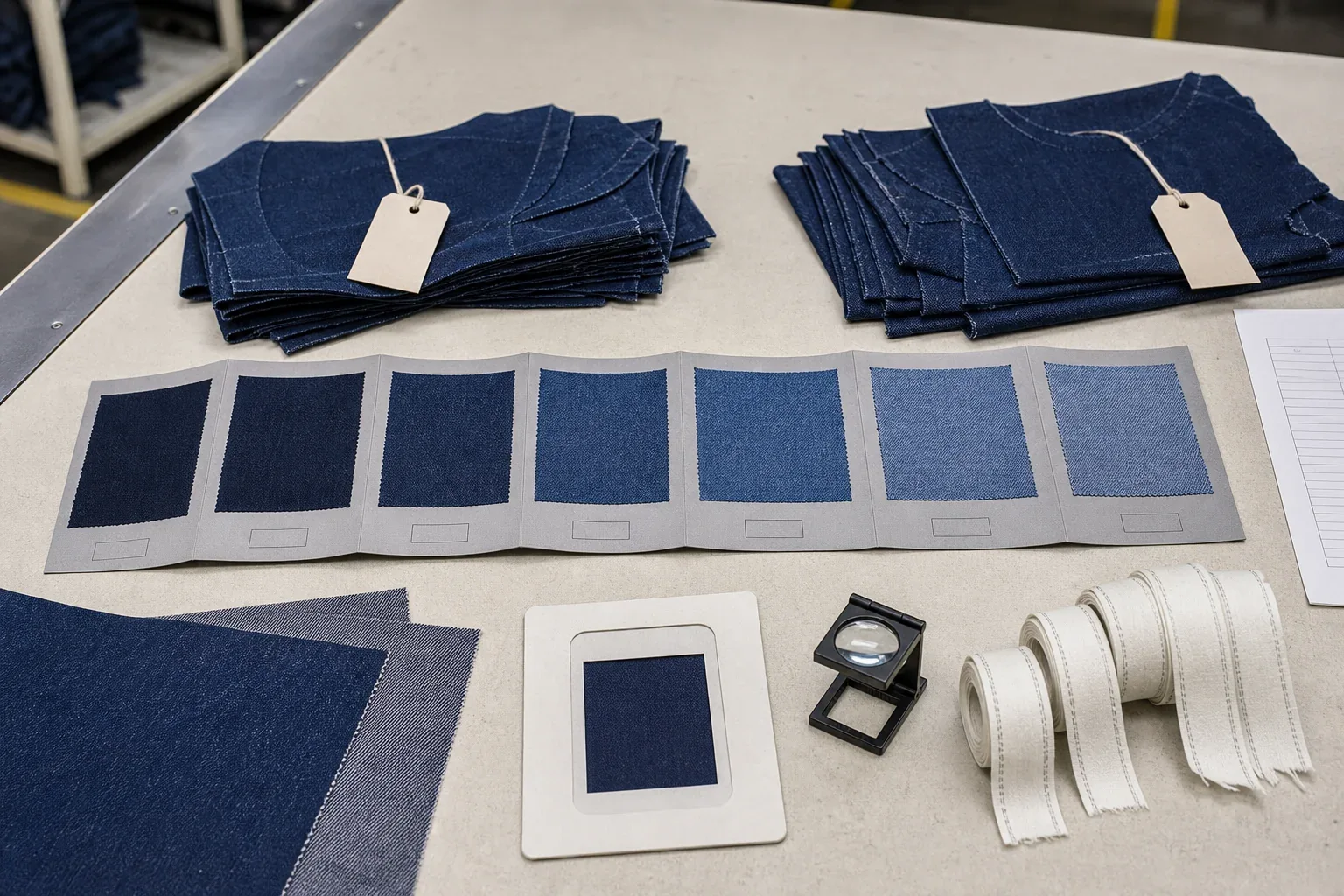 Garment Shade Band Approval: Control the Production Color Range
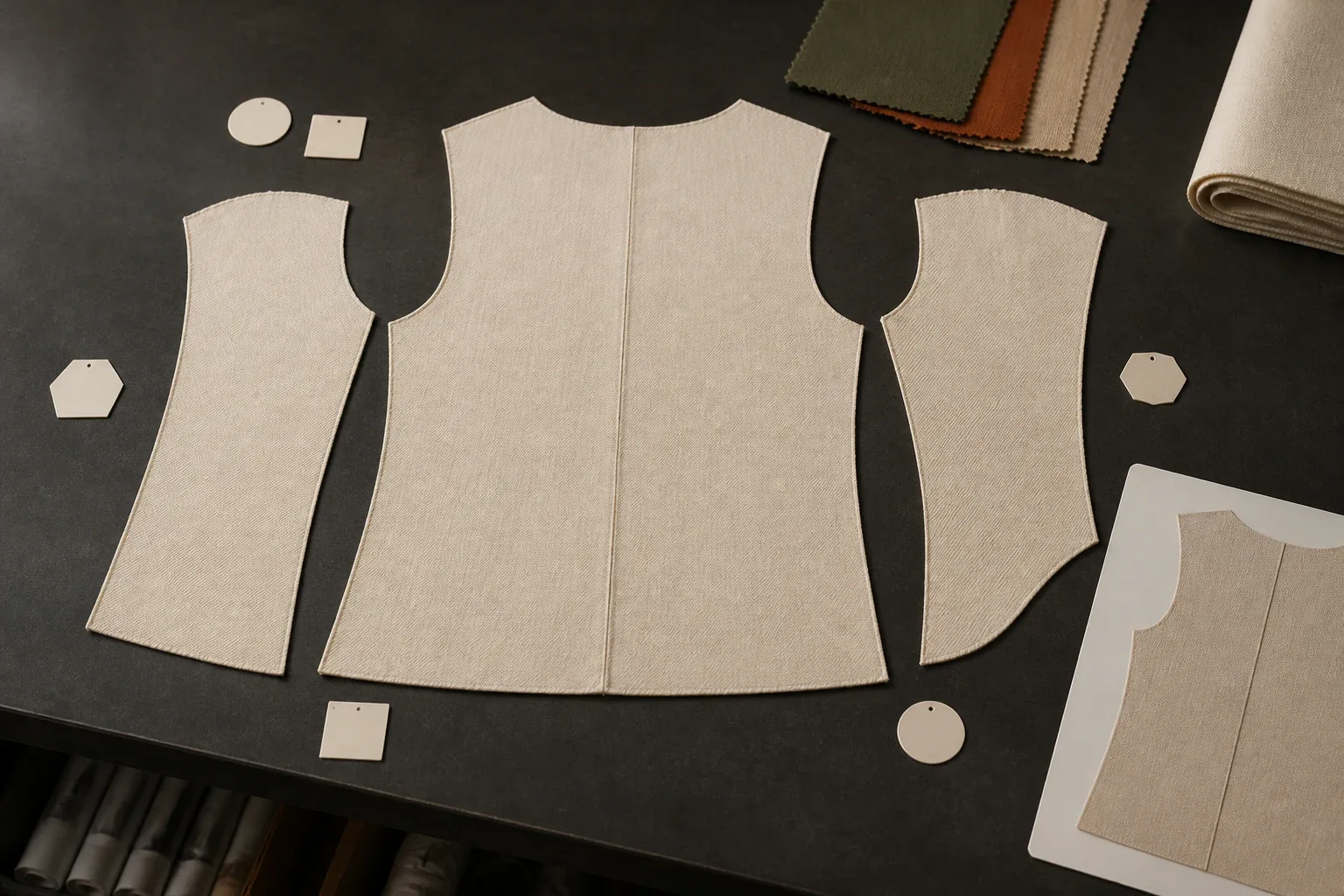 Garment Panel Mismatch: How to Verify the Wrong Piece
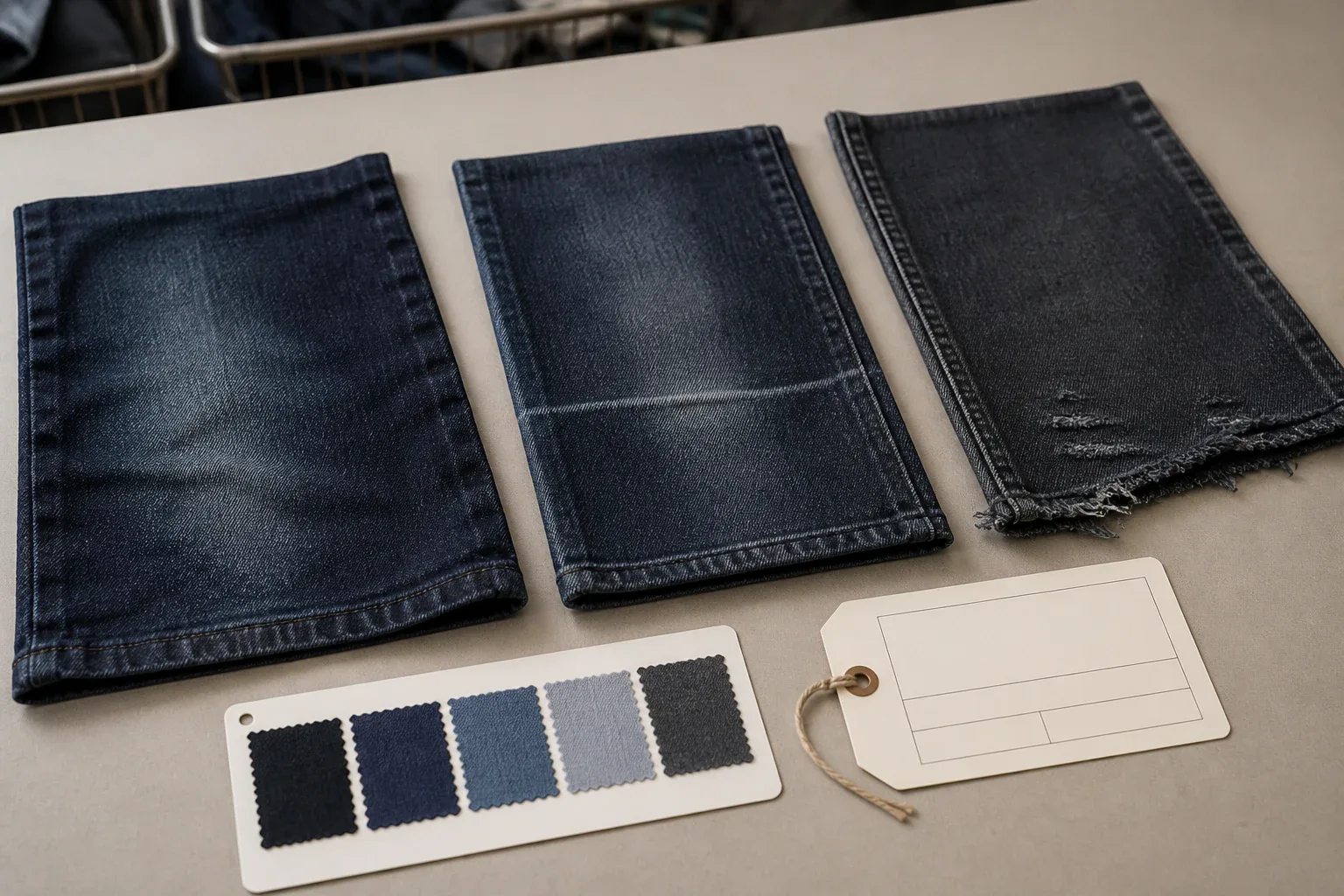 Garment Wash Defects: Causes, Evidence and Approval Questions
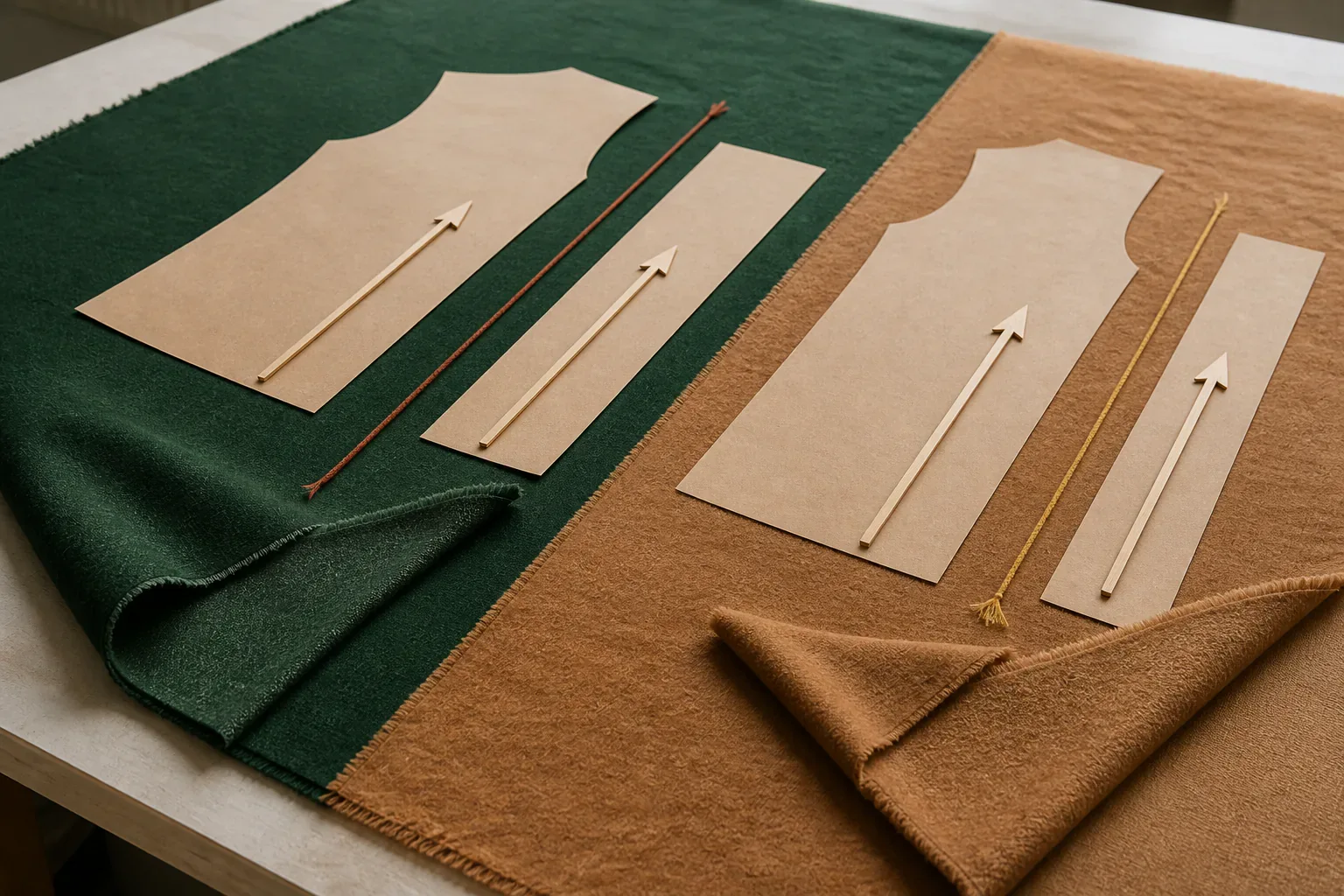 Fabric Grain, Nap and One-Way Cutting for Apparel
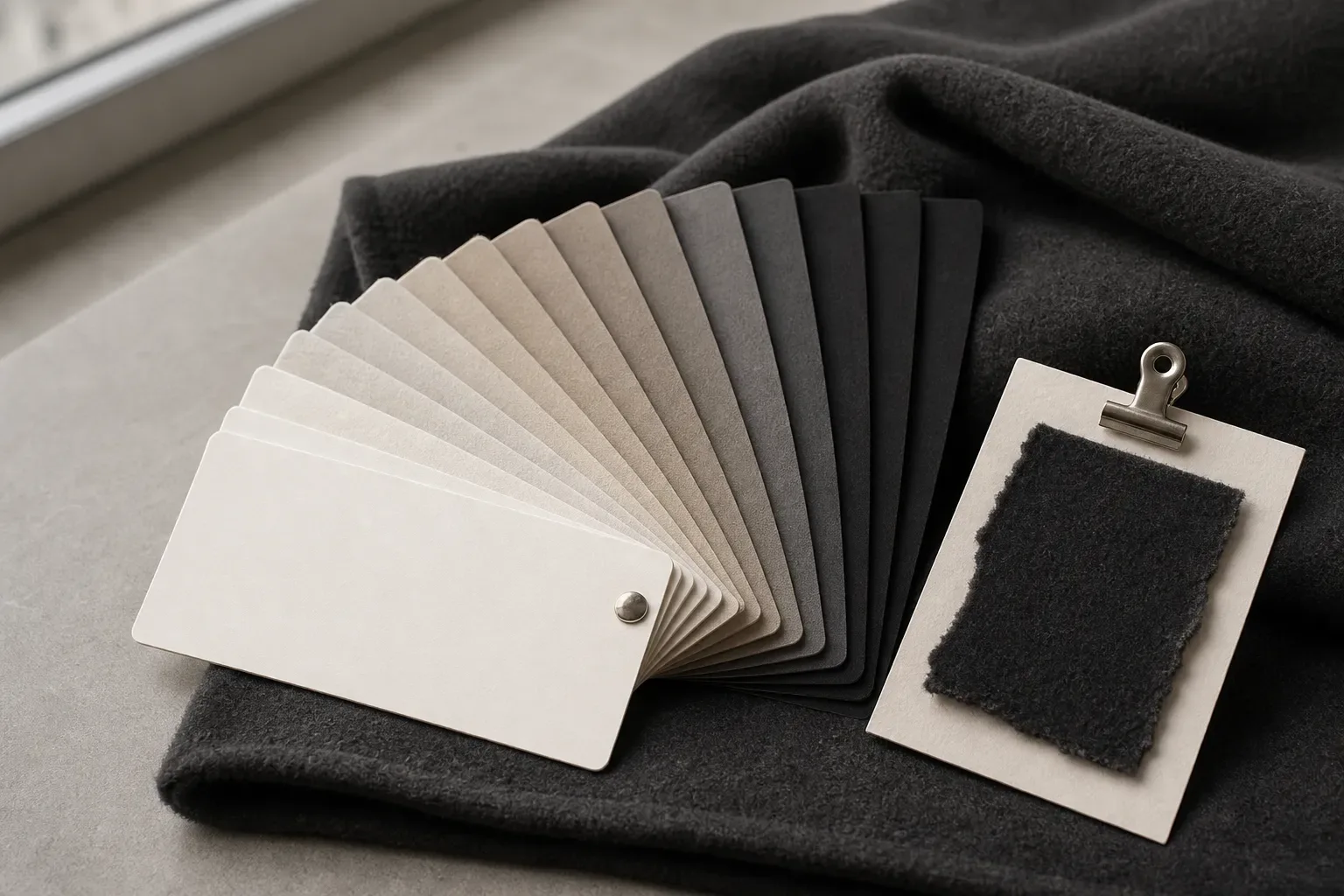 Why Your Black Isn’t My Black: How Color Actually Gets Locked in Garment Production