How to Make Merch That Does Not Feel Like Merch
Print-on-demand, decorated blanks, or cut-and-sew: the three ways to make merch, the order sizes where each one wins, and the quality and labeling details that separate a merch drop from a product line.
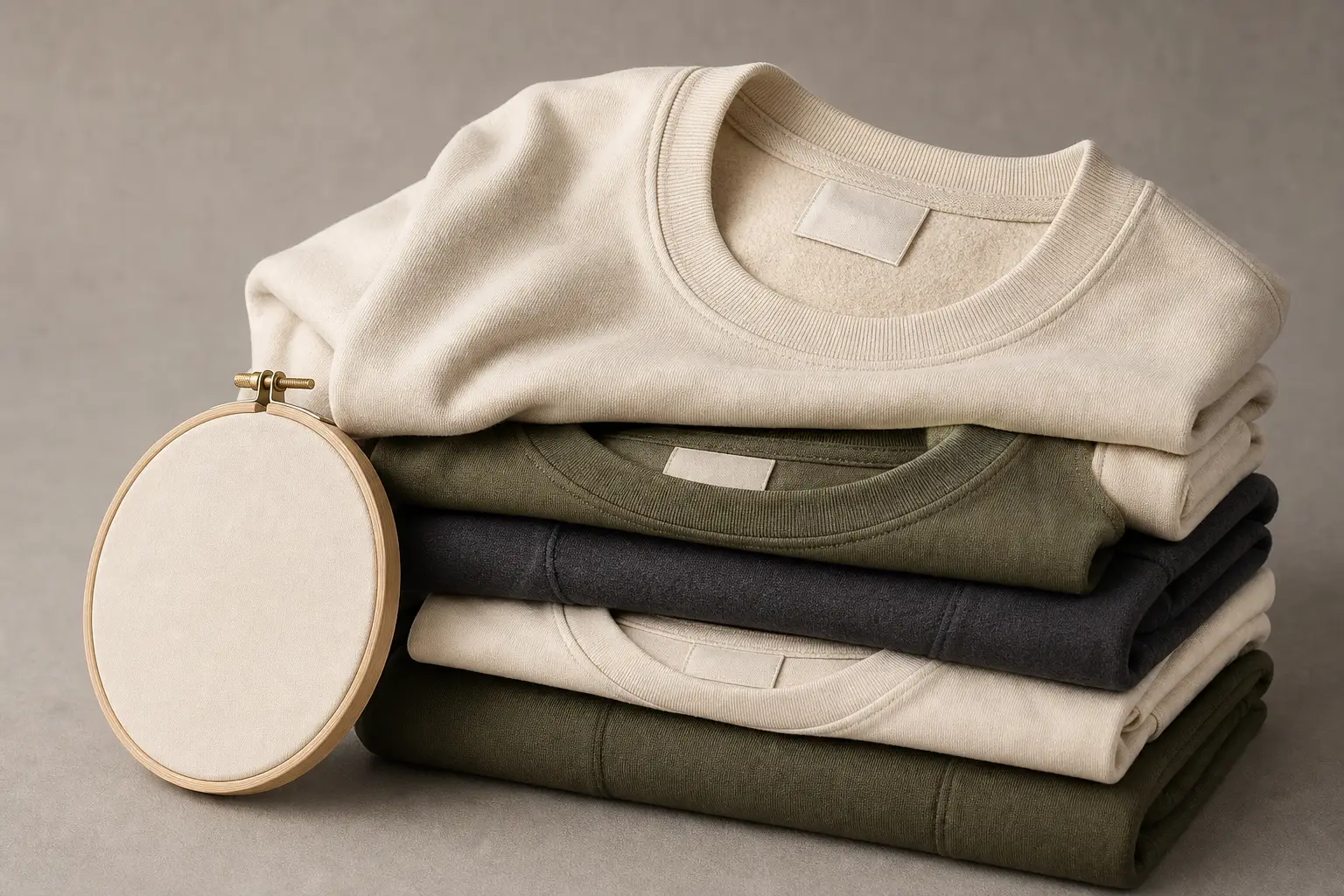
There are exactly three ways to make merch, and the right one is a function of your order size and your quality bar. Print-on-demand prints one piece at a time when someone orders — zero risk, highest unit cost, no control over the garment itself. Decorated blanks put your artwork on wholesale garments — fast and cheap at small quantities, but every brand on the same blank feels the same. Cut-and-sew manufactures the garment itself. Fabric, fit, wash, labels — all yours, and it starts making sense once an audience reliably buys what you drop. This guide walks all three honestly, including the point where we enter the picture and the points where we'd tell you not to use a factory at all.
The three routes, side by side
| Print-on-demand | Decorated blanks | Cut-and-sew | |
|---|---|---|---|
| Minimum | 1 piece | ~12-50 (printer-dependent) | starts at 50 per style |
| Unit cost | highest | middle | lowest at volume |
| Upfront cash | none | low | real |
| Garment control | catalog only | blank catalog only | fabric, fit, wash, trims |
| Your label inside | rarely | sometimes (relabeling) | always |
| Decoration options | DTG/DTF mostly | most methods | every method, applied in production |
| Lead time | days per order | ~1-2 weeks typical | simple sample 10-18 working days after confirmation; complex work longer; bulk 20-30 working days after approval |
| Fails when | quality-sensitive audience | you need a distinct garment | demand is unproven |
The rows that decide it are usually cash and control. POD converts zero inventory risk into the highest per-piece cost and someone else's garment; cut-and-sew converts real upfront cash into the lowest unit economics and a garment nobody else has. Decorated blanks sit between — and for a first drop, between is often exactly right.
For tee-specific vendor selection after choosing that route, the T-shirt manufacturers across blanks, POD and cut-and-sew maps provider models to the stage each suits.
Start with POD if demand is a guess
We manufacture for a living and will still say it plainly: if you don't yet know whether fifty people will buy, print on demand is the correct tool. It's a demand test you can run for the cost of artwork. The moment it stops being correct is measurable — when per-unit printing eats your margin at quantities you're now selling every month, when returns mention fabric feel, or when your audience starts asking why the hoodie feels like every other hoodie. We wrote a whole decision guide on that inflection: POD vs cut-and-sew, and when to switch.
Decorated blanks: the useful middle
Between those poles sits the route most first physical drops actually take: buy wholesale blanks, have them screen printed or embroidered locally, sell them at the event or on the store. It wins on speed and small math — printers commonly take jobs from one to four dozen pieces — and it produces a real garment in hand without a factory relationship. Two catches. The garment is still the blank catalog's garment: fabric, weight and fit are fixed, and your customer may own the identical blank in another brand's print. And if you swap the neck label for your own — relabeling — the blank legally becomes your product, which quietly hands you the labeling obligations covered below. Blanks are a fine middle; they're just not a destination for a brand whose garment is the point.
What cut-and-sew actually changes
The difference isn't abstract "quality" — it's a list of decisions that become yours. Fabric weight moves from whatever the blank is to a number you choose (a 350 gsm fleece and a 450 gsm fleece are different products — the GSM guide covers that vocabulary). Fit moves from a standard blocky blank to your pattern — boxy, cropped, drop-shoulder, whatever the brand wears. Washes — stone, acid, vintage, garment dye — only exist in cut-and-sew, because they're applied to the finished garment. The label inside is yours by default, not by exception.
For scale: our published tier pricing runs USD 13.60-17.60 per piece for a heavyweight boxy tee and USD 27.60-31.90 for a heavyweight washed french terry hoodie — live catalog numbers, not teasers, and both include the garment itself rather than a markup on someone's blank.
Decoration is then a production step, not an afterthought: chest embroidery, puff print, DTF across a seam — methods compared in our print guide and the screen vs DTG vs DTF explainer — applied to cut panels before assembly, which is why placement stays identical across five hundred pieces. A stone-washed printed hoodie simply cannot be assembled from a blank; that's the category of product the route unlocks.
Production starts at 50 pieces per style; the final minimum for a specific garment depends on its fabric, colors and decoration, and a project-specific quote follows once the complete details are reviewed.
The two legal lines merch guides skip
First, labeling. If you sell apparel in the US under your own brand, the garment must carry the fiber content, country of origin, and your identity (business name or RN number) under the Textile Fiber Products Identification Act rules (16 CFR Part 303), plus care instructions under the Care Labeling Rule (16 CFR Part 423). A factory handles this as routine — woven labels and printed inside-neck labels are trim-sheet lines — but a relabeled blank or a POD garment shipped in your packaging is still your compliance problem. It's a detail, until a retail buyer or a marketplace audit makes it the whole conversation.
Second, rights. Merch built on someone else's trademarks, characters, logos or lyrics needs a license from the rights holder — fan enthusiasm doesn't create an exception, and print shops and factories will refuse obviously infringing artwork. Original designs, your own brand marks, commissioned art with a clear transfer: those are yours to print. This isn't legal advice, just the boundary every merch program eventually meets.
The actual path, start to finish
- Lock the design and the garment spec together. Artwork sized to real print dimensions, garment described in factory vocabulary — fit, fabric weight, wash, placements. That translation is what a tech pack does, and yes, AI can draft one now.
- Sample. One production-method sample of the real garment with the real decoration. Simple samples typically take 10-18 working days after project details are confirmed; complex styles or processes take longer. This is where fabric hand, print feel and fit stop being guesses.
- Approve, then produce. Bulk runs 20-30 working days after sample approval. Panel decoration happens flat, assembly follows, and final inspection measures against the spec — the AQL logic is the same whether the garment is merch or a mainline drop.
- Land it and price it. Freight terms and duties are their own small literacy (shipping terms decoded); healthy merch retails at a multiple of landed cost that survives a discount code, which is why the per-piece numbers above matter before design, not after.
Merch that behaves like product
The merch that outlives a drop cycle — the hoodie people wear after the tour, the tee that gets repurchased — is indistinguishable from a good product line, because it is one. That's the whole thesis of making merch past the POD stage: treat it like apparel, and the audience treats it like apparel. If your next run needs a merch manufacturer rather than a printer, the full program lives on our custom merch production page, and the streetwear brand playbook covers the brand-building half of the same journey.
FAQ
How do I make my own merch? Creating merch comes down to picking the route that matches your risk: print-on-demand to test demand with zero inventory, decorated wholesale blanks for small fast runs, or cut-and-sew manufacturing once demand comfortably covers a 50-piece production run per style. Then it is design, a sample and production. For cut-and-sew, simple samples typically take 10-18 working days after project details are confirmed; complex styles or processes take longer. Bulk typically takes 20-30 working days after approval.
How expensive is it to make merch? Print-on-demand tees commonly land in the high teens to low twenties per piece delivered, with no upfront cash. At production scale, our published tier pricing runs USD 13.60-17.60 per piece for a heavyweight custom tee and USD 27.60-31.90 for a heavyweight washed hoodie — with the garment, fabric and labels specified by you rather than inherited from a blank.
How many pieces do I need for custom merch? Decorated-blank programs commonly start around one to four dozen depending on the printer. Full cut-and-sew production starts at 50 pieces per style with us; the final minimum for a specific garment depends on its fabric, colors and decoration, and the quote is project-specific.
Do I need a license to make merch? If the artwork uses someone else's trademarks, characters, band names or logos — yes, permission from the rights holder, and reputable printers and factories will reject infringing files. Original designs and your own brand marks need no license. Separately, US apparel sold under your brand needs fiber, origin, identity and care labeling per 16 CFR Parts 303 and 423.
Is print-on-demand merch lower quality than manufactured merch? It's less controllable rather than automatically worse: you inherit the blank's fabric, fit and weight, and DTG-class printing on standard blanks. Manufactured merch controls fabric weight, fit, wash and decoration method per piece — the levers that make a garment feel branded — which is why brands typically switch once demand is proven.
References
- 16 CFR Part 303 — Rules under the Textile Fiber Products Identification Act (eCFR) — fiber content, country of origin and identity labeling
- 16 CFR Part 423 — Care Labeling Rule (eCFR) — care instruction requirements for wearing apparel
- Jiashun published catalog tier pricing, retrieved 2026-07-30 — per-piece anchors quoted above are live product-page prices, not estimates
Related guides
 Print-on-Demand vs. Cut-and-Sew: When Should Your Brand Switch to a Factory?
 How to Start a Streetwear Brand in 2026: The Production Playbook
 How Much Does It Cost to Make a T-Shirt? Factory Numbers, Not Guesses
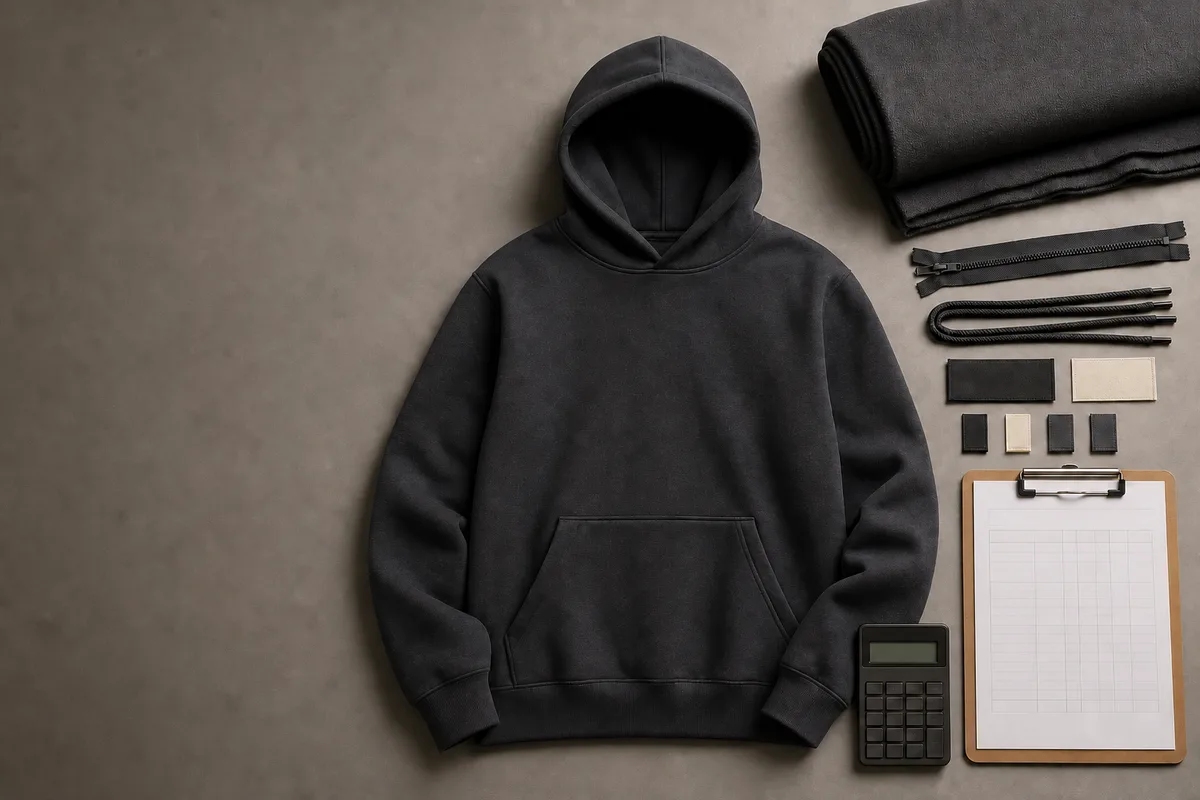 How Much Does It Cost to Make a Hoodie? A Factory Cost Anatomy
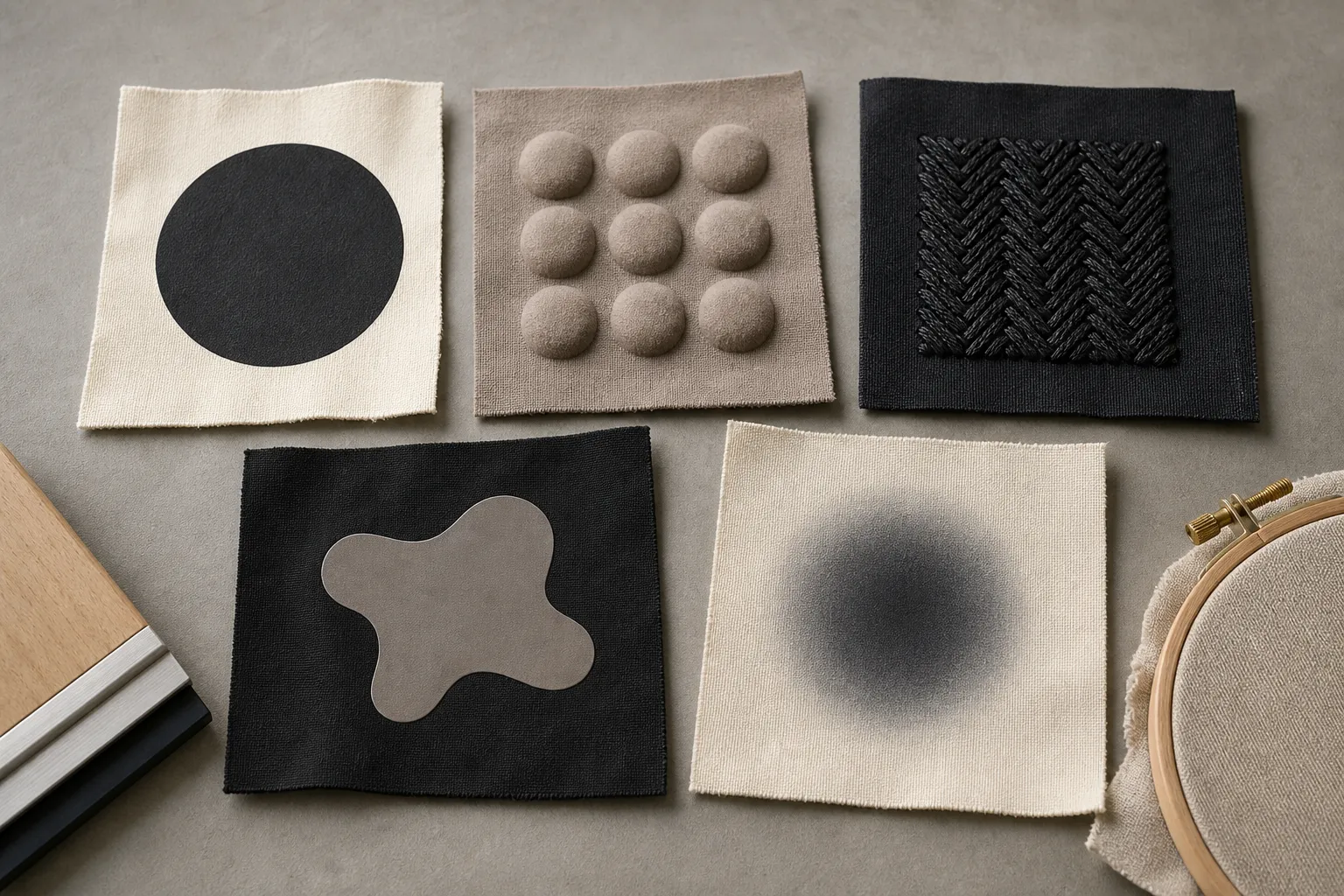 Screen, DTG, DTF, Puff or Embroidery: Choosing Your Method
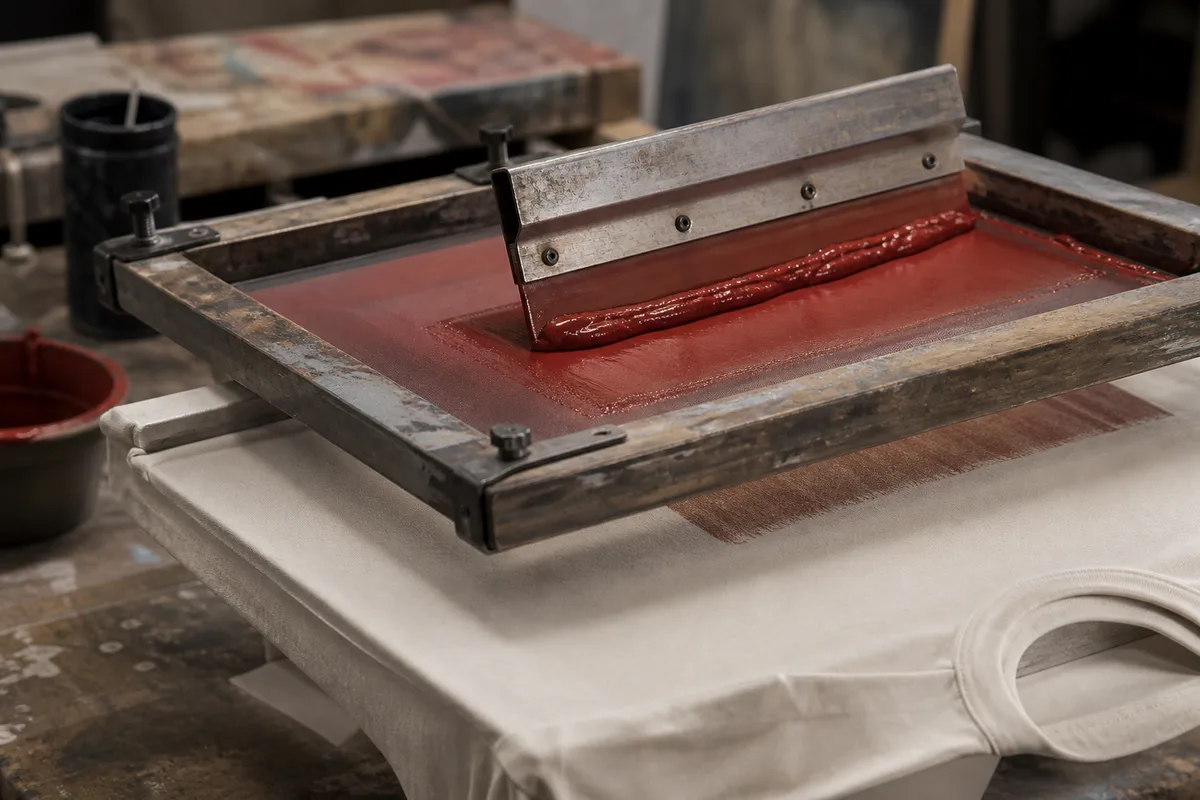 Screen, DTG, DTF: How T-Shirt Printing Actually Works, Explained From the Press Room