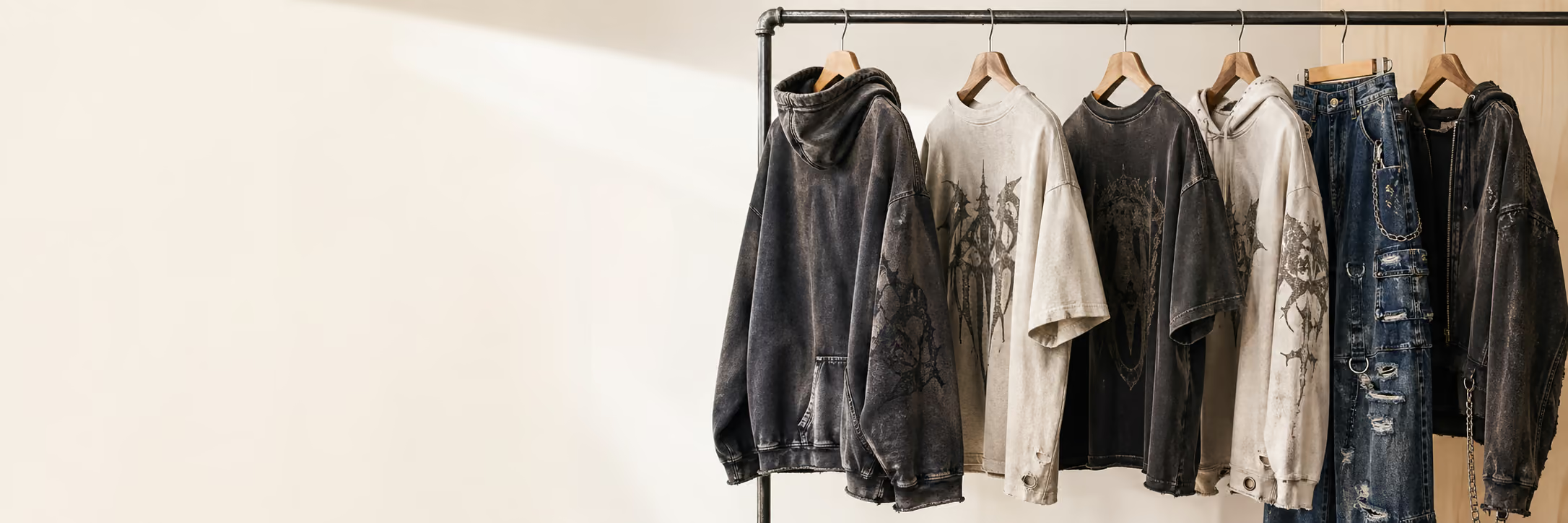
Factory notes for streetwear brands
Practical guides for preparing briefs, comparing techniques and understanding the production decisions behind custom men's streetwear.
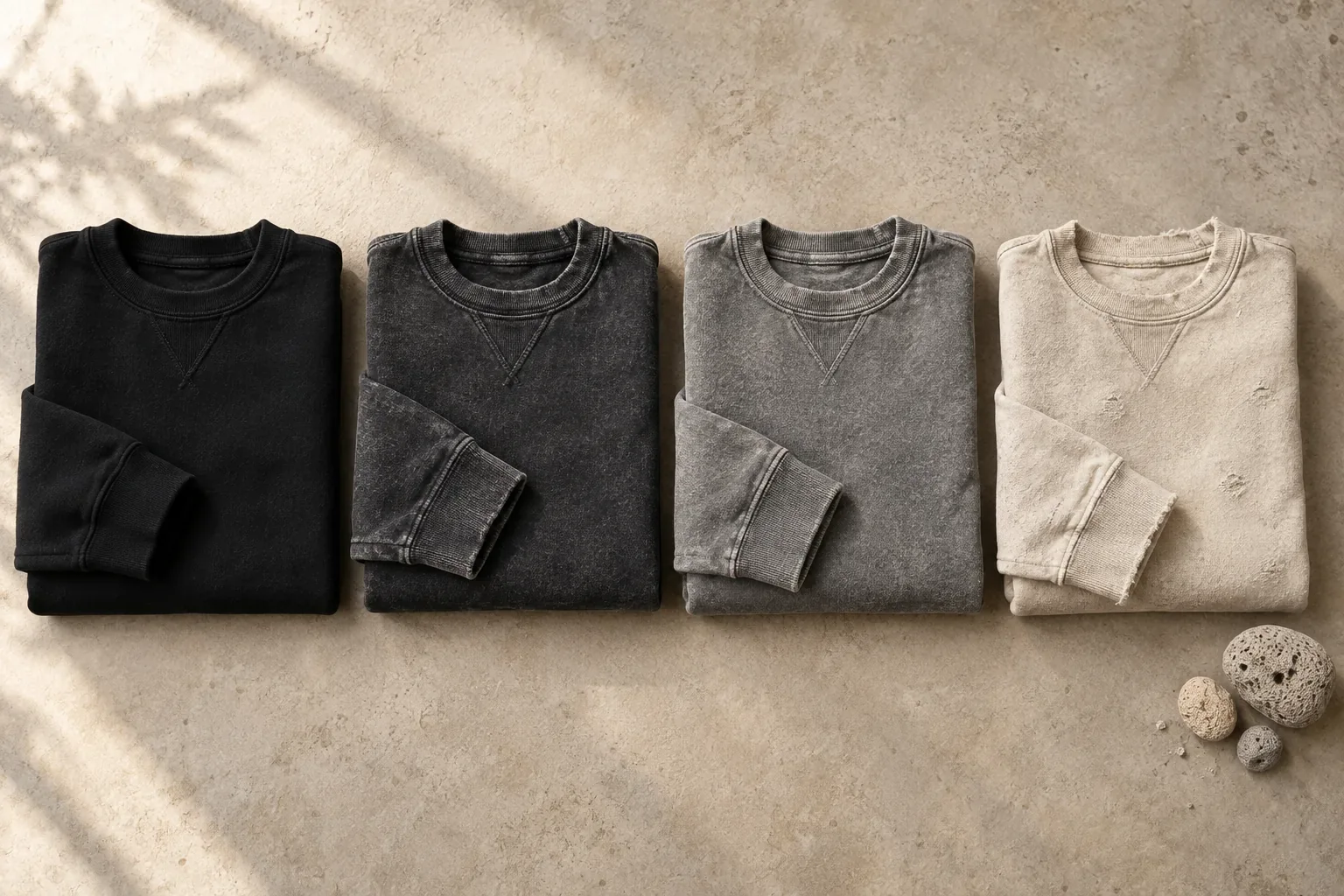
Garment Washing Explained: What 'Washed' Means in Clothing Manufacturing
What garment washing actually is, why factories wash sewn garments, the main wet and dry process families, and what to specify, sample and approve before bulk.
Read guide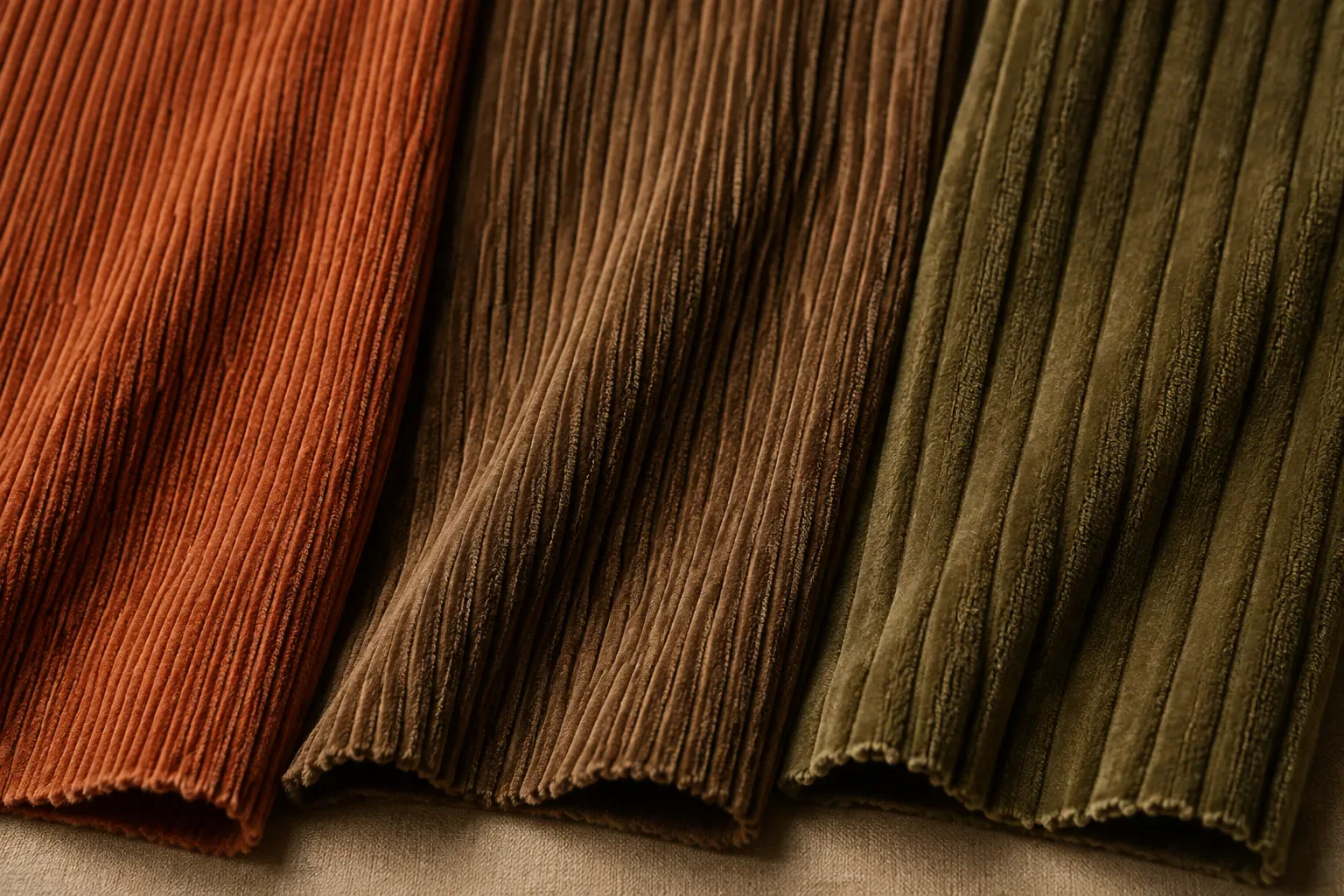
Corduroy Wale Count Guide for Apparel Buyers
Compare fine, standard and wide-wale corduroy, then record the actual rib count, fabric identity, direction and physical approvals your factory needs.
Read guide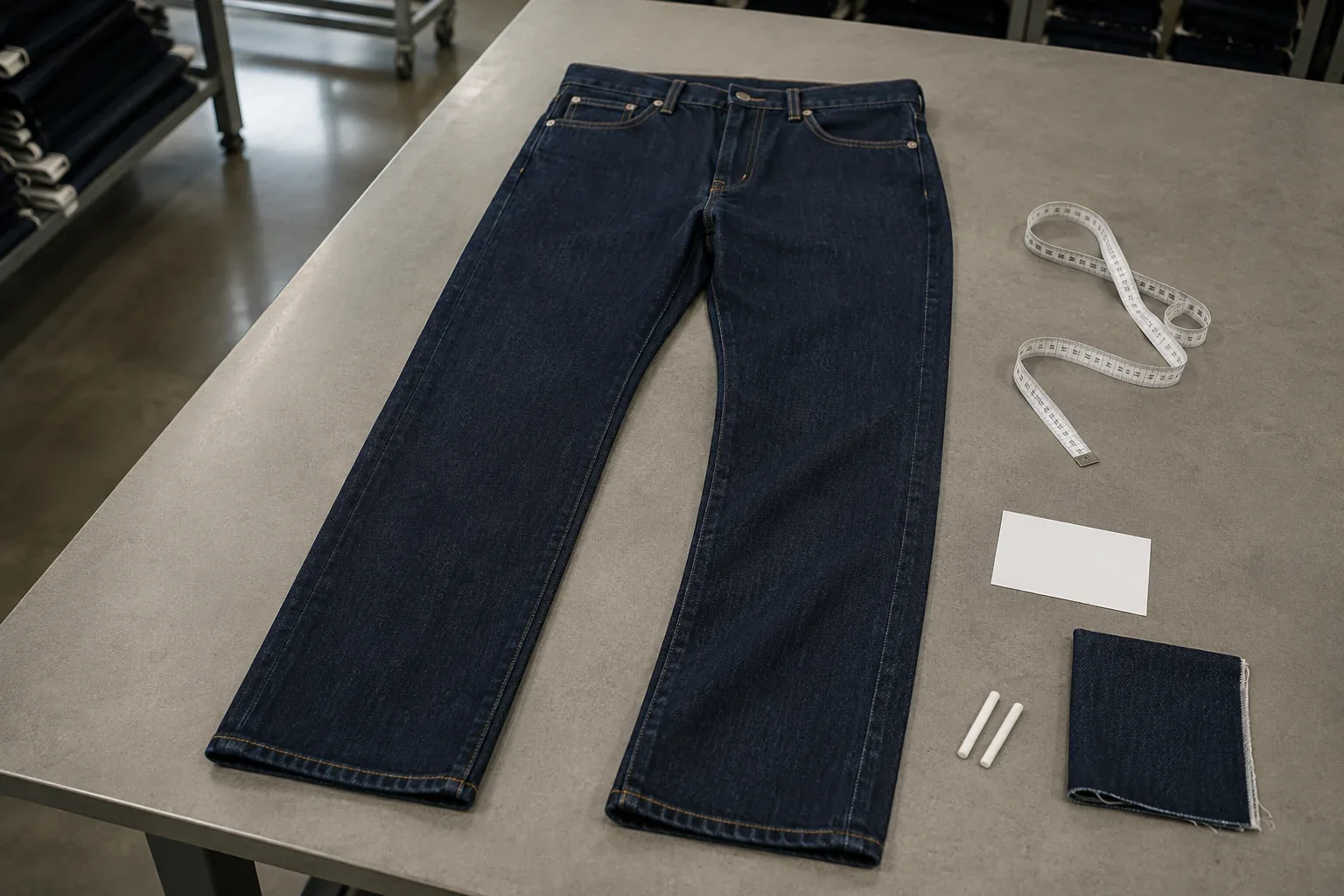
Jeans Leg Twist: Causes, Wash Evidence and Bulk Approval
Jeans leg twist is a visible rotation, not a root-cause verdict. Learn how brands separate denim skew, pattern or cutting asymmetry, sewing displacement and wash response before bulk approval.
Read guide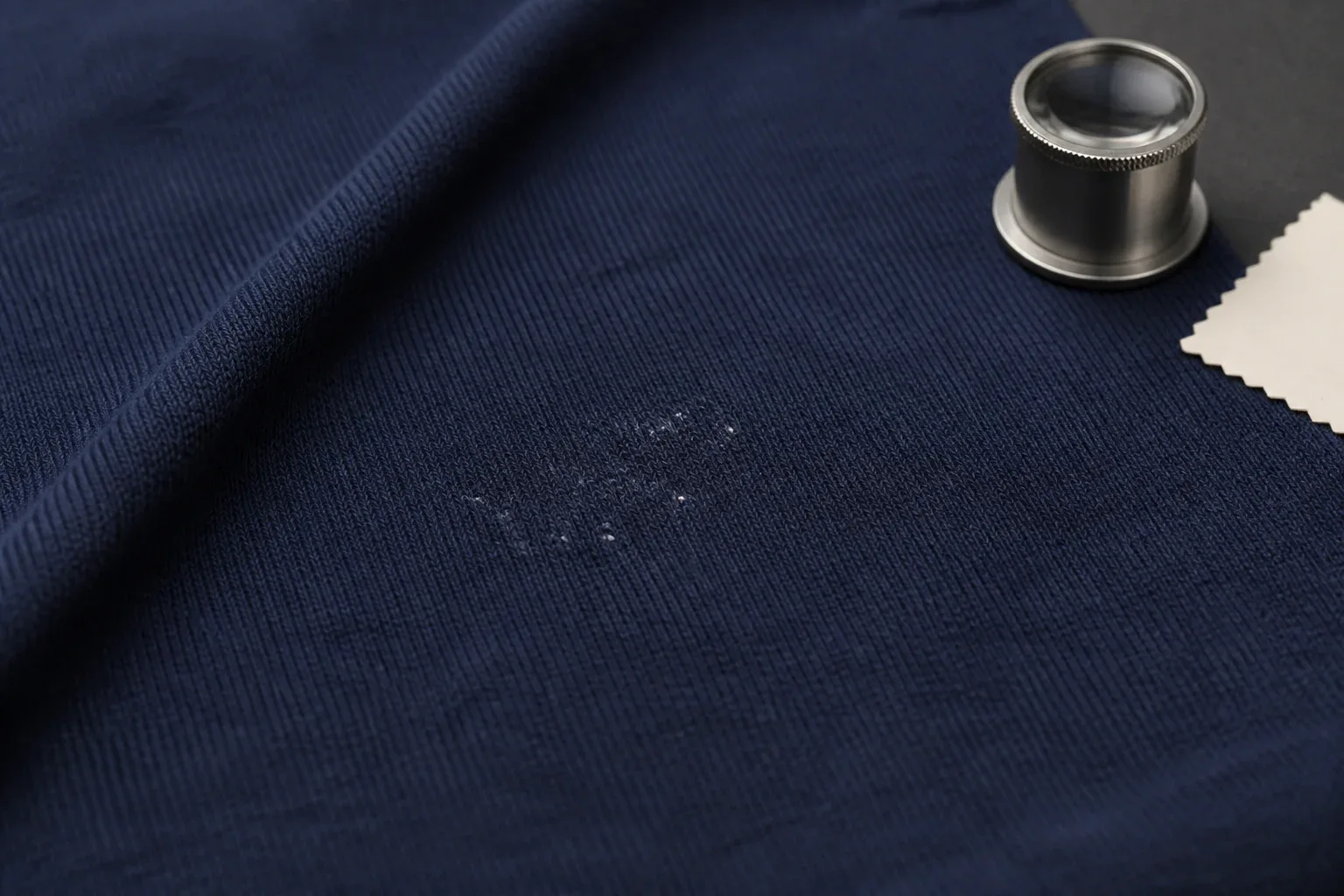
Dead Cotton White Specks in Fabric: A Buyer Investigation Guide
Dead cotton white specks are an appearance to investigate, not a diagnosis from a photo. Build a traceable roll-and-lot record before holding, testing or releasing material.
Read guide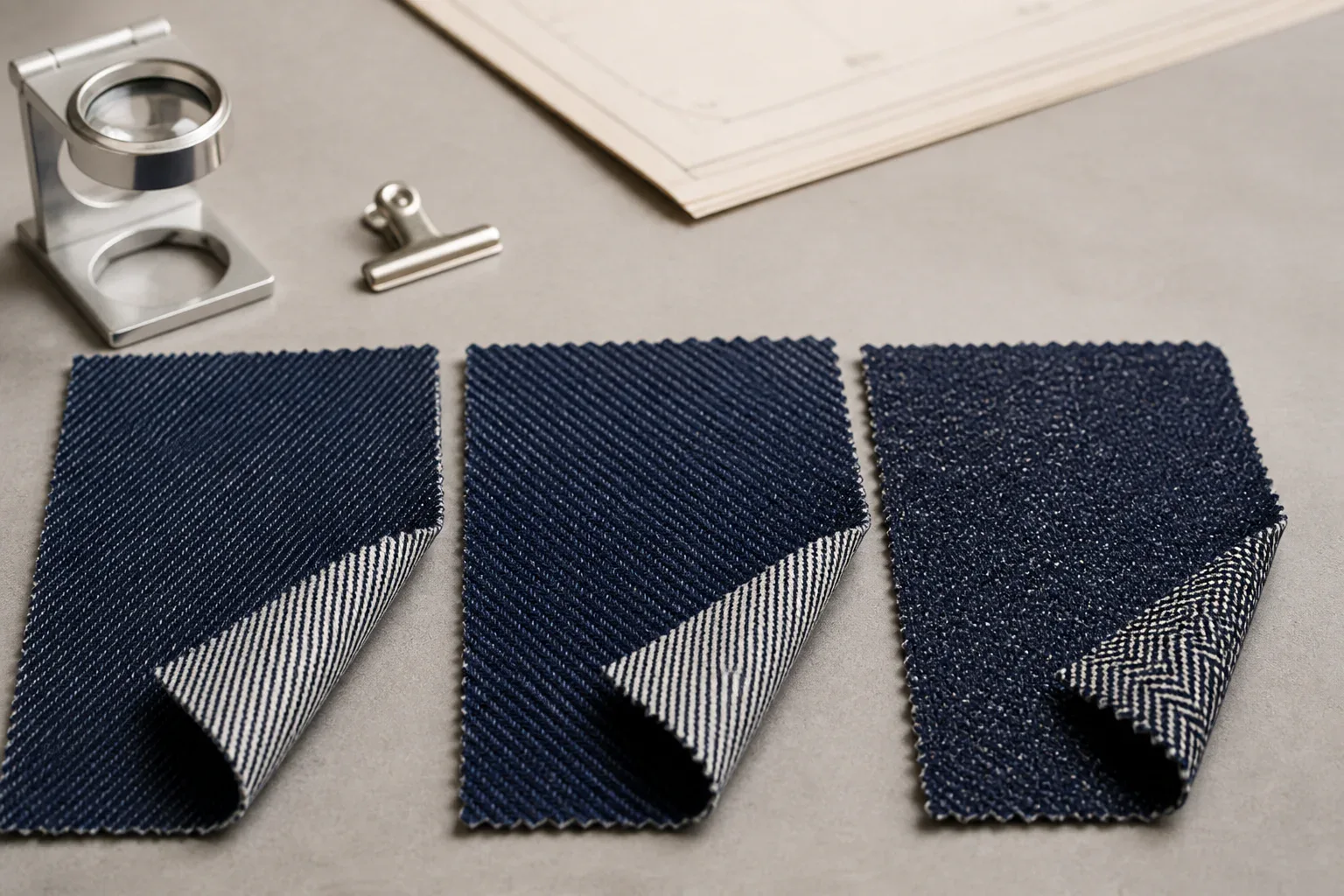
Right-Hand, Left-Hand and Broken Twill Denim: A Brand Selection Guide
Denim twill direction changes the visible diagonal, surface reference and approval record. Learn how buyers should compare right-hand, left-hand and broken twill before sampling.
Read guide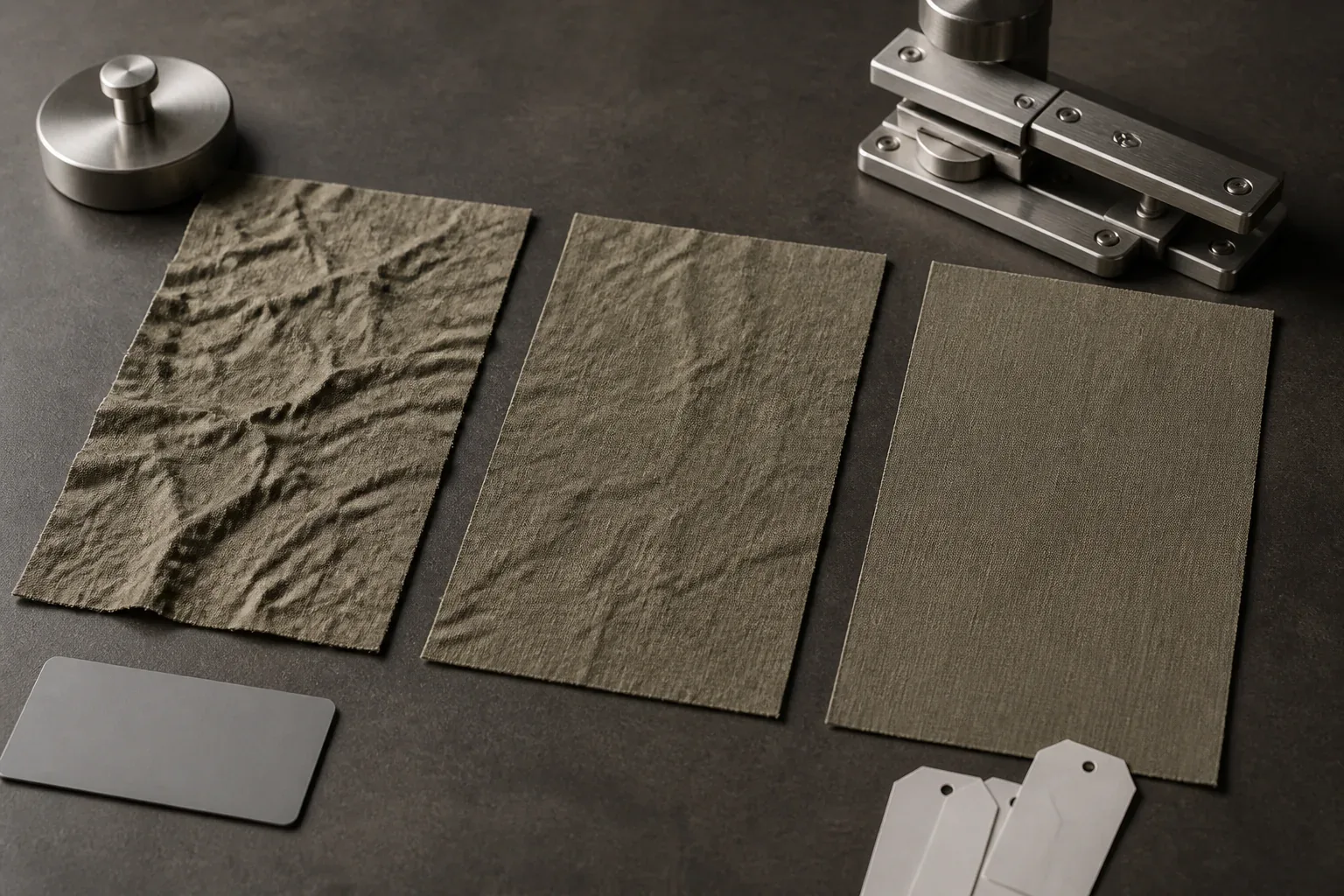
Fabric Wrinkle Recovery: How Buyers Compare Test Evidence
Compare induced-wrinkle appearance and crease-recovery-angle evidence without confusing wrinkle recovery with stretch recovery, drape, shrinkage or laundering appearance.
Read guide
Panel-to-Panel Shade Variation in Garments: Evidence Before Diagnosis
A panel shade difference is an observation, not a root-cause verdict. Build a traceable garment, component, face, orientation, roll, lot and wash-state map before deciding where the evidence belongs.
Read guide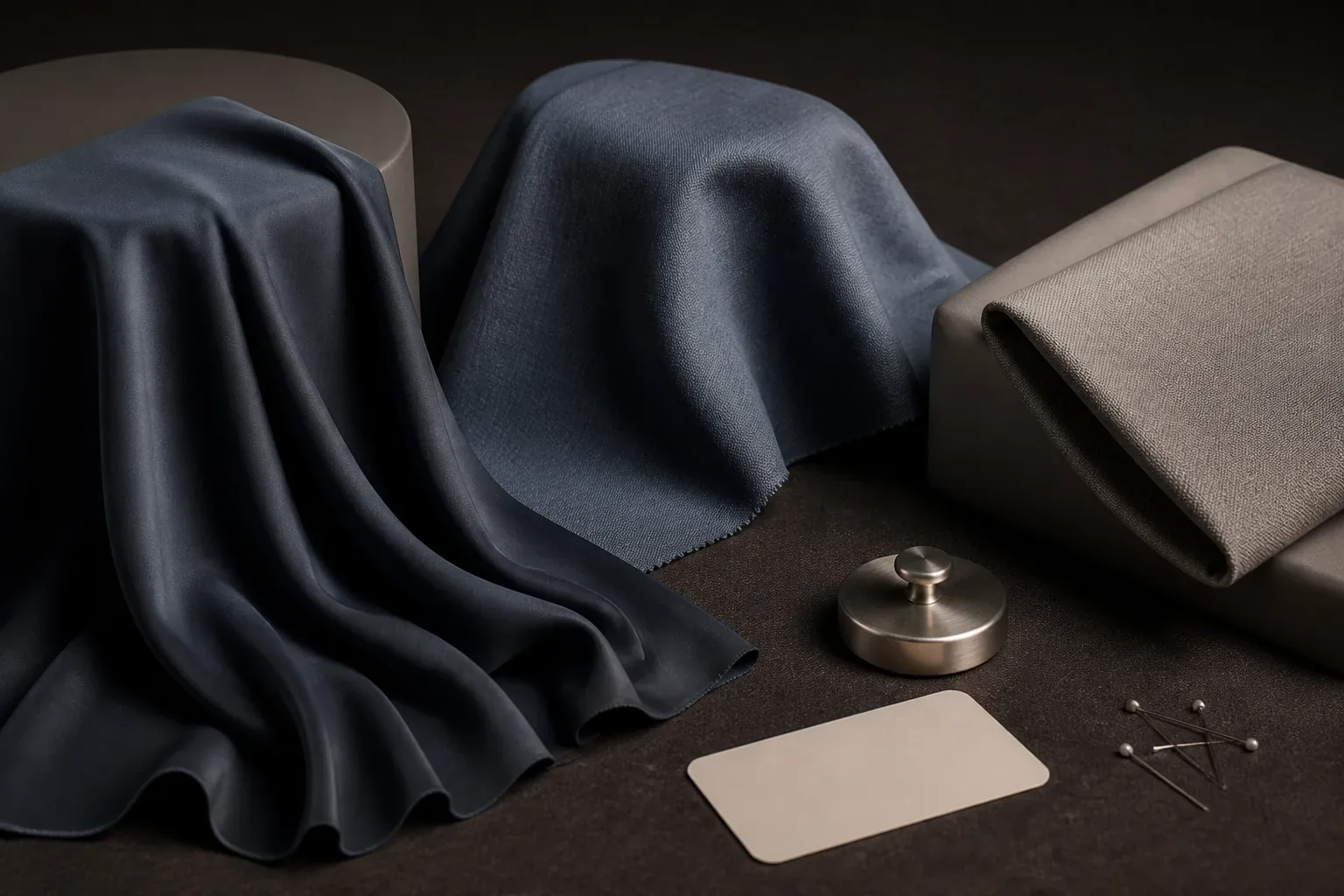
Fabric Drape for Apparel: How to Specify, Compare and Approve It
Specify fabric drape with a garment use, identified material state, oriented comparison and bounded evidence instead of relying on words such as fluid or structured.
Read guide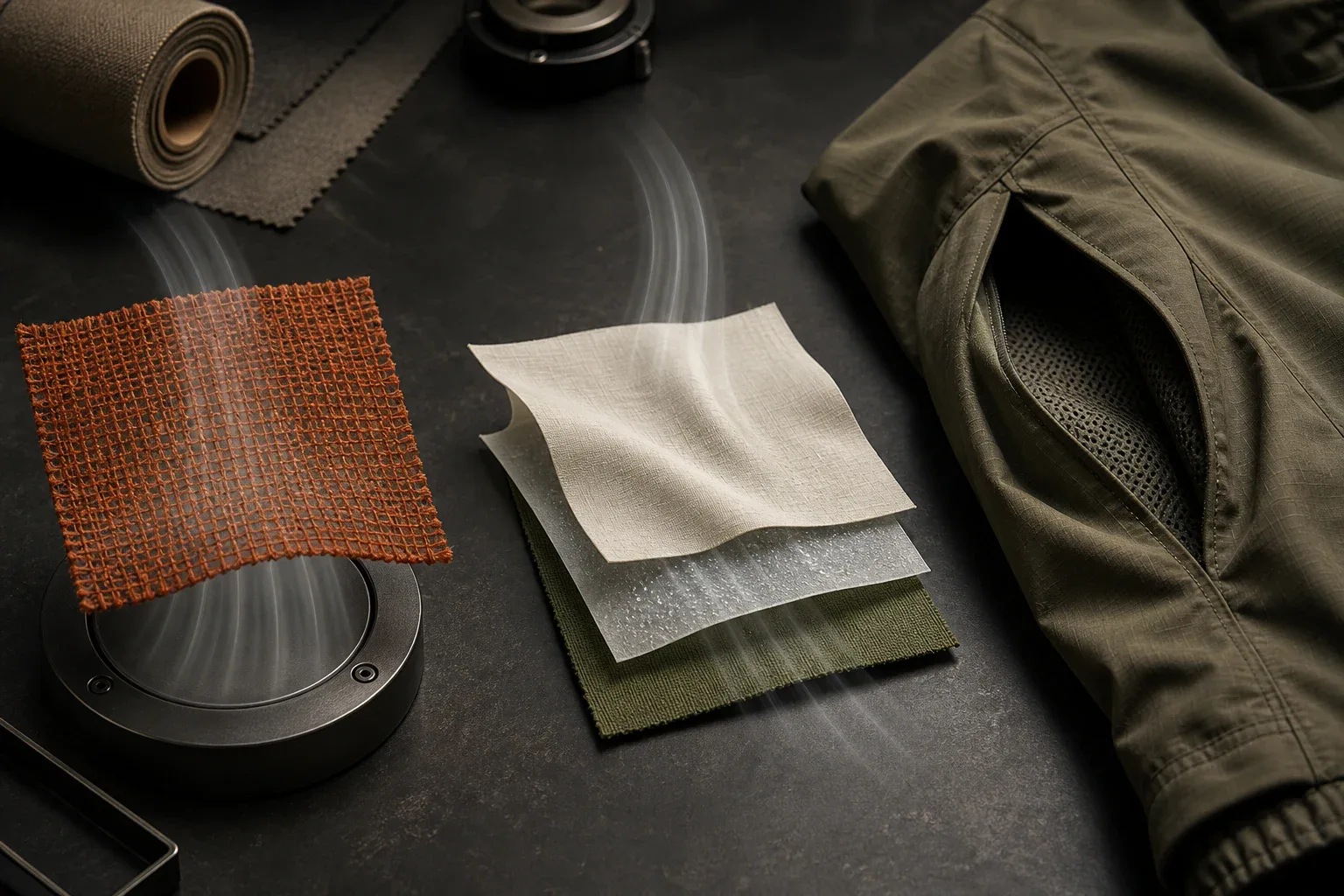
Air Permeability vs Breathability: What Fabric Tests Actually Show
Air permeability measures airflow through a specified textile under stated test conditions. Breathability can refer to airflow, water-vapor transfer, or a wear impression, so buyers need a named method, comparable reports, and garment-level approval evidence.
Read guide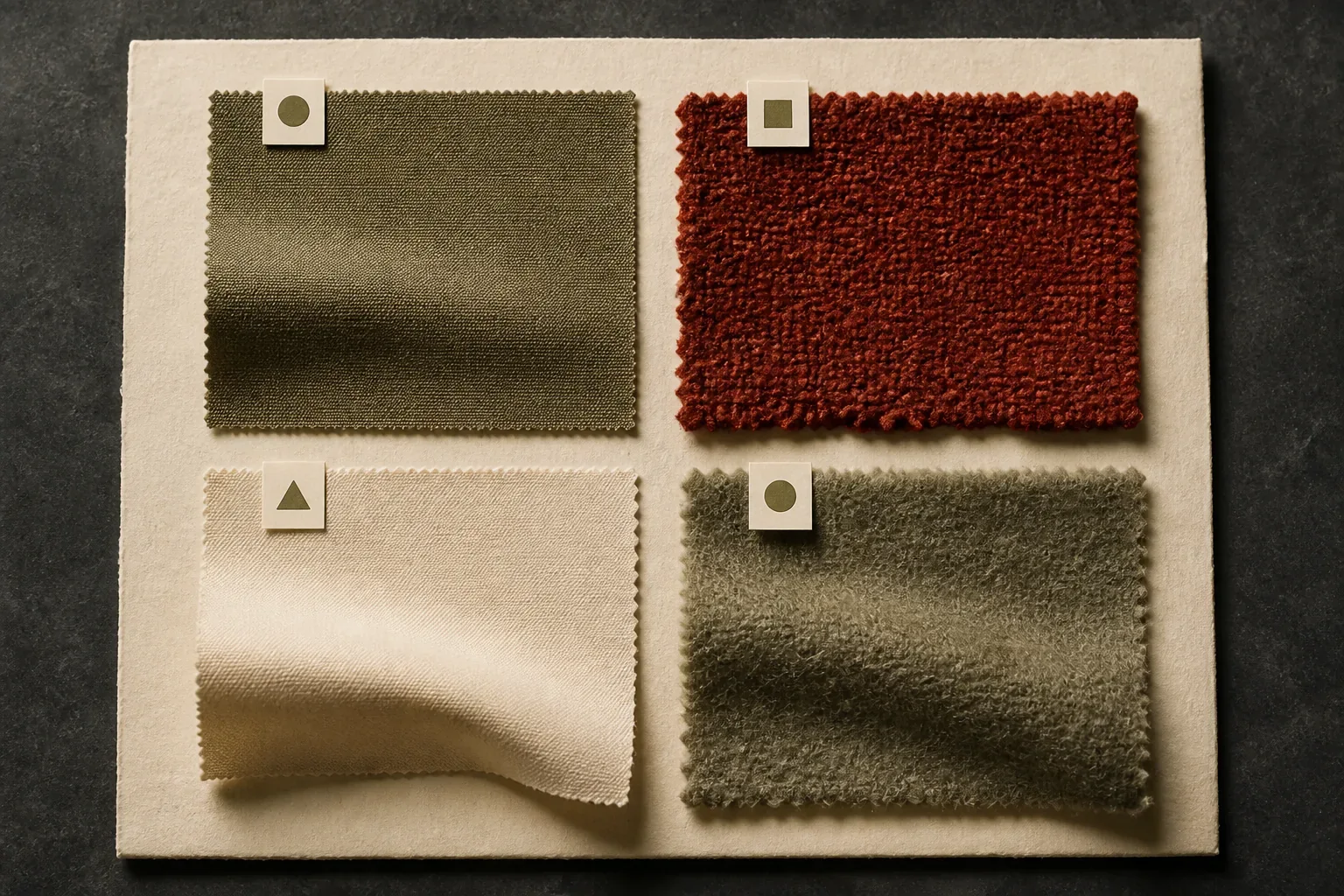
Fabric Handfeel Specification: Turning "Soft" Into an Approvable Brief
Turn vague fabric-hand words into a controlled brief with tactile axes, an identified physical comparator, a defined material state and revision evidence.
Read guide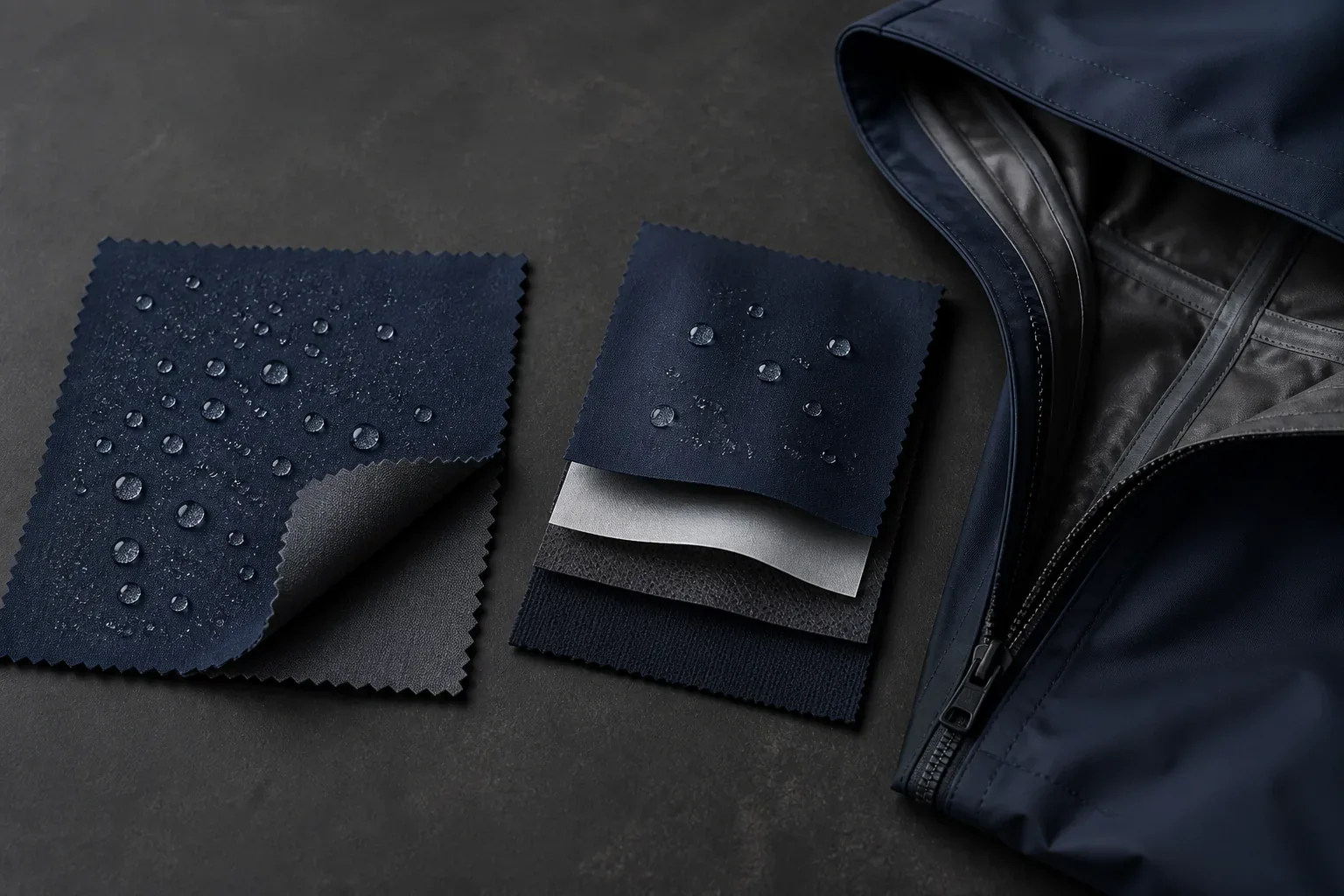
Water-Resistant vs Waterproof Fabric: A Buyer Evidence Guide
Water-resistant and waterproof are not interchangeable sourcing shortcuts. Learn how to separate surface wetting, fabric penetration and finished-garment ingress before approving an outerwear program.
Read guide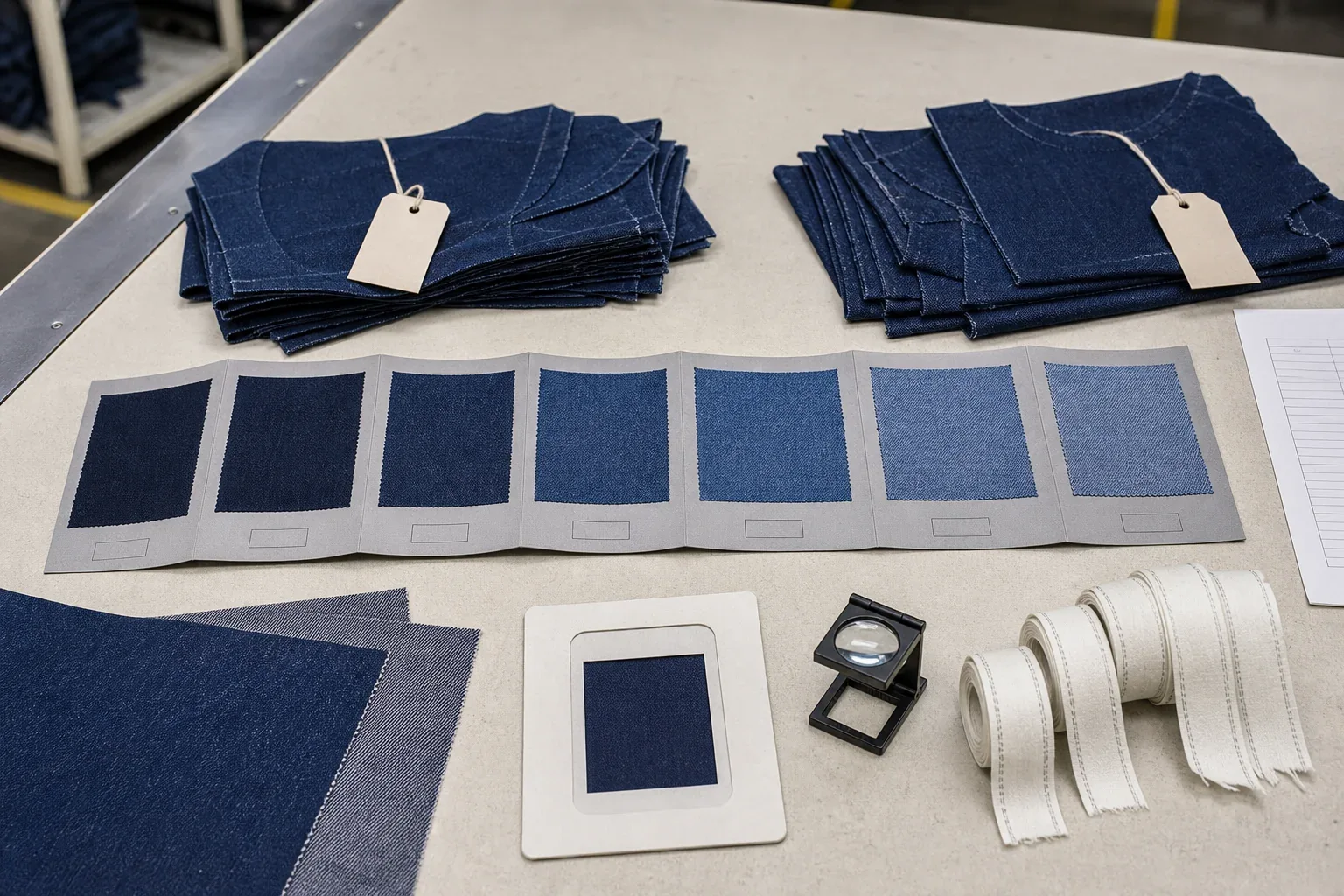
Garment Shade Band Approval: Control the Production Color Range
A garment shade band turns production color variation into identified samples, approved groups and explicit use restrictions instead of one vague color sign-off.
Read guide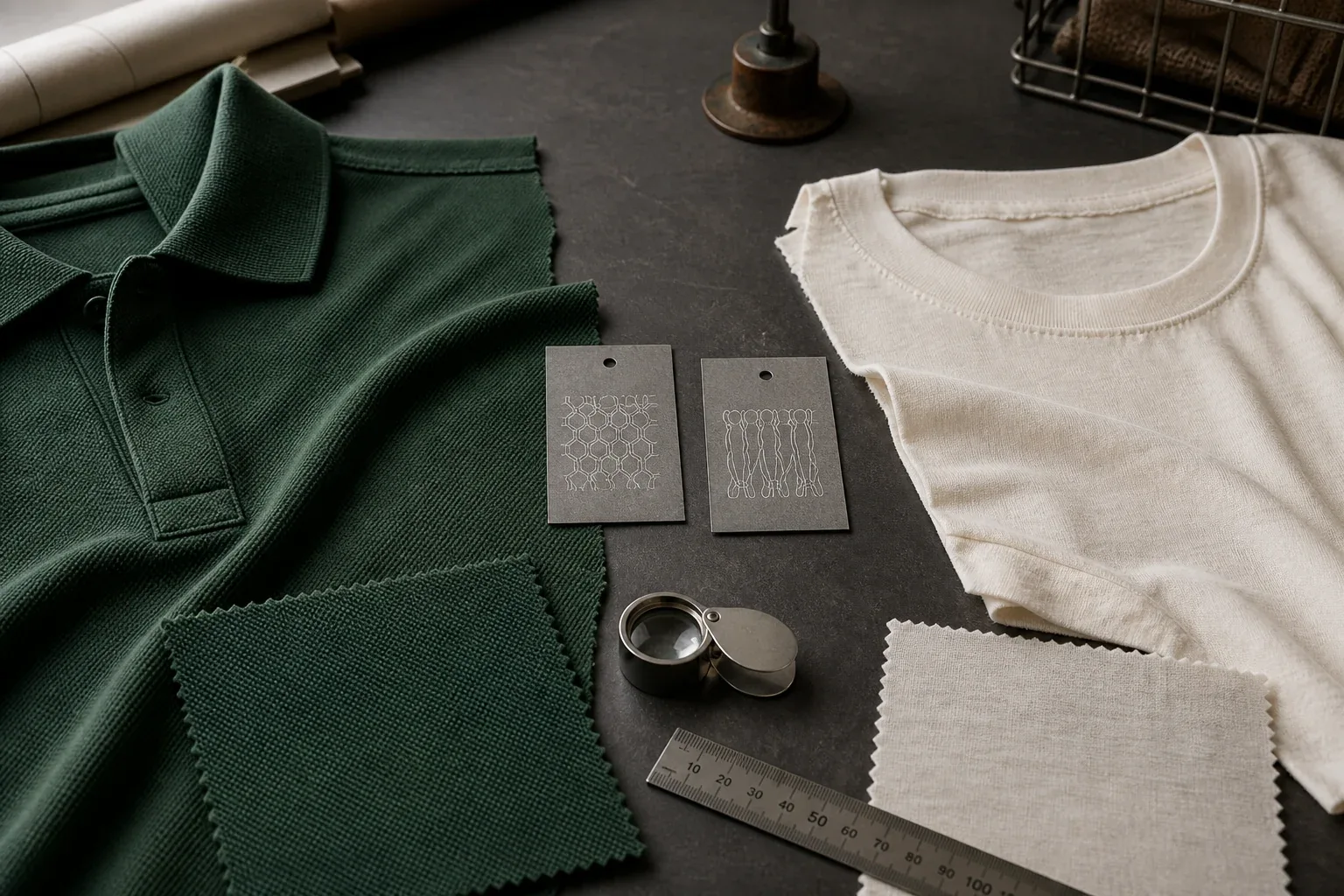
Pique vs Jersey Fabric: Choosing Knit for Polos and T-Shirts
Pique and jersey are knit structures, not quality grades. Compare their surface, drape, decoration behavior, and approval tests before assigning either fabric to a polo or T-shirt program.
Read guide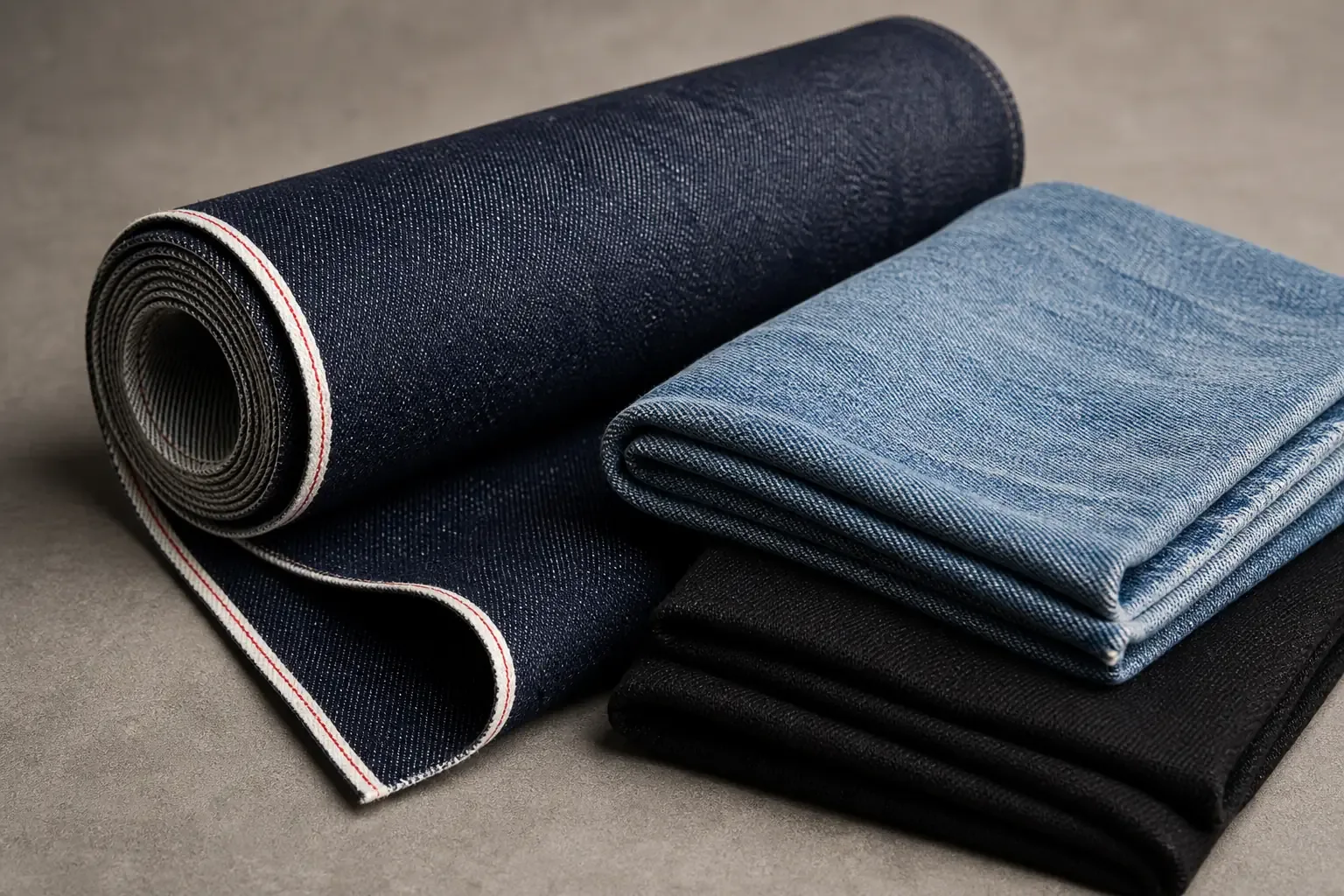
Types of Denim Fabric: A Factory Guide to Reading the Cloth
Every denim is one cloth with five decisions layered on it: raw or washed, sanforized or unsanforized, selvedge or wide-loom, rigid or stretch, and the dye route. A factory guide to the types of denim fabric and what each choice changes on the cutting table.
Read guide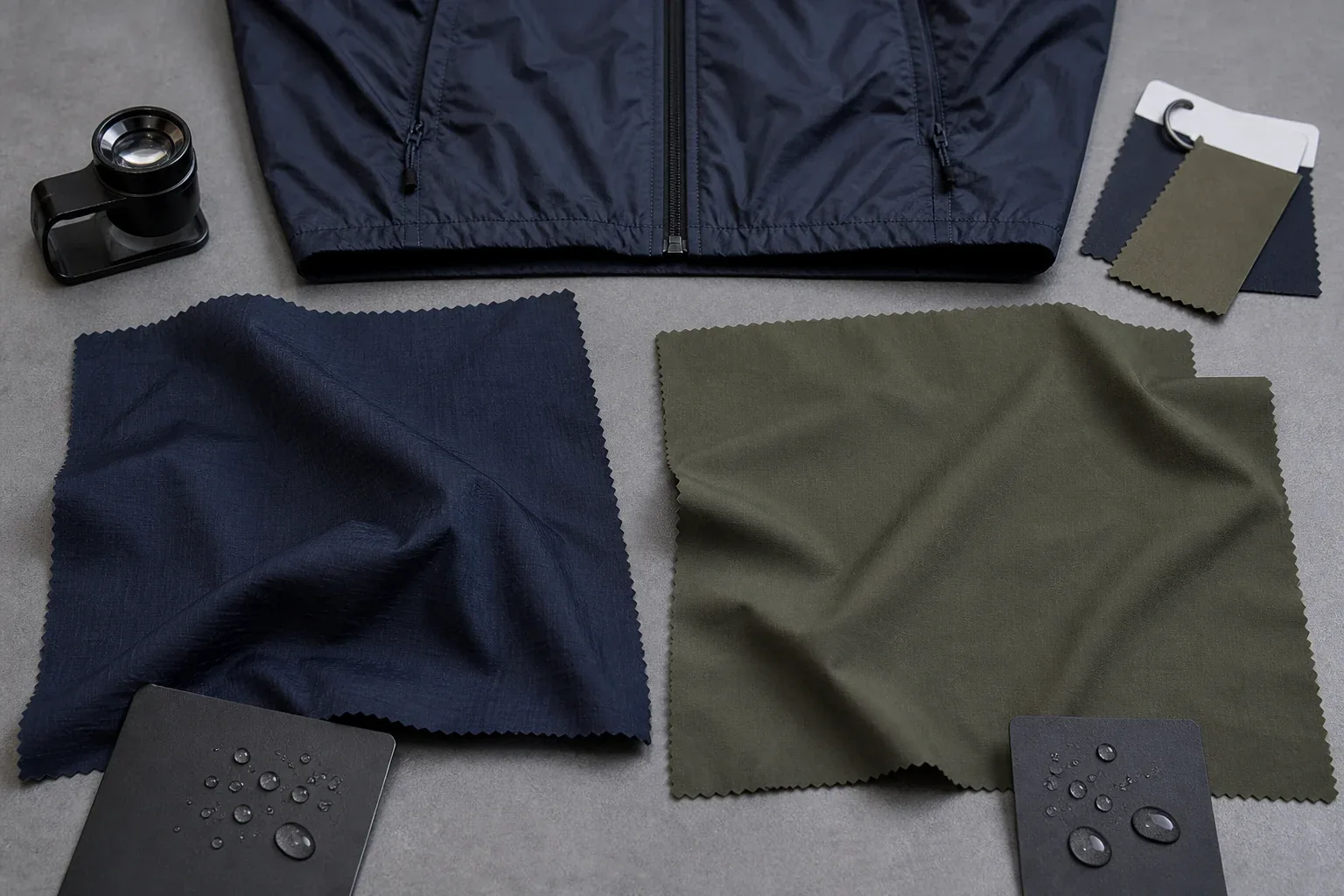
Nylon vs Polyester Jacket Fabric: What Changes in an Outerwear Sample
A nylon or polyester label does not settle a jacket-shell decision. Compare identified fabrics by construction, finish, garment zones, decoration and sample evidence before bulk.
Read guide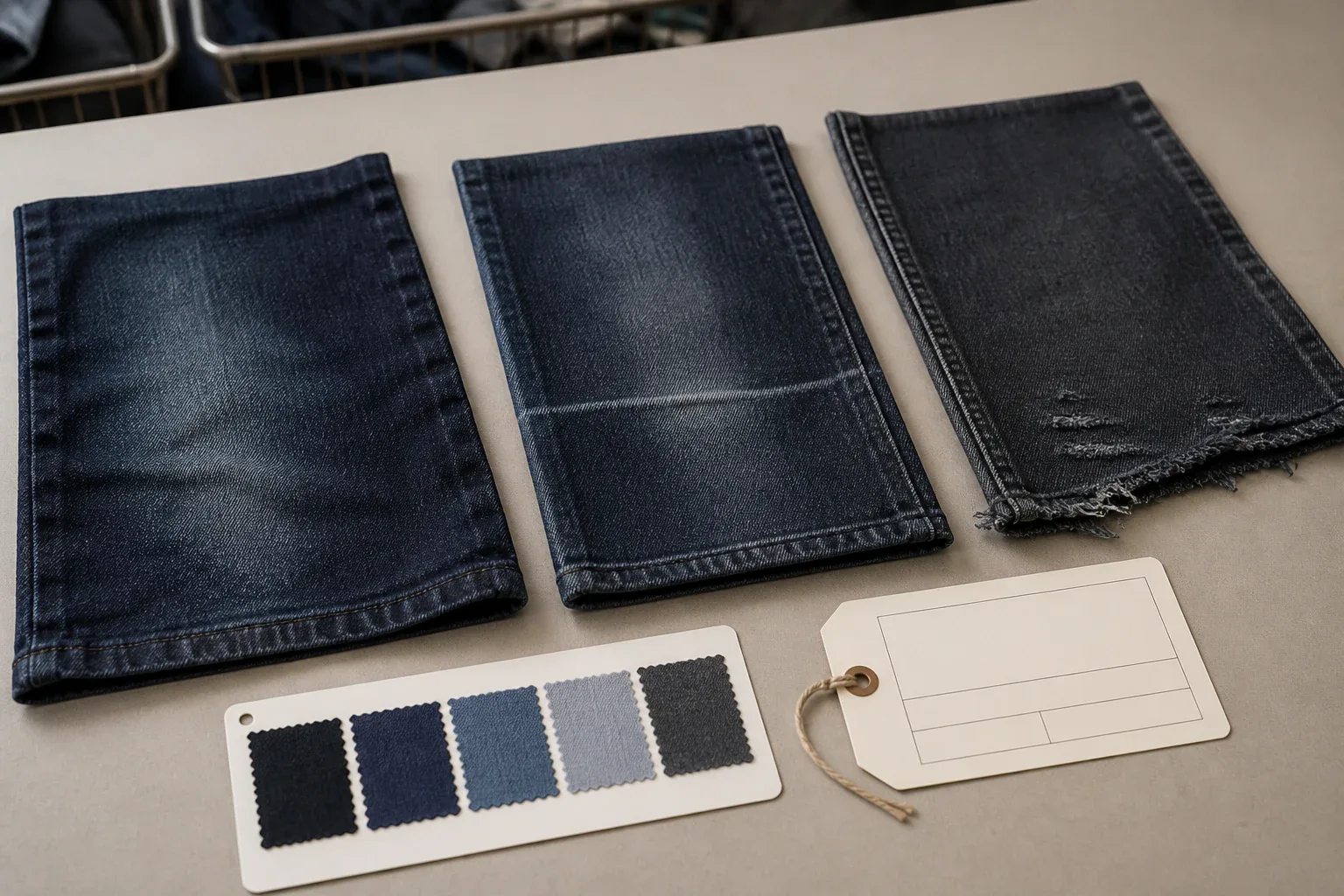
Garment Wash Defects: Causes, Evidence and Approval Questions
A wash defect name is an observation, not a root-cause verdict. Learn how brands separate backstaining, uneven shade, abrasion, component damage and dimensional change with controlled evidence.
Read guide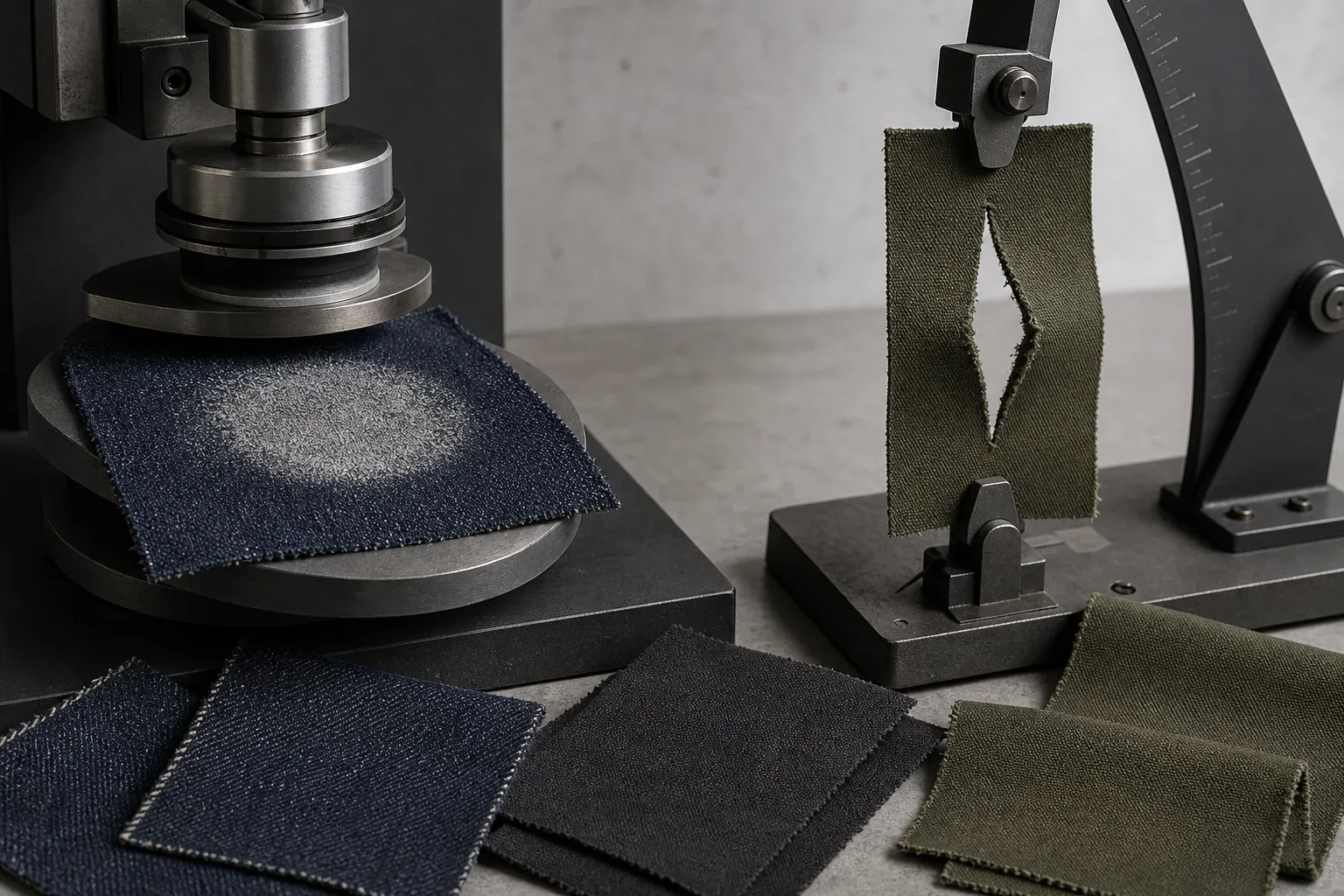
Fabric Abrasion vs Tear Strength: Which Evidence Does a Brand Need?
Abrasion and tear tests reproduce different failure modes. Learn how garment zones, method, endpoint, direction and specimen state determine which evidence a clothing brand can compare.
Read guide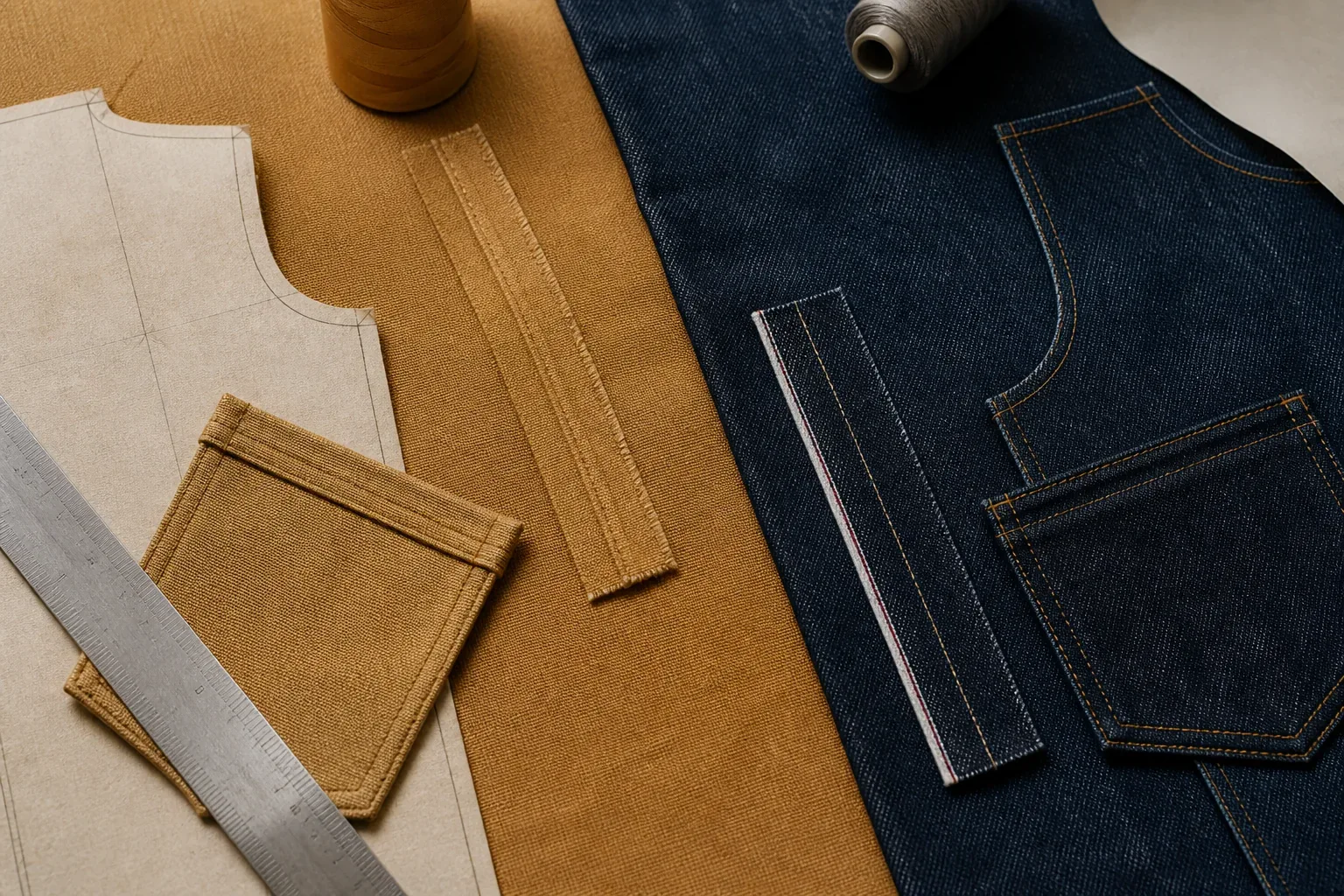
Duck Canvas vs Denim for Workwear Programs
Compare identified duck canvas and denim candidates by garment zone, hand, finish, construction, test context and approval evidence—not a universal durability ranking.
Read guide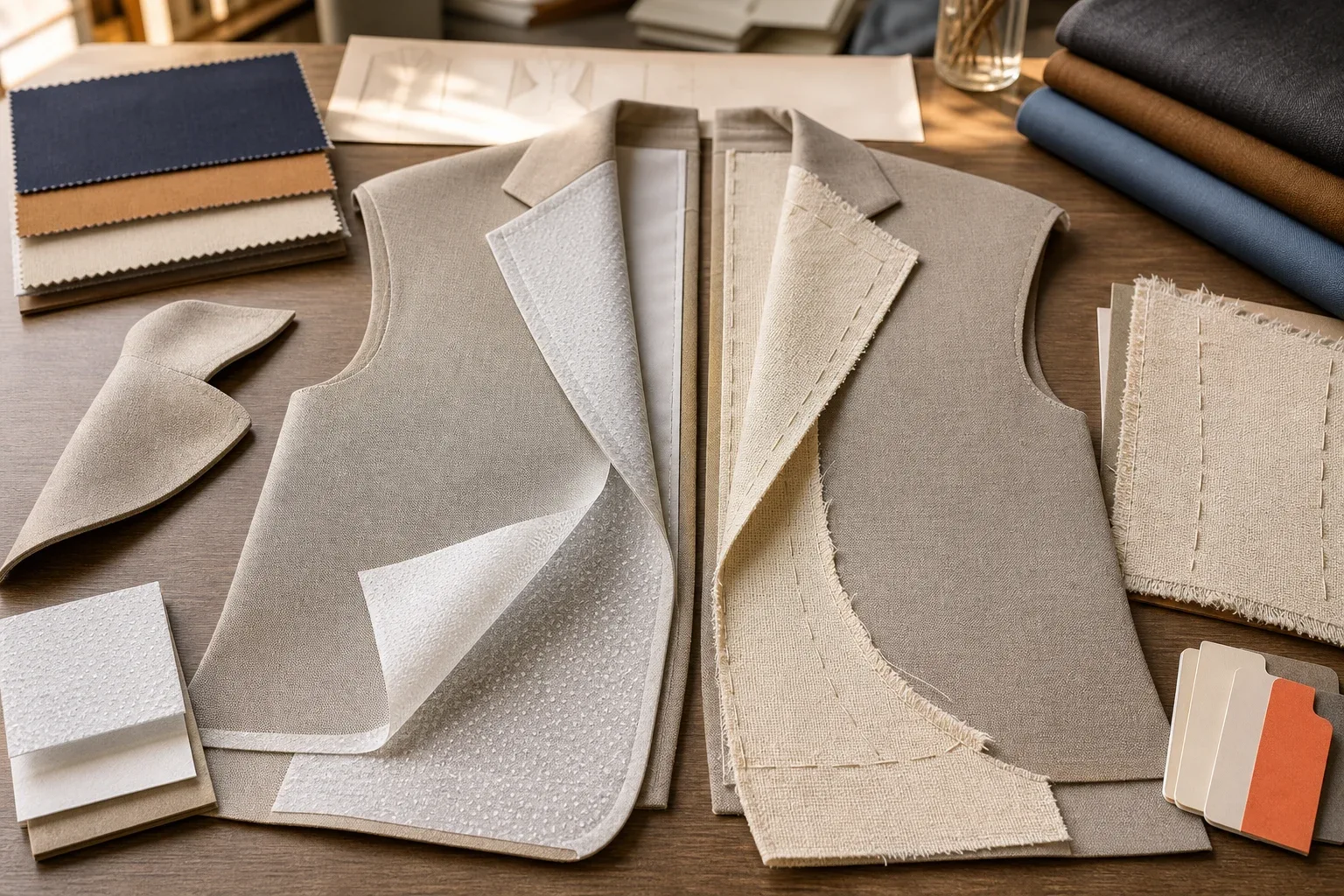
Fusible vs Sew-In Interfacing: A Garment Production Guide
Choose fusible or sew-in interfacing from the shell, garment zone, intended hand, care route and approval evidence—not from a universal quality ranking or fusing recipe.
Read guide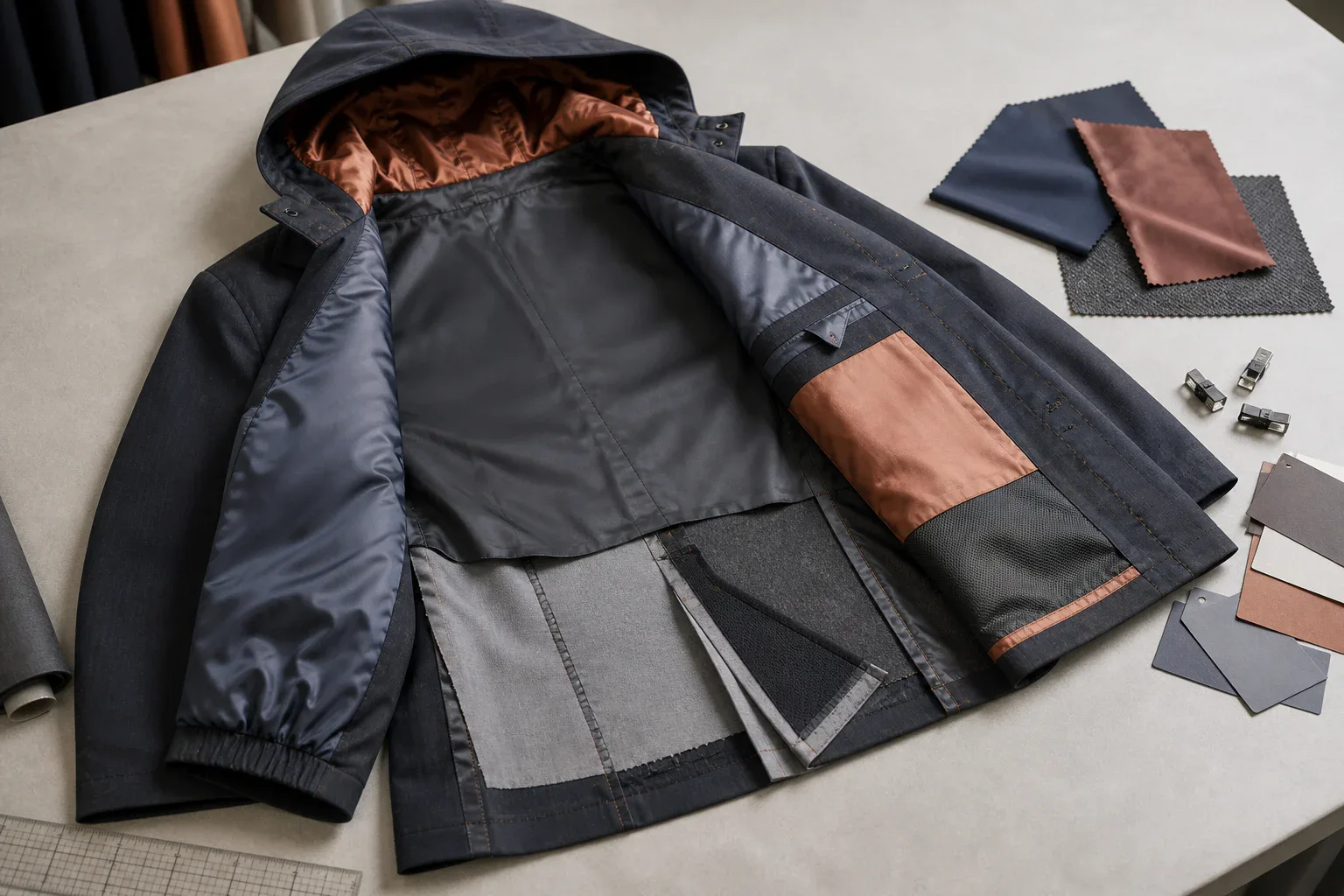
Jacket and Coat Lining Types: A Brand Specification Guide
Specify an outerwear lining as a material-and-assembly system, then approve how it moves, hangs and changes with the shell across body, sleeve, pocket, hood, hem and vent zones.
Read guide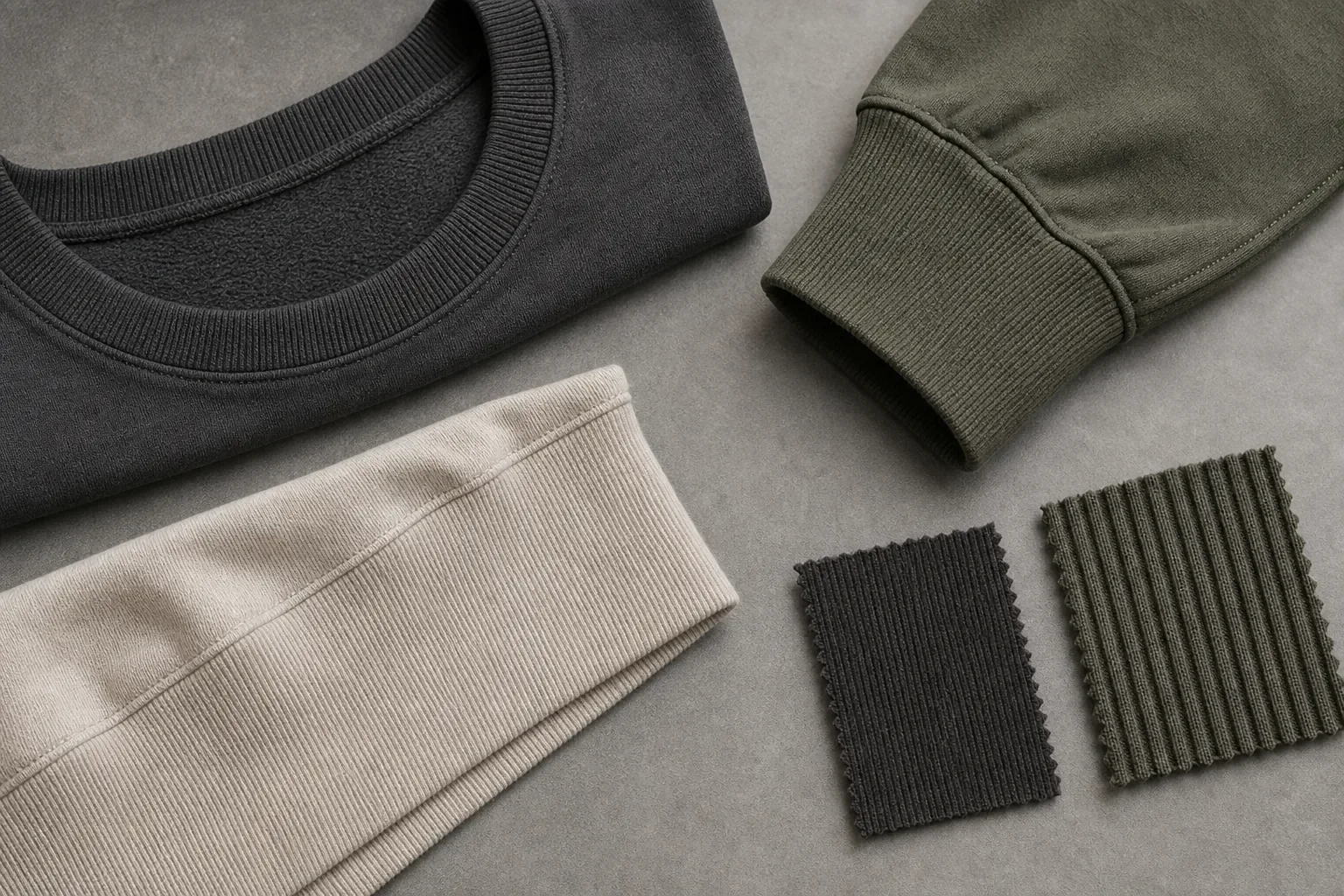
Rib Knit Fabric Types for Neckbands, Cuffs and Hem Bands
Compare rib structures without treating 1x1, 2x2 or 2x1 as a performance grade, then build a factory-ready trim specification and approve rib with the body fabric.
Read guide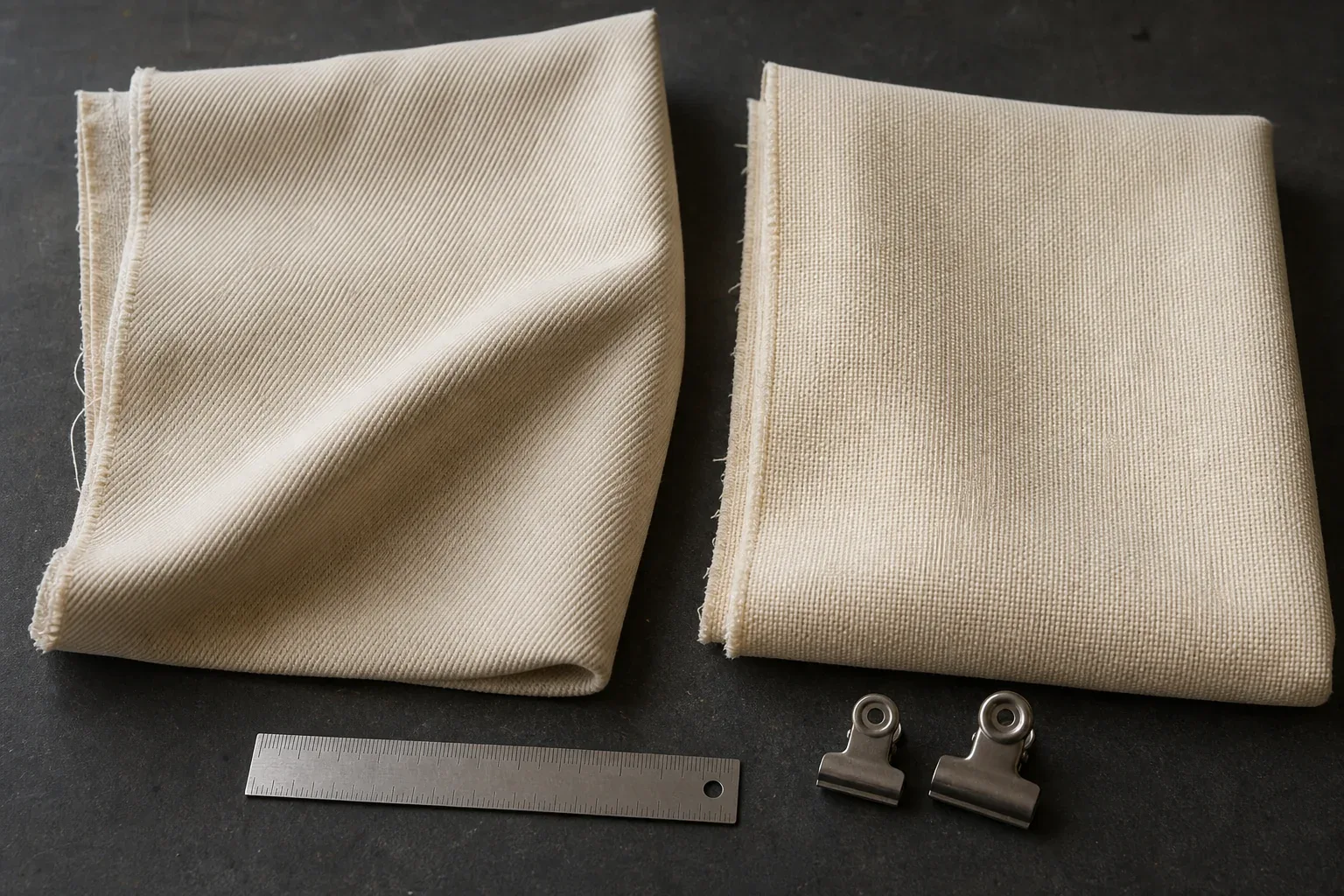
Twill vs Canvas Fabric for Pants and Jackets
Twill and canvas differ first in construction, but the name alone cannot predict strength or wear. Compare structure, hand, garment consequences and the evidence a brand should approve.
Read guide
Fabric Swatch Approval Checklist for Clothing Brands
Approve a fabric swatch by identity, face and back, construction, hand, weight, test evidence and revision—without mistaking one small sample for bulk approval.
Read guide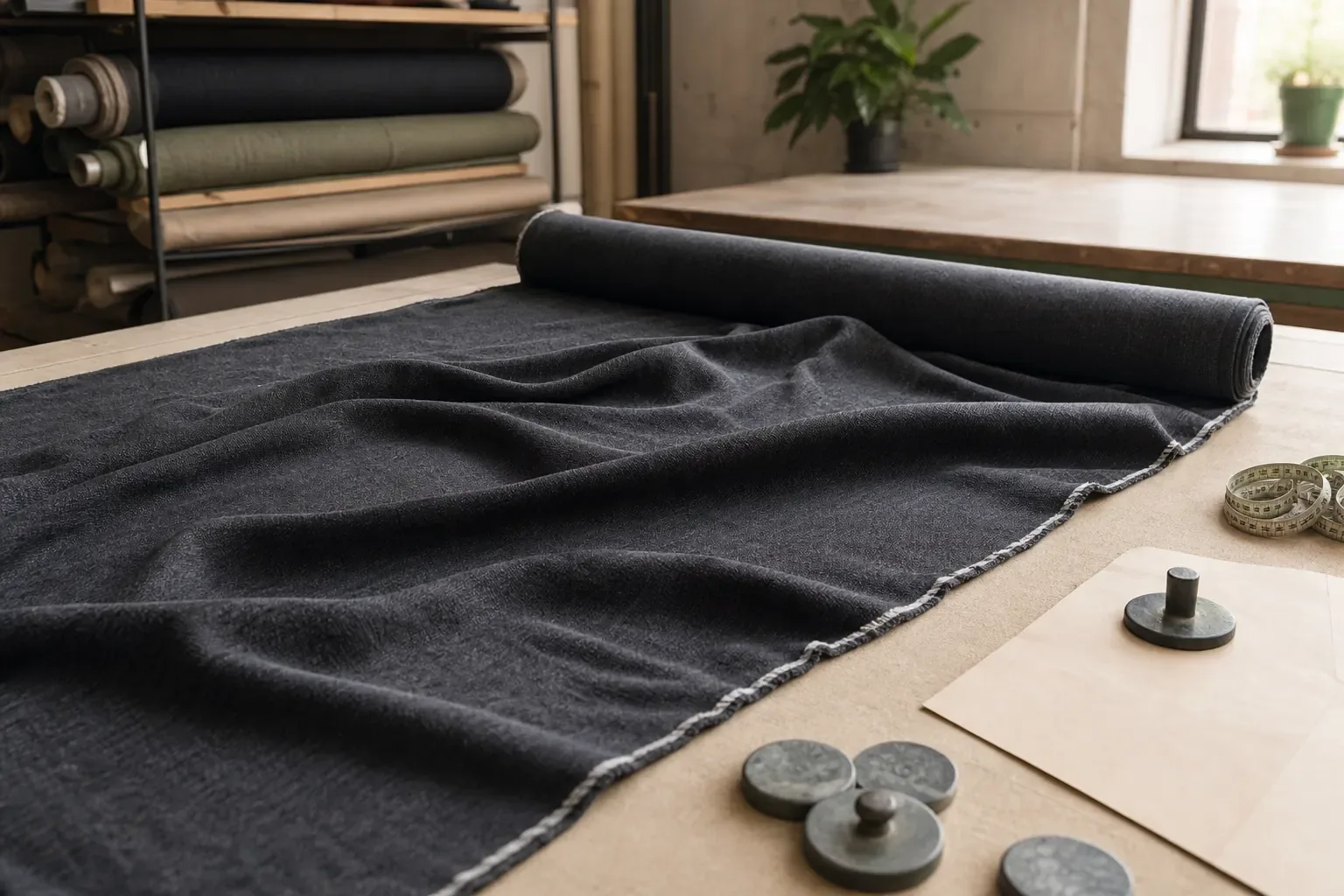
Why Fabric Relaxation Before Cutting Matters
Fabric relaxation lets roll goods reach an agreed low-tension cutting state before the marker becomes cut panels. Learn what to record, how usable width changes and why elapsed time alone is not a release test.
Read guide