Knitwear vs Cut-and-Sew Knits: How a Factory Makes Sweaters and Jersey Differently
Knitwear is knitted from yarn into the shape of the garment on flat machines; cut-and-sew knit is cut from circular-knit fabric. See how gauge, yarn, sampling, price and defects differ, and which garments suit each route.
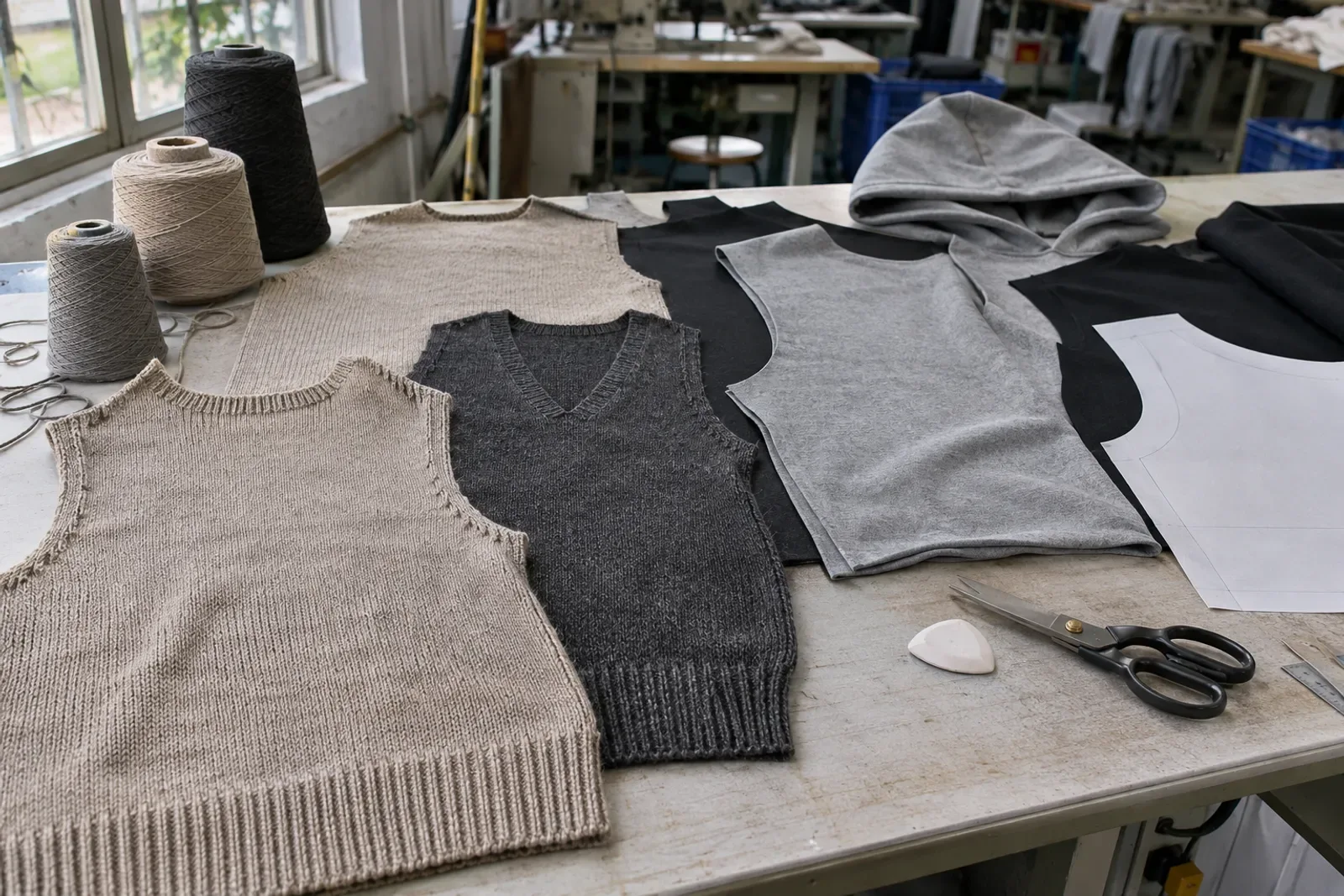
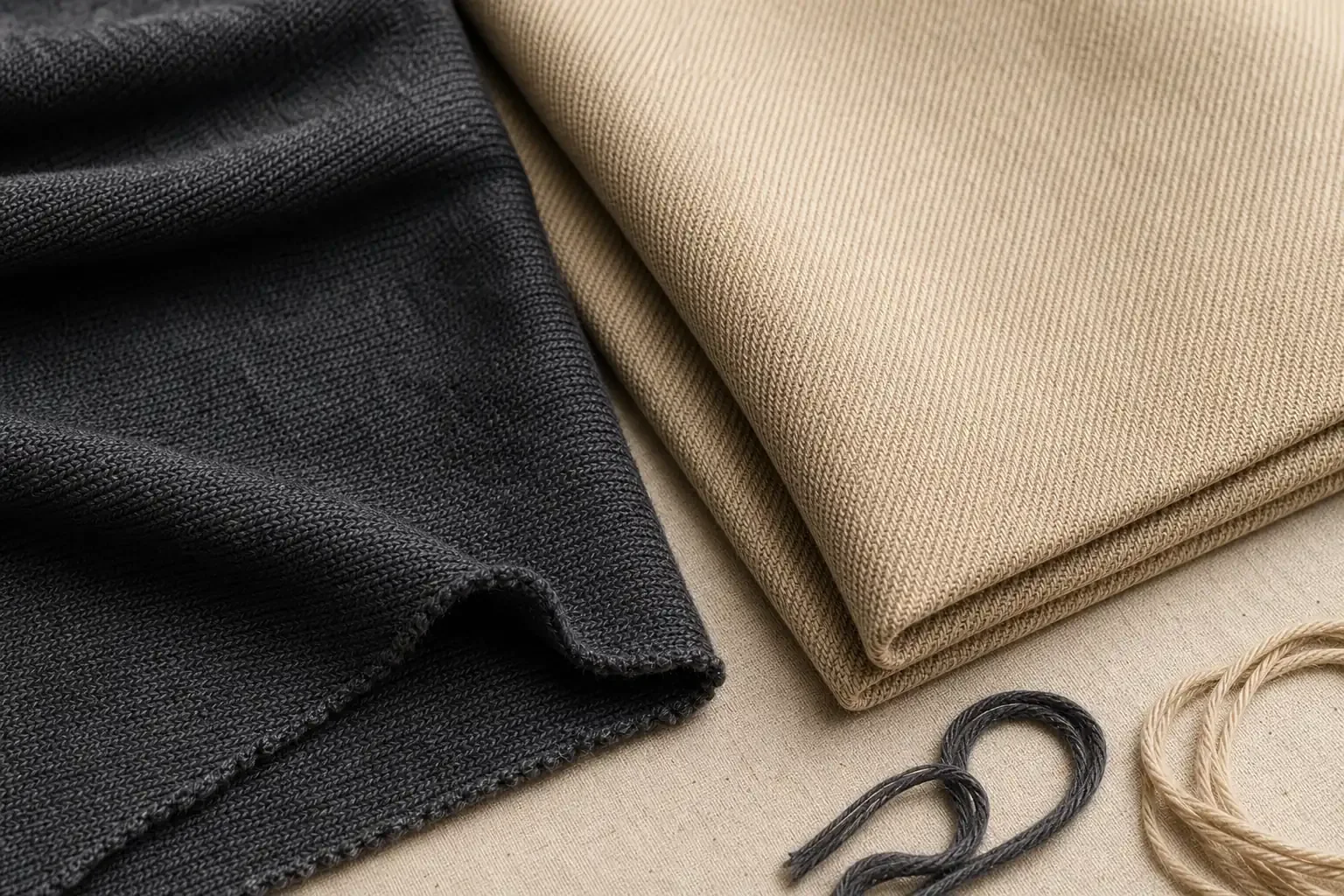
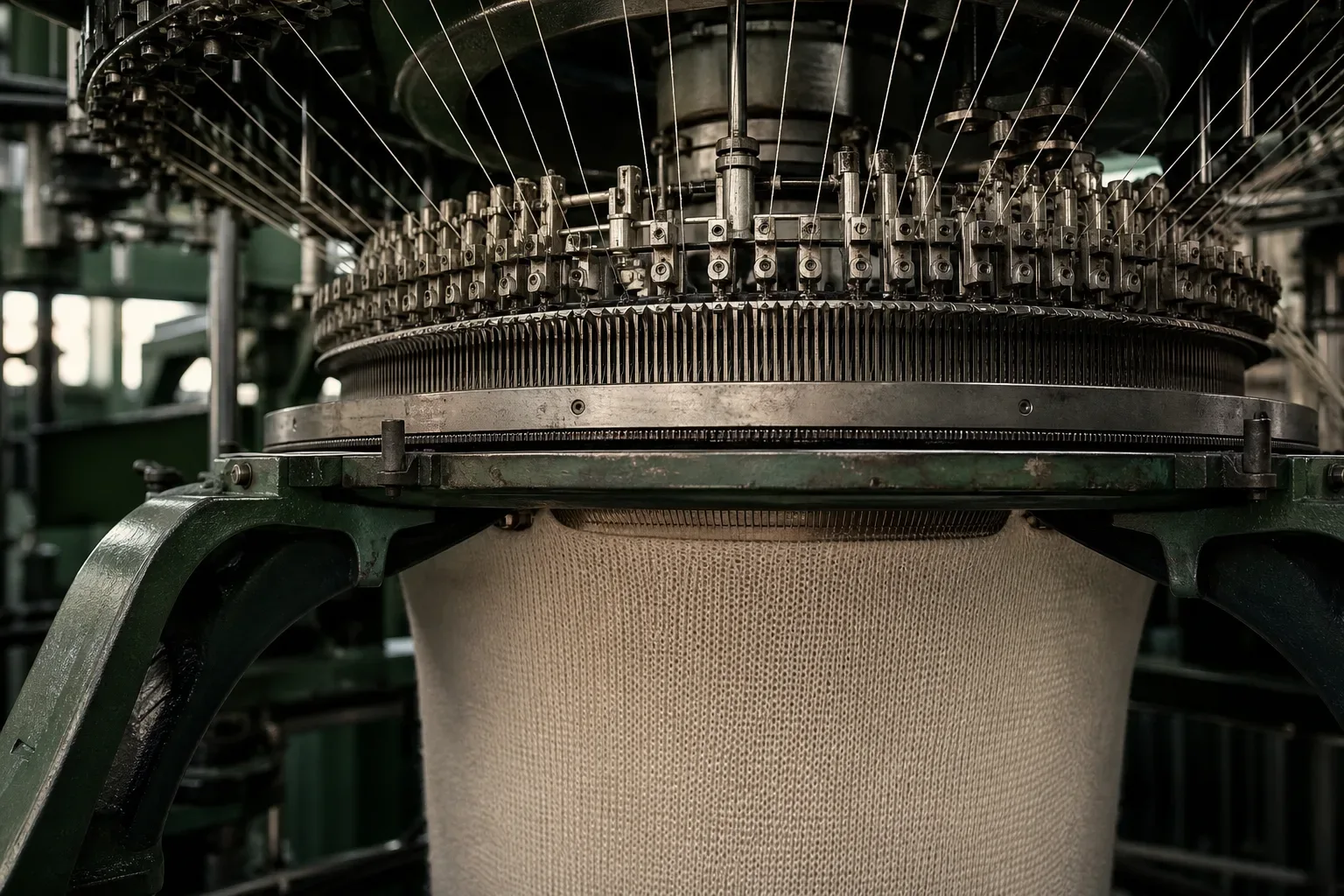
Knitwear is made from yarn into the shape of the garment on a flat knitting machine; cut-and-sew knit is made from yarn into a roll of fabric on a circular machine, which is then dyed, cut and sewn. A sweater is built stitch by stitch to its own outline, then linked together. A jersey tee or fleece hoodie is cut out of finished fabric, the way a shirt is cut from woven cloth.
That single difference at step one changes the specification (gauge and yarn count against GSM and shrinkage), the sampling route, what drives the price and which defects to look for. This guide follows both routes across the factory floor and ends with which garments belong on which.
Key takeaways
- Knitwear is specified by gauge, yarn, count and stitch structure, and it is priced mostly by yarn weight, machine minutes and linking. Cut-and-sew knit is specified by fabric construction, GSM and shrinkage, and it is priced mostly by fabric per metre, marker efficiency and sewing minutes.
- Changing a knitwear design means rewriting a machine program and often re-sourcing yarn; changing a jersey design means changing a pattern and cutting new panels.
- Many garments can go either way (knit polos, vests, cardigans, hoodies, sets). Pick the route by the handfeel, drape and silhouette you want, not by the name of the garment.
Where Does the Knitwear Route Split From the Cut-and-Sew Route?
It splits at the first machine. Both start from yarn, and both are weft knits (loops formed row by row), but the machine, the product that comes off it and every step afterwards are different.
| Step | Knitwear (sweater knitting) | Cut-and-sew knit (jersey, fleece, terry) |
|---|---|---|
| Starting material | Yarn on cones, chosen and dyed for this style | Yarn bought into a knitting mill's fabric programme, or custom-knitted fabric |
| Machine | Computerized flat knitting machine (two needle beds, a carriage that travels back and forth) | Circular knitting machine (a ring of needles knitting a tube) |
| What comes off the machine | Shaped panels (front, back, sleeves) or, on some machines, a whole garment | A tube of fabric, opened and rolled |
| Colour | Yarn is dyed before knitting; colour and pattern are built into the stitches | Fabric is usually dyed after knitting (piece dyeing); see yarn-dyed vs piece-dyed |
| Finishing the material | Panels are linked, washed or milled for handfeel, then steamed to size | Fabric is dyed, relaxed, brushed or compacted to a target GSM and width |
| Cutting | None for fully fashioned panels; blanks are cut only in the cut-and-sew-knitwear method | Fabric is spread in layers and cut to a marker |
| Assembly | Linking (stitch-for-stitch joining), then hand finishing | Overlock, coverstitch and flatlock on sewing machines |
| Spec that controls the result | Gauge, yarn blend and count, stitch per zone, finished measurements after steaming | Construction, finished GSM, shrinkage, pattern |
The practical consequence: with knitwear the brand is designing the fabric and the garment together, because the stitch structure and the shape are one decision. With cut-and-sew knit the fabric is a separate decision that happens before the pattern. Our knit vs woven guide draws the wider line between loops and interlaced yarn; this page stays inside the knit family.
What Is Knitwear in a Factory, and What Is "Sweater Knit Fabric"?
In a factory, knitwear means garments knitted directly from yarn on flat machines: sweaters, cardigans, knit vests, knit polos and knit sets. The industry also calls the work sweater knitting. The product is not sold as fabric first; the fabric and the garment are created in the same pass.
Sweater knit fabric is a looser shop term. It can mean a real flat-knitted sweater panel, but it is also used for circular-knit fabrics that imitate a sweater look: a chunky rib, a cable-look jacquard or a brushed jersey. Those fabrics are cut and sewn like any jersey. A hoodie in "sweater knit" can therefore be either a knitted hoodie built from yarn (knitwear) or a cut-and-sew hoodie in a sweater-look fabric. The supplier needs to know which one the brand means, because the cost, the minimum yarn order and the sampling route differ.
How Is a Sweater Actually Made, Step by Step?
The knitwear route runs in a fixed order, and most of the cost and most of the defects sit in a few of the steps.
- Yarn selection and dyeing. The yarn blend, count and colour are decided first. Yarn is dyed in lots, so colour is approved on a yarn card or a knitted swatch before panels are knitted.
- Programming. A technician writes the knitting program for the style: the size set, the shaping, the stitch per zone, the stripe or jacquard pattern and the carriage speed. The program is the pattern of a sweater.
- Knitting. The flat machine knits front, back and sleeves (or a whole garment). A carriage moves across two needle beds, forming loops row by row, and increases or decreases stitches to shape the panel.
- Linking. Panels are joined stitch for stitch on a linking machine, so the seam is a row of loops and not a sewn edge.
- Hand finishing. Yarn tails are trimmed, small faults are mended, trims and labels go on, and some edges are looped or hand-sewn.
- Washing and milling. The garment is washed, and sometimes milled (shrunk deliberately) to give a softer, denser hand.
- Steaming and blocking. The garment is steamed and shaped to the measurement chart so size is stable.
- Inspection and packing.
What does gauge mean, and how fine is each gauge?
Gauge (G) is the number of needles per inch on the machine bed. A low gauge uses few, thick needles and thick yarn, and the knit is chunky. A high gauge uses many fine needles and fine yarn, and the knit is thin and smooth. The yarn must match the gauge: a thick yarn on a fine gauge will not run, and a fine yarn on a coarse gauge makes a loose, holey fabric.
| Gauge | What it looks and feels like | Garments it commonly suits |
|---|---|---|
| 1.5G | Very chunky, thick rope-like yarn, heavy and sculptural | Statement oversized sweaters, thick cardigans, knit scarves and beanies |
| 3G | Thick and soft, visible large stitches, warm | Heavy-gauge oversized sweaters, chunky cable knits |
| 5G | Substantial and structured, a classic winter sweater hand | Cable knits, jacquard sweaters, heavy cardigans, knit hoodies |
| 7G | Medium weight, defined stitch, easy to see pattern | Everyday sweaters, cardigans, intarsia and jacquard streetwear knits |
| 9G | Medium-fine, smoother face, lighter than 7G | Mid-weight sweaters, knit sets |
| 12G | Fine, smooth, drapes well, light to mid weight | Knit polos, vests, fine pullovers, layering pieces |
| 14G | Fine and flat, close to a tailored knit | Knit polos, fine cardigans, vests, merino and cashmere-blend pieces |
| 16G and above | Very fine, almost like a thick jersey, light and sleek | Lightweight knit polos, fine pullovers, fine-gauge knit sets |
Because gauge sets how much fabric one machine minute produces, it also sets cost: a 3G sweater uses a lot of yarn and knits fast; a 14G sweater uses less yarn but takes many more rows to cover the same panel.
What yarns are used, and what does the yarn count mean?
Common knitwear yarns are wool and merino, cashmere blends, cotton, acrylic, mohair and brushed yarns, viscose, alpaca blends, and nylon or polyester blends. Blends are common because each fibre contributes something: wool brings warmth and bounce, cotton brings softness and breathability, acrylic brings colour range and price control, nylon adds strength and reduces pilling, mohair and brushed yarns give a fuzzy halo.
Two spinning routes matter for handfeel. Worsted yarn is combed so the fibres lie parallel; it is smooth, strong and gives crisp stitch definition. Woollen yarn is carded, leaving fibres more tangled and airy; it is fuzzier, warmer and softer, and pills a little more readily.
Yarn count states the thickness. In the metric Nm system, the number is how many kilometres of yarn one kilogram makes, so a higher number is a finer yarn. A notation such as 2/28Nm means two plies of Nm28 twisted together, which behaves like a single Nm14 yarn. 2/48Nm is two plies of Nm48, an effective Nm24: a fine yarn for fine gauges. As a rough guide, 12G to 16G commonly pairs with counts around 2/48Nm and finer, 7G and 9G with mid counts, and 3G to 5G with thick, multi-ply or chunky spun yarns. The factory confirms the right pairing on a swatch.
Why yarn has a minimum and a lead time. Yarn is spun and dyed in lots, and a colour is dyed to order. A custom colour means a dye lot sized to the order and a wait before knitting starts, and a different dye lot of the same colour can show a slight shade difference. That is why the yarn colour is approved first, and why a bulk order is knitted from one lot where possible.
Which stitch structures can a sweater have?
The stitch structure is the "fabric" decision for knitwear, and it can change zone by zone in one garment.
- Plain (jersey) stitch. Smooth V-stitches on the face, purl bumps on the back; it curls at the edges unless a rib or hem holds it.
- 1x1 and 2x2 rib. Alternating knit and purl columns; highly stretchy, used for cuffs, hems, collars and sometimes the whole body. See the rib knit guide.
- Full and half cardigan. Thick, rib-based structures with a raised, textured face, used for heavier cardigans.
- Cable. Groups of stitches crossed over each other to make twisted ropes; it pulls the panel narrower, so the program adds width.
- Links-links (purl). Rows of knit and purl on the same face, giving a flat, reversible, bulky fabric that does not curl.
- Jacquard. Two or more yarn colours knitted into a pattern across the panel; floats on the back.
- Intarsia. Blocks of colour knitted from separate yarn carriers, with no floats; used for large graphics and logos.
- Pointelle. Small transfers of stitches that make an open, eyelet pattern.
- Tuck. Loops held for more than one row, giving a raised, textured, thicker fabric.
What are the three ways a knitwear garment is built?
| Method | How it works | Strengths | Trade-offs |
|---|---|---|---|
| Cut-and-sew knitwear | Knit rectangular blanks, then cut the garment shape and sew the edges | Faster to knit, easier for simple shapes and quick samples | More yarn waste; cut edges need overlocking and can look less refined |
| Fully fashioned | Each panel is knitted to its final shape by increasing and decreasing stitches, leaving small fashioning marks at the shaping points; panels are linked | Very little waste, clean linked seams, a precise fit and a traditional knitwear finish | More machine time and more linking labour |
| Whole garment / seamless | A machine with several needle beds knits the entire garment in one piece (machine makers such as Shima Seiki with WholeGarment, and Stoll with knit-and-wear) | No side or sleeve seams, minimal linking, nearly no waste | A longer, more specialised program; limited styles per machine; slower per piece |
Fully fashioned is the reference method for quality knitwear. Cut-and-sew knitwear is common for heavier-gauge fashion pieces and designs that rely on a boxy shape, while whole-garment suits clean, seam-free silhouettes.
What is linking, and what is hand finishing?
Linking joins two knitted panels by catching each loop of one edge onto each loop of the other on a linking machine, so the seam is stitch for stitch and stays as stretchy as the knit. It is slower than overlocking and needs a skilled operator, but it gives a flat, smooth seam that does not irritate and does not run.
Hand finishing is everything the machines leave: looping the neckline or hem, trimming yarn tails, mending a dropped stitch or a small hole (known in the industry as mending, or 补洞), sewing labels and trims, and hand-sewn details. On a fine-gauge knit, finishing time can match knitting time.
Why do washing, milling and steaming matter so much?
Knitwear is the opposite of woven cloth: it is soft and mobile until it is finished, so its handfeel and size are set in the last steps. Washing with softener relaxes the loops and lifts the surface. Milling (缩绒) is a controlled wet shrink that felts the surface of wool and wool blends, giving a denser, softer, fuller hand. Steaming and blocking (定型) set the finished measurements: the garment is steamed on a form or board to the measurement chart. If a brand writes measurements on the tech pack, it must say whether they are before or after washing and steaming.
Why does changing a sweater design mean rewriting a program?
On a flat machine the pattern of the sweater is the program: every stitch, every shaping step, every stripe. Moving a stripe, widening a cable, changing a collar depth or adding an intarsia graphic means a change in the program, a test knit and often a new size set. A pattern for a jersey tee changes on paper in a few minutes; a knitting program has to be knitted to be proven. That is why the first sample of a new knitwear design is the most important step, and why late design changes cost more.
Machine time per piece is the cost driver that follows. A 14G jacquard sweater with long colour floats can take many times the knitting minutes of a 5G plain pullover, and a whole-garment piece occupies the machine for its entire cycle. Quotes are built from yarn weight plus minutes on the machine plus linking and finishing minutes.
How Is a Cut-and-Sew Knit Garment Made?
The cut-and-sew route starts one stage earlier in the supply chain: the fabric. The yarn is knitted on an industrial circular machine into a tube (see the circular knitting machine guide), then dyed, finished, relaxed and rolled. After that, the garment is a pattern, a cutting table and a sewing line.
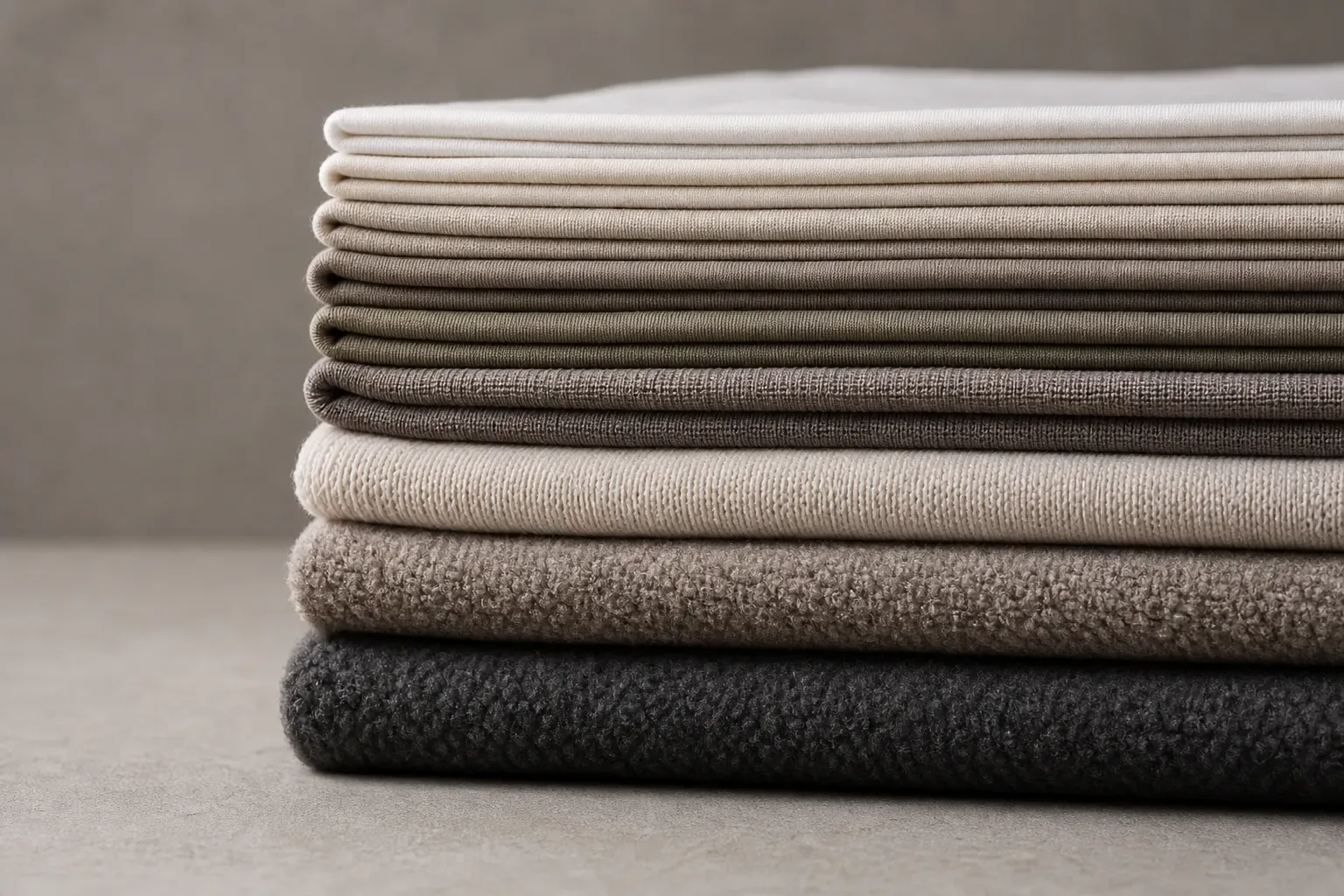
Which fabrics belong to this route?
- Single jersey: the standard tee fabric, light and stretchy, with a smooth face. See single jersey vs interlock.
- Interlock: two interlocked ribs, thicker, smoother on both sides, more stable.
- Rib: stretchy, used for fitted tops and for trims.
- French terry: loops on the back, a flat face; the classic mid-weight sweatshirt fabric. See what is French terry.
- Fleece (brushed back): the loop back is brushed into a soft pile for warmth. See the fleece fabric weights guide.
- Piqué: textured cotton-based polo fabric. See piqué vs jersey.
What does GSM tell you, and what does it not?
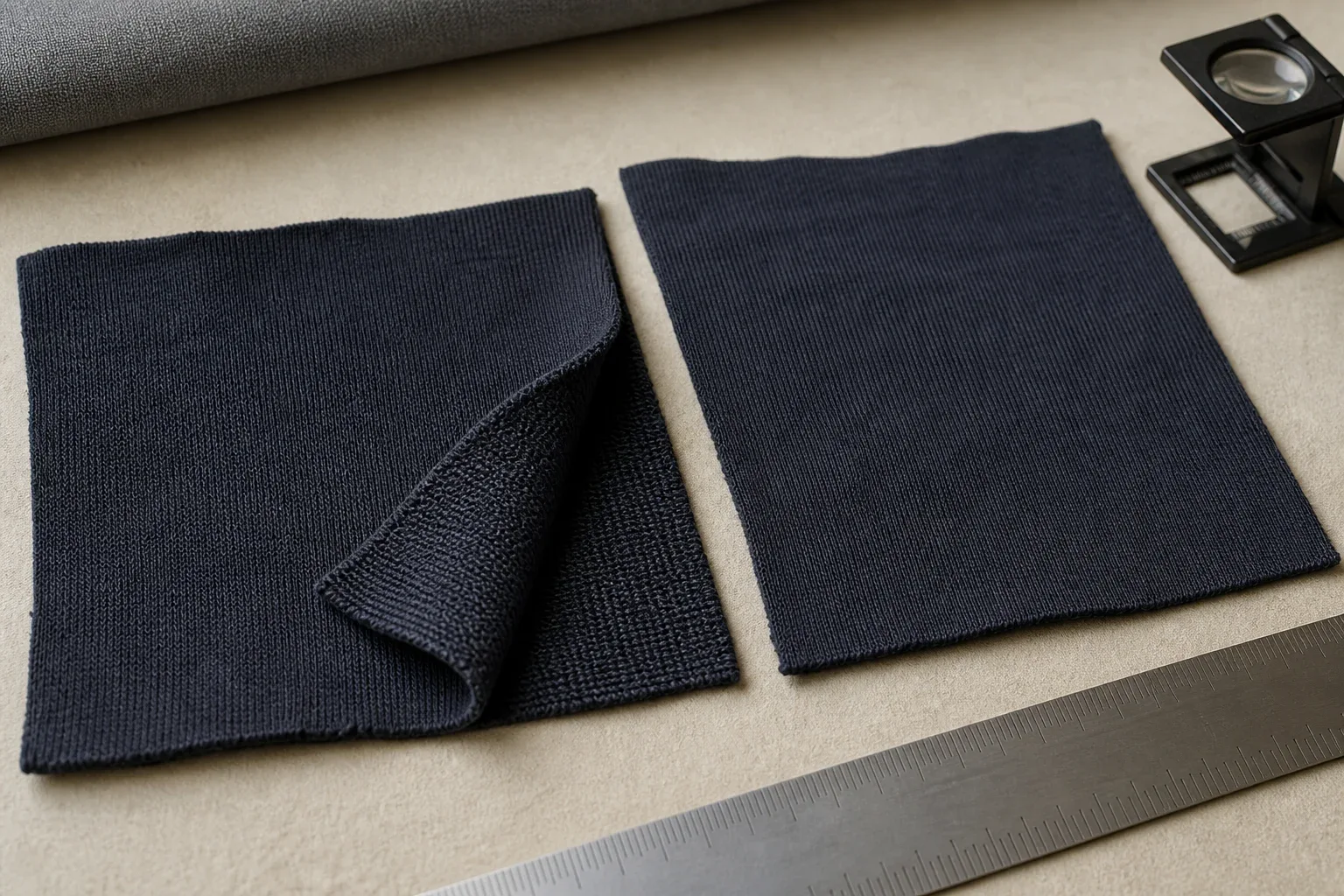
For cut-and-sew knit, GSM (grams per square metre) is the headline spec. It tells how dense and heavy the finished fabric is, and it separates a 180 GSM tee from a 450 GSM hoodie. The finished GSM, not the greige GSM, is what goes on the tech pack; see greige vs finished fabric and the streetwear GSM guide. A knitwear sweater is not specified in GSM; it is described by gauge, yarn and the garment's weight.
What are shrinkage and spirality?
Circular-knit fabric holds tension from the machine and the dye house. After washing it relaxes, so it shrinks in length and sometimes grows in width, and it can spiral, with the wales twisting off the vertical. Spirality is what causes side seams on a tee to move to the front. See why T-shirt side seams twist and the cotton shrinkage tolerances guide. Good practice is a shrinkage target on the tech pack and a relaxed, pre-washed test before cutting.
How do cutting and marker efficiency work?
Fabric is spread in layers, a marker (a nested layout of every pattern piece) is laid on top, and the pieces are cut out. Marker efficiency is the share of the fabric area that ends up in a pattern piece; the rest is waste. A well-nested marker, sensible grain control and the right fabric width keep waste low. See the marker efficiency guide and fabric consumption.
How is it sewn?
Cut knit panels are joined with overlock (cuts the edge and wraps it in thread), coverstitch (two parallel lines on the face for hems and necklines, a looper on the back) and flatlock (a flat, decorative seam). Rib trims are sewn on at the neck, cuffs and hem. See the stitch types guide. Sewing minutes are the largest single labour cost on this route.
What Goes on the Tech Pack for Each Route?
The tech pack is where the two routes visibly diverge. A sweater brief written like a tee brief leaves out the numbers that matter.
Knitwear tech pack checklist
- Gauge (for example 5G, 12G).
- Yarn: fibre blend, spun type (worsted or woollen), count (for example 2/28Nm) and ply.
- Stitch structure per zone: body, sleeves, cuffs, hem, collar, any cable, jacquard or intarsia area.
- Colour: yarn colour references and, for jacquard and intarsia, a chart or artwork.
- Finished measurements, stated after washing and steaming, with tolerances.
- Trims: labels, buttons, zips, drawcords and where they go.
- Washing and handfeel direction: soft wash, milled, brushed, distressed.
- Target garment weight per size (a sweater is bought by weight as much as by piece).
Cut-and-sew knit tech pack checklist
- Fabric construction (single jersey, French terry, fleece, rib) and fibre content.
- Finished GSM and width, with the tolerance.
- Shrinkage and spirality targets after wash.
- Pattern, grading and measurements, see garment pattern making.
- Stitch types for each seam and hem.
- Decoration: print, embroidery or wash, see embroidery vs screen printing.
- Colour reference and approval method.
The tech pack and factory quote guide covers the full document and how a quote is built from it.
How Does Sampling Differ Between Knitwear and Cut-and-Sew?
The order of events is different.
Knitwear sample: yarn is sourced and dyed (or matched from stock), the program is written, the first panels are knitted, linked, washed and steamed to measure. The first sample proves the program, the gauge, the handfeel and the measurements at the same time. Revisions go back to the program and sometimes back to yarn.
Cut-and-sew sample: the fabric is chosen or knitted and dyed, the pattern is cut, and the sample is sewn. Revisions go to the pattern, so an adjustment to a sleeve length or a body width is quick.
In both cases a physical sample is approved before bulk. See garment sample types and the sample approval checklist.
What Drives the Price of Each?
| Cost driver | Knitwear | Cut-and-sew knit |
|---|---|---|
| Material | Yarn price per kg × garment weight, plus yarn waste and tails | Fabric price per metre × consumption per garment, plus cutting waste |
| Machine time | Knitting minutes by gauge and structure (jacquard and fine gauge cost the most) | Fabric knitting is charged inside the fabric price |
| Assembly | Linking and hand finishing, which are slow and skilled | Sewing minutes on overlock, coverstitch and flatlock |
| Efficiency lever | Gauge and yarn choice, fully fashioned shaping to cut waste | Marker efficiency and fabric width |
| Finishing | Washing, milling, steaming | Garment wash, dye, print, embroidery |
| Decoration | Usually built into the knit (jacquard, intarsia) or embroidered | Print, embroidery, patches, wash |
For knitwear, the weight of the garment is the quickest way to see where a quote comes from: a heavy 3G sweater is mostly yarn cost, a fine 14G jacquard is mostly machine time. For cut-and-sew, a heavier GSM and a bad marker are the quickest ways to a higher fabric cost. See why factory quotes differ.
What Defects Does Each Route Produce, and How Are They Checked?
Knitwear
| Defect | What it is | What catches it |
|---|---|---|
| Dropped or missed stitch | A loop not formed, leaving a run or a hole | Visual inspection of every panel before linking |
| Holes | Yarn break or needle fault | Light-table inspection and mending |
| Uneven tension or horizontal stripes | Yarn feed or lot differences across rows | Same yarn lot for a style; check on the first panel |
| Linking undone | A seam opening because a loop was skipped | Seam check by pulling, 100% visual |
| Size moving after washing | Milling or washing shrinks or grows the garment | Measure after wash and steam on a sample |
| Pilling and hairiness | Loose fibres rolling into balls on the surface | Yarn choice, a pilling test; see the pilling guide |
| Colour lot variance | Slightly different shade between yarn lots | One lot per style, a shade band approval |
Cut-and-sew knit
| Defect | What it is | What catches it |
|---|---|---|
| Spirality and twist | Wales twist off vertical after washing | Fabric relaxation and wash test; see why T-shirt side seams twist |
| Shrinkage | Dimensions change in the first wash | Test to the stated target before cutting |
| Needle holes | Damage from the sewing needle on fine knits | Right needle and point; see needle damage |
| Barré | Horizontal bands from uneven yarn or knitting tension | Fabric inspection on the roll; see the barré guide |
| Laddering and runs | A broken loop running along a wale | Fabric choice and seam construction; see laddering and runs |
| Seam puckering | Wavy seam from thread tension or feed | Machine settings; see seam puckering causes |
Which Garments Go Which Way?
| Garment | Usual route | When the other route makes sense |
|---|---|---|
| T-shirt | Cut-and-sew (single jersey) | A fine-gauge knitted tee when a flat, refined hand is the point |
| Hoodie | Cut-and-sew (French terry or fleece) | A knitted hoodie in 5G to 7G for a textured, sweater-like hoodie |
| Crewneck sweatshirt | Cut-and-sew (terry or fleece) | A knitted crewneck sweater for a warmer, dressier piece |
| Chunky or cable sweater | Knitwear | A brushed fleece with a cable-look graphic is a lighter alternative |
| Cardigan | Knitwear | A fleece or terry cardigan for sportswear |
| Polo | Either: cut-and-sew piqué or fine-gauge knit polo | Knit polo for a drapey, premium hand; piqué polo for a sturdier, sportier one |
| Sweater vest | Knitwear | A jersey vest for a flat, sporty look |
| Shorts and sets | Either | Knit sets for a soft, textured look; terry or jersey sets for easy care |
Pick knitwear when the pattern or texture lives in the stitch (cable, jacquard, intarsia, pointelle), when you want the warmth and bounce of wool, or when you want a fully fashioned fit with linked seams. Pick cut-and-sew when the garment depends on a particular fabric weight (a 450 GSM hoodie), when a large flat print or embroidery needs a stable surface, or when the design changes often and a pattern revision is cheaper than a program rewrite. See the sweatshirt vs hoodie guide for the cut-and-sew side.
How Does Jiashun Handle Both?
Jiashun, based in Dongguan, makes both: streetwear cut-and-sew and sweater knitwear, so a brief goes on the route that suits the garment.
Knitwear. Styles include oversized and heavy-gauge sweaters, cardigans, knit vests, knit polos and knit sets. Gauges run from 1.5G to 16G, with common gauges at 1.5G, 3G, 5G, 7G, 12G, 14G and 16G. Yarns include cotton, acrylic, wool, mohair blends, alpaca blends, cashmere blends, viscose, and nylon or polyester blends. Techniques include jacquard, intarsia, cable knit, pointelle, distressed or destroyed knit, brushed (mohair-look) finish, garment washing, embroidery and linking. MOQ is 50 pieces per style, per color. The reference price is USD 30.90–32.90 per piece by quantity, confirmed in the quotation. Simple samples take 10–18 working days after project details are confirmed, and bulk takes 20–30 working days after sample approval. See the custom knitwear manufacturer page.
Cut-and-sew. Hoodies, sweatshirts, tees and sets are made from jersey, terry and fleece, with hoodies at 400–600 gsm. MOQ is 50 pieces per style, per color, with the same sample and bulk timing: simple samples take 10–18 working days after project details are confirmed, and bulk takes 20–30 working days after sample approval. See the custom hoodie manufacturer, the custom sweatshirt manufacturer and the cut-and-sew manufacturing page.
Send a sketch, a reference sweater or a tech pack, and the first thing we answer is the route: which of the two builds the garment you want, and at what gauge or GSM.
FAQ
What is the difference between knitwear and cut-and-sew knits?
Knitwear is knitted directly from yarn into garment panels or a whole garment on a flat machine, then linked. Cut-and-sew knit is knitted as a roll of fabric on a circular machine, then dyed, cut and sewn. The first is specified by gauge and yarn, the second by construction and GSM.
What is fully fashioned knitwear?
A fully fashioned sweater has each panel knitted to its final shape by adding and dropping stitches, which leaves small fashioning marks at the shaping points. The panels are linked together. It produces little waste and a precise fit, and is considered the reference construction for quality knitwear.
What is the difference between flat knitting and circular knitting?
A flat machine has two straight needle beds and a carriage that moves back and forth, so it can shape panels or whole garments. A circular machine has a ring of needles that knits a continuous tube of fabric, which is then cut. Flat is used for sweaters, circular for jersey, fleece and terry.
Is sweater knit the same as jersey?
No. Jersey is a fabric knitted in a circular tube and then cut; sweater knit is usually yarn knitted straight into a panel. Both use loops, but a sweater knit is typically thicker, with more visible stitches, and can include cables, jacquard or intarsia that jersey cannot.
What does gauge mean in knitwear?
Gauge is the number of needles per inch on the machine bed. Low gauges (1.5G, 3G, 5G) produce thick, chunky knits; high gauges (12G, 14G, 16G) produce fine, smooth knits. Yarn thickness must match the gauge.
Can a hoodie be made as knitwear?
Yes. A knitted hoodie is built from yarn on a flat machine, usually at 5G to 7G, and has a textured, sweater-like hand. A fleece or terry hoodie is cut and sewn from fabric and suits heavier GSM and large prints. Both can be produced; the choice is about the handfeel and look.
Which is cheaper, knitwear or cut-and-sew?
It depends on the garment. A heavy-gauge sweater is mostly yarn cost; a fine-gauge jacquard is mostly machine time. A jersey tee is mostly fabric and sewing minutes. Quote both from the same design and compare.